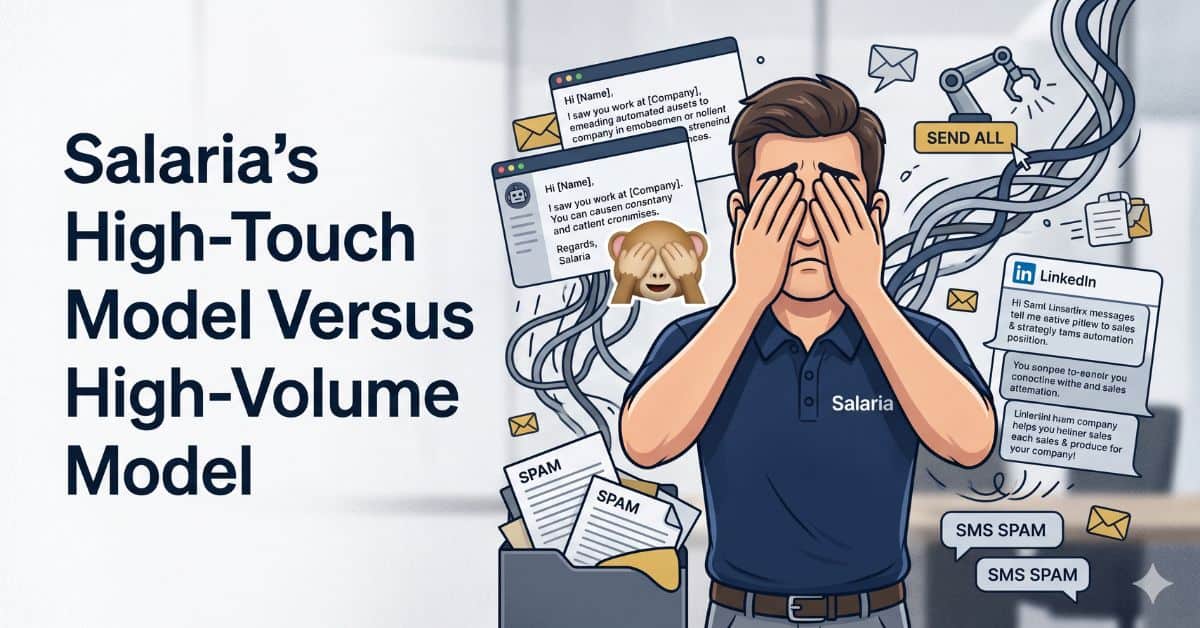
High-volume outbound makes teams look busy. High-touch outbound builds trust, starts better conversations, and creates the kind of pipeline that actually converts.
There is a reason so many companies are frustrated with outbound right now.
They tried the high-volume playbook. They bought the tools. They launched the sequences. They fired off the emails. They ran the LinkedIn automation. They let AI agents prospect thousands of leads. On paper, it looked like a lot of activity. In reality, it produced very little that a sales leader actually wants: real conversations, qualified meetings, and healthy pipeline.
We hear this all the time.
Companies come to Salaria after trying high-volume outbound and say the same thing in different ways. They emailed 100,000 people and almost nobody responded. They generated a lot of touches but not many meetings. They had activity but not momentum. They had automation but not outcomes.
Sometimes the story is even worse: a massive campaign produces a handful of meetings, and only one of them is actually worth pursuing. That is not a pipeline strategy. That is a warning sign.
That is the core problem with the high-volume model. It creates the illusion of progress while quietly damaging the parts of the sales process that matter most.
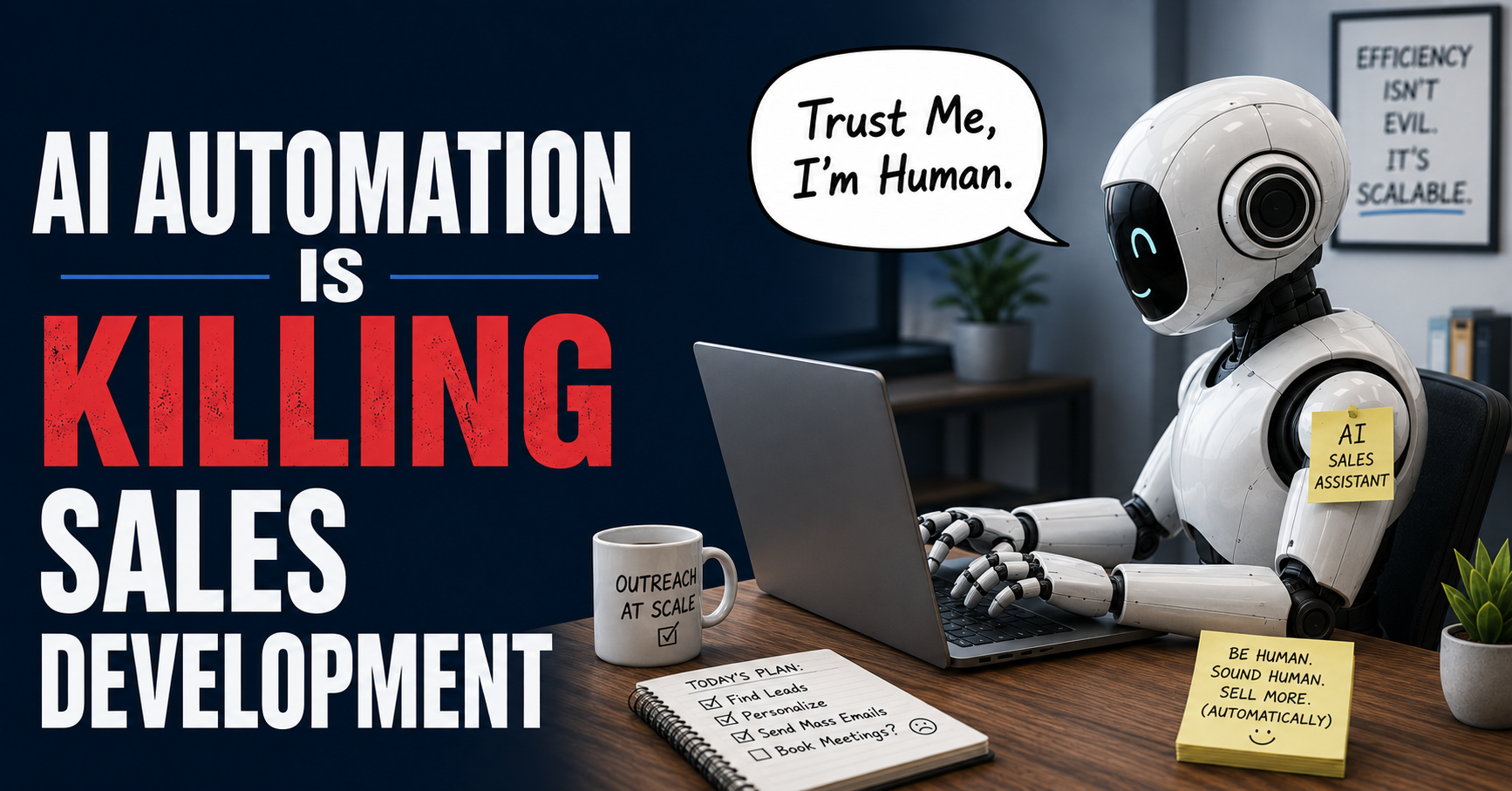
High-volume outbound is often presented as efficient, modern, and scalable. In reality, it is frequently just activity theater. It makes teams look busy while weakening brand perception, burning through target markets, and producing low-quality pipeline. Salaria’s model is different because it starts from a completely different belief: better outreach beats more outreach.
High-Volume Outbound Is Not a Real Sales Strategy
The first issue with the high-volume model is that it confuses scale with effectiveness.
Just because thousands of messages were sent does not mean real sales work happened. Just because an AI tool prospecting engine scraped contacts all day does not mean meaningful pipeline was created. Just because a dashboard shows huge activity numbers does not mean the market cares.
This is one of the easiest traps in sales development today.
A salesperson or outsourced provider can point to volume and say they worked hard. They can show that 10,000 emails went out this week, that hundreds of LinkedIn messages were sent, or that a set of automated sequences touched every lead in the database. But if none of that creates strong conversations with real buyers, then the output is not sales progress. It is noise.
The high-volume model is attractive because it looks efficient. It gives people something measurable to show. But sending more messages is not the same as building more pipeline. In many cases, it is simply a faster way to prove that irrelevant outreach scales irrelevance.
Why Activity Metrics Can Hide Pipeline Failure
One of the most dangerous things about the high-volume model is how easy it is to defend with numbers.
A weak outbound program can hide behind open rates, send counts, sequence volume, and list size for a surprisingly long time. That makes it easy for teams to avoid the harder truth: the pipeline is not there.
This is why high-volume outbound can become a convenient excuse.
Instead of asking whether the outreach is thoughtful, relevant, and converting, teams focus on activity metrics. They celebrate the amount of outreach rather than the quality of response. They point to how much happened instead of what happened.
That approach becomes especially risky when automation is layered on top. AI prospecting, automated email, LinkedIn outreach, text sequences, and social automation can all create the impression that the machine is working. But if the result is weak pipeline, then the machine is not helping. It is hiding the problem.
A good sales system should not be measured only by how much it sends. It should be measured by the quality of the conversations it creates. That is where the high-touch model has a clear advantage. It forces the team to focus on substance, not motion.
How High-Volume Outreach Burns Through Your Market
There is another problem with high-volume outbound that many companies only recognize after the damage is done. It burns the market.
If your company repeatedly sends generic messages, over-automated follow-ups, shallow personalization, and robotic outreach to the same universe of prospects, those prospects start to associate your brand with annoyance. They learn to ignore you. In some cases, they actively dislike you before a real salesperson ever gets the chance to have a useful conversation.
That is a serious issue.
In a large market, this creates waste. In a smaller market, it can become a strategic problem. If your total addressable audience is limited, bad outreach can damage your brand across the entire category. Once those contacts are burned, future high-touch outreach becomes much harder. Your better salespeople have to clean up a mess they did not create.
This is why we view high-volume outbound so critically. It is not just ineffective. It can reduce the value of future sales efforts. It can make a market colder, not warmer.
A company should not treat its target market like a disposable list.
Why AI Personalization No Longer Impresses Buyers
One of the reasons the high-volume model is losing effectiveness is that buyers are getting better at spotting fake personalization.
They know when a message was stitched together by AI. They know when the sender pulled a random detail from LinkedIn, the company website, or a public profile and tried to pass it off as thoughtful outreach. They know when a compliment is generic. They know when the message is trying too hard to seem personal while clearly being part of a mass send.
That kind of outreach does not impress serious buyers anymore.
In fact, it often has the opposite effect. It makes the sender look lazy, not clever. It signals that the goal was not understanding. The goal was scaling the appearance of understanding.
This is a major reason why high-volume outbound is under pressure in 2026. Everyone is already doing some version of AI-generated personalization. That means the tactic itself is no longer a differentiator. Buyers see it constantly, and most of it is forgettable.
Salaria believes outreach should feel considered, not manufactured. That requires a higher standard. It requires actual research, stronger targeting, and a message that makes sense for the prospect in front of you.
What a High-Touch Outbound Model Actually Looks Like
A high-touch model is not just lower volume. It is a different philosophy.
It starts with the belief that quality pipeline comes from quality preparation. Instead of asking how many people can be touched this week, it asks which people deserve to be contacted and why. It values relevance before volume. It prioritizes fit before automation.
That changes the work.
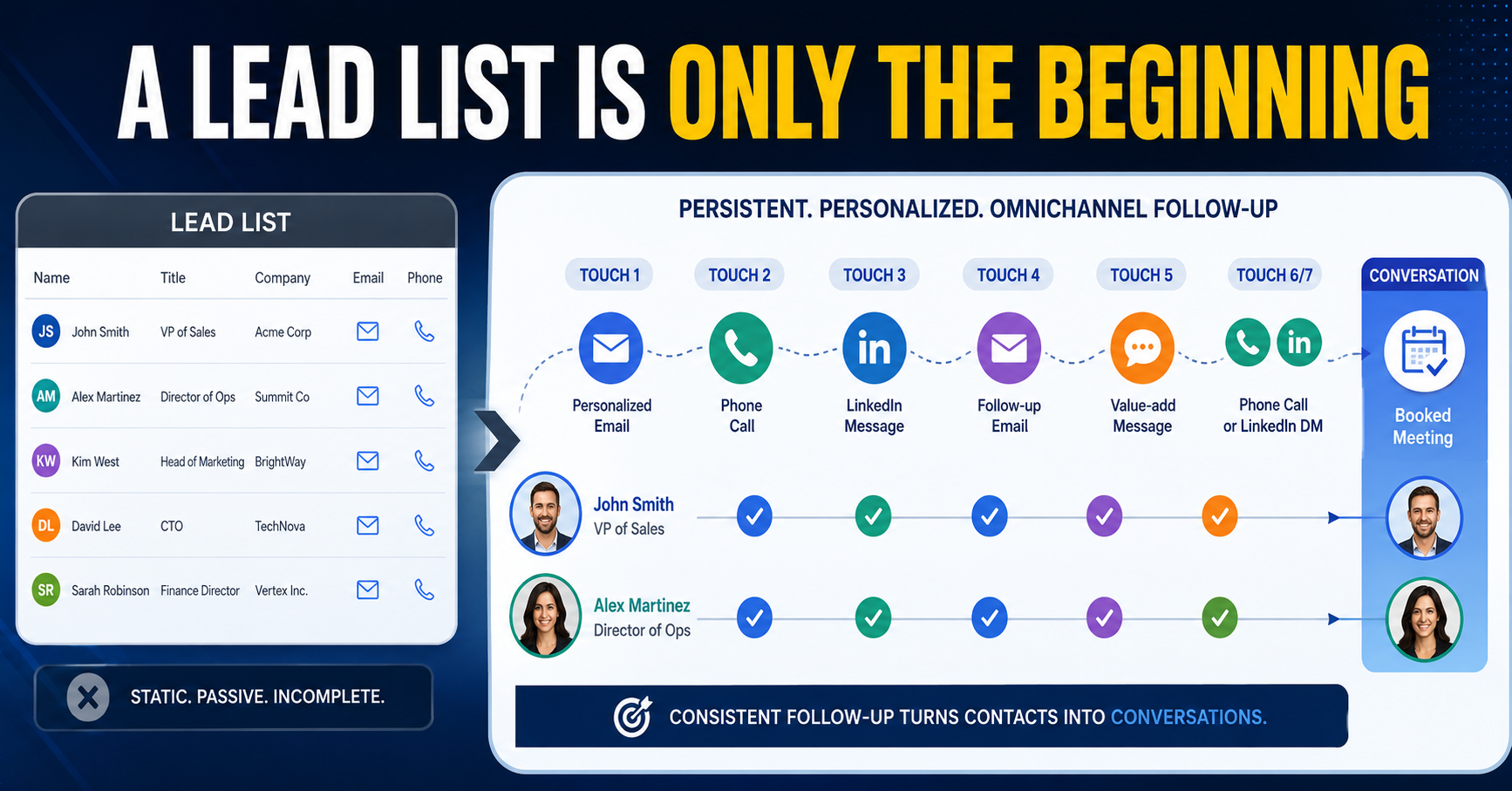
A high-touch outbound model means researching accounts properly. It means understanding the company, the decision-maker, and the reason the outreach is timely. It means building lists carefully instead of blindly trusting bulk data. It means crafting messaging that reflects the real context of the buyer. It means making sure follow-up is thoughtful rather than mechanical.
It also means using AI correctly.
At Salaria, AI is a support tool, not a replacement for judgment. It can help accelerate research. It can help organize information. It can help support preparation. But the strategy, the interpretation, and the outbound execution still need humans. That is what makes the model Human-AI rather than AI-only.
The result is fewer wasted touches, stronger conversations, and a much better chance of turning outreach into qualified pipeline.
Why Salaria Focuses on Quality Over Volume
Salaria’s model exists because the market is overloaded with spammy outbound and superficial SDR outsourcing.
Too many providers have become what we would call slop factories. They optimize for output volume, not buyer response. They promise scale, but what they often deliver is repetition, low-quality messaging, and poor representation of the client brand.
Salaria takes the opposite view.
We believe successful SDR outsourcing requires strong consulting, talented salespeople, extreme due diligence, and campaigns that are actually thought through. We do not believe more noise is the answer. We believe better outreach is the answer.
That means:
- High-touch, not high-volume
- Research-led, not spam-led
- Human-AI, not AI-only
- Pipeline quality over activity metrics
- Strategic outbound instead of automated noise
This is not a slower version of the same model. It is a better model.
Better Outreach Creates Better Pipeline
In the end, the debate between high-touch and high-volume comes down to one question: what kind of pipeline are you trying to build?
If the goal is to impress people with activity dashboards, then high-volume outreach can do that. If the goal is to create qualified opportunities with real buyers, then a high-touch model is the stronger path.
The reason is simple. Better outreach creates better conversations. Better conversations create stronger meetings. Stronger meetings create healthier pipeline.
That is the chain that matters.
Companies do not need more sales noise. They need more relevance, more thought, and more discipline in how they approach outbound. They need a model that respects both the buyer and the brand.
That is what Salaria is built around.
In a market full of automation-heavy outbound, Salaria stands for something more durable: quality over volume, research over noise, and real sales execution over activity theater.
That is how better pipeline gets built.
Replace High-Volume Noise With High-Quality Pipeline
If your team is tired of high-volume outbound that creates activity without results, Salaria can help. We build high-touch outbound programs designed around research, relevance, and real sales execution so your team can generate stronger conversations and better pipeline without damaging your brand.
Whether you need a smarter outbound strategy, better SDR execution, or a more effective Human-AI sales development model, our team is ready to help.