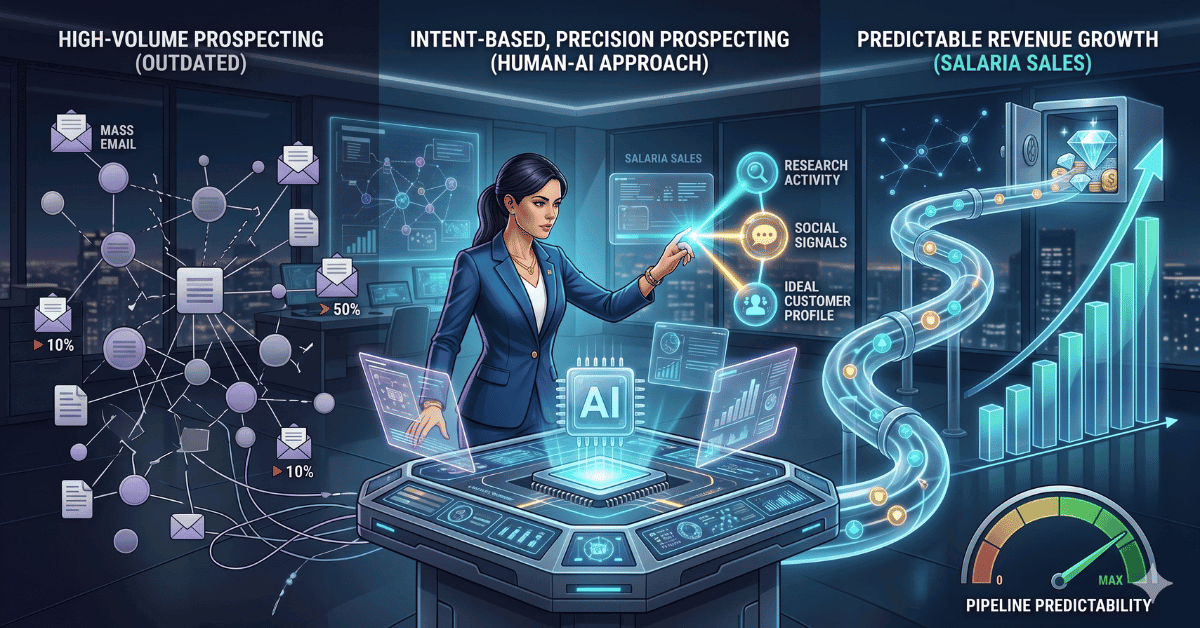
“Intent-Based Prospecting is changing outbound sales development by helping businesses focus on buyers who are ready to engage, not just names in a database. Salaria Sales combines a Human-AI sales approach with precision targeting to build predictable pipeline growth.”
Many B2B sales teams still rely on outdated prospecting methods focused on volume instead of relevance. The result is often a crowded pipeline filled with low-quality leads that fail to convert into revenue. Modern buyers are more informed, more selective, and less responsive to generic outreach than ever before. This shift has forced businesses to rethink how they approach outbound sales development and B2B lead generation. Intent-Based Prospecting has emerged as a smarter and more efficient strategy for identifying buyers who are actively researching solutions or showing interest in specific services. Instead of sending mass emails and hoping for responses, companies can now prioritize timing, buyer intent, and personalized engagement. Combined with a Human-AI sales approach, Intent-Based Prospecting enables sales teams to focus on high-value opportunities, improve conversion rates, and create predictable revenue growth. Businesses that adopt precision prospecting strategies are positioning themselves for stronger pipeline performance and long-term sales success.
What Is Intent-Based Prospecting
Intent-Based Prospecting is a modern outbound sales development strategy that focuses on identifying and engaging prospects who demonstrate buying intent. Instead of targeting broad lists of contacts, businesses use behavioral signals, research activity, and engagement data to prioritize leads that are more likely to convert.
What is Buyer Intent and Why is it Important?
Buyer intent refers to the signals and behaviors that indicate a prospect may be actively exploring solutions or or preparing to make a purchasing decision. These signals can include website visits, content downloads, search behavior, social engagement, or interactions with industry-related topics. Sales teams that understand buyer intent can engage prospects at the right time with more relevant messaging, increasing the likelihood of meaningful conversations and qualified opportunities, and reducing wasted outreach efforts on prospects who are unlikely to convert.
2. How Intent-Based Prospecting Differs from Traditional Prospecting
Traditional prospecting often focuses on sending high volumes of emails or calls to large contact lists without considering buyer readiness. This “spray and pray” approach may create activity, but it rarely produces strong conversion rates. Intent-Based Prospecting shifts the focus toward precision and timing. Instead of targeting everyone, businesses prioritize prospects who show genuine interest or fit their Ideal Customer Profile. This targeted strategy improves efficiency and allows SDR teams to spend more time on opportunities that matter most.
3. Why Intent Matters in Outbound Sales Development
Outbound sales development has become increasingly competitive as buyers receive more sales messages every day. Generic outreach no longer captures attention the way it once did. Intent-Based Prospecting helps businesses stand out by making conversations more relevant and personalized. Prospects are more likely to engage when outreach aligns with their current needs and interests. Companies that integrate intent data into their sales development strategy often see stronger response rates, better meeting quality, and shorter sales cycles.
Why Precision Prospecting Creates Predictable Revenue Growth
Predictable revenue growth is built on consistency, efficiency, and quality pipeline generation. Precision prospecting enables businesses to create repeatable processes that drive stronger sales outcomes.
How Does Precision Prospecting Improve Pipeline Quality?
A high-performing pipeline is not defined by the number of leads but by the quality of opportunities moving through the funnel. Intent-Based Prospecting improves pipeline quality by targeting prospects who are more likely to engage and convert. This reduces wasted time on unqualified leads and allows sales teams to focus on revenue-generating opportunities. Companies with high-quality pipelines typically experience stronger conversion rates and more accurate sales forecasting. Better targeting also leads to more productive sales conversations.
How Does Precision Prospecting Lead to Higher Conversion Rates?
When outreach is aligned with buyer intent, conversion rates naturally improve. Prospects who are actively researching solutions are more receptive to conversations and more willing to explore potential partnerships. Personalized messaging based on intent signals creates a stronger connection with buyers. This increases trust and improves the effectiveness of outbound sales development efforts. Higher conversion rates also reduce customer acquisition costs over time.
How Does Precision Prospecting Create More Efficient SDR Teams?
Intent-Based Prospecting allows SDR teams to work smarter instead of harder. Rather than spending hours contacting cold and unqualified leads, SDRs can prioritize accounts with higher buying potential. This improves productivity and enables sales teams to focus on strategic engagement. SDR outsourcing providers that use precision prospecting strategies often achieve better performance because their efforts are aligned with buyer readiness. Efficient SDR teams contribute directly to predictable revenue growth.
How Does Precision Prospecting Lead to Stronger Sales Forecasting?
Sales forecasting becomes more reliable when the pipeline is built on qualified opportunities instead of inflated lead volume. Intent-Based Prospecting creates greater visibility into buyer behavior and engagement trends. This allows leadership teams to make better decisions based on accurate data. Companies that rely on quality-driven prospecting strategies are better equipped to predict future revenue outcomes. Strong forecasting also improves resource planning and overall sales performance.
What Are the Key Components of a Successful Intent-Based Prospecting Strategy?
Building a successful Intent-Based Prospecting strategy requires a combination of technology, research, and human expertise.
Why is Defining a Clear Ideal Customer Profile Essential for Precision Prospecting?
A well-defined Ideal Customer Profile is the foundation of precision prospecting. Businesses need to identify the industries, company sizes, job titles, and challenges that align with their solutions. This ensures that prospecting efforts are focused on the right audience. A strong ICP reduces wasted outreach and improves engagement quality. Companies that regularly refine their ICP based on market data and performance insights achieve better results over time.
How Can Businesses Use Data and Intent Signals Strategically?
Intent data provides valuable insights into prospect behavior and buying readiness. Businesses can use website activity, content engagement, search trends, and social interactions to identify high-potential leads. However, data alone is not enough. Successful sales teams know how to interpret intent signals and prioritize opportunities effectively. Combining data analysis with strategic outreach improves prospecting precision and pipeline performance.
Why Should Businesses Combine AI with Human Expertise in Prospecting?
The Human-AI sales approach combines technology-driven insights with authentic human engagement. AI tools help identify patterns, automate research, and prioritize leads at scale. Human SDRs bring emotional intelligence, personalization, and relationship-building skills to the conversation. This balance ensures outreach remains efficient while still feeling relevant and personal. Businesses that combine AI with human expertise create more meaningful buyer experiences.
Why is Multi-Channel Outreach Important for Intent-Based Prospecting?
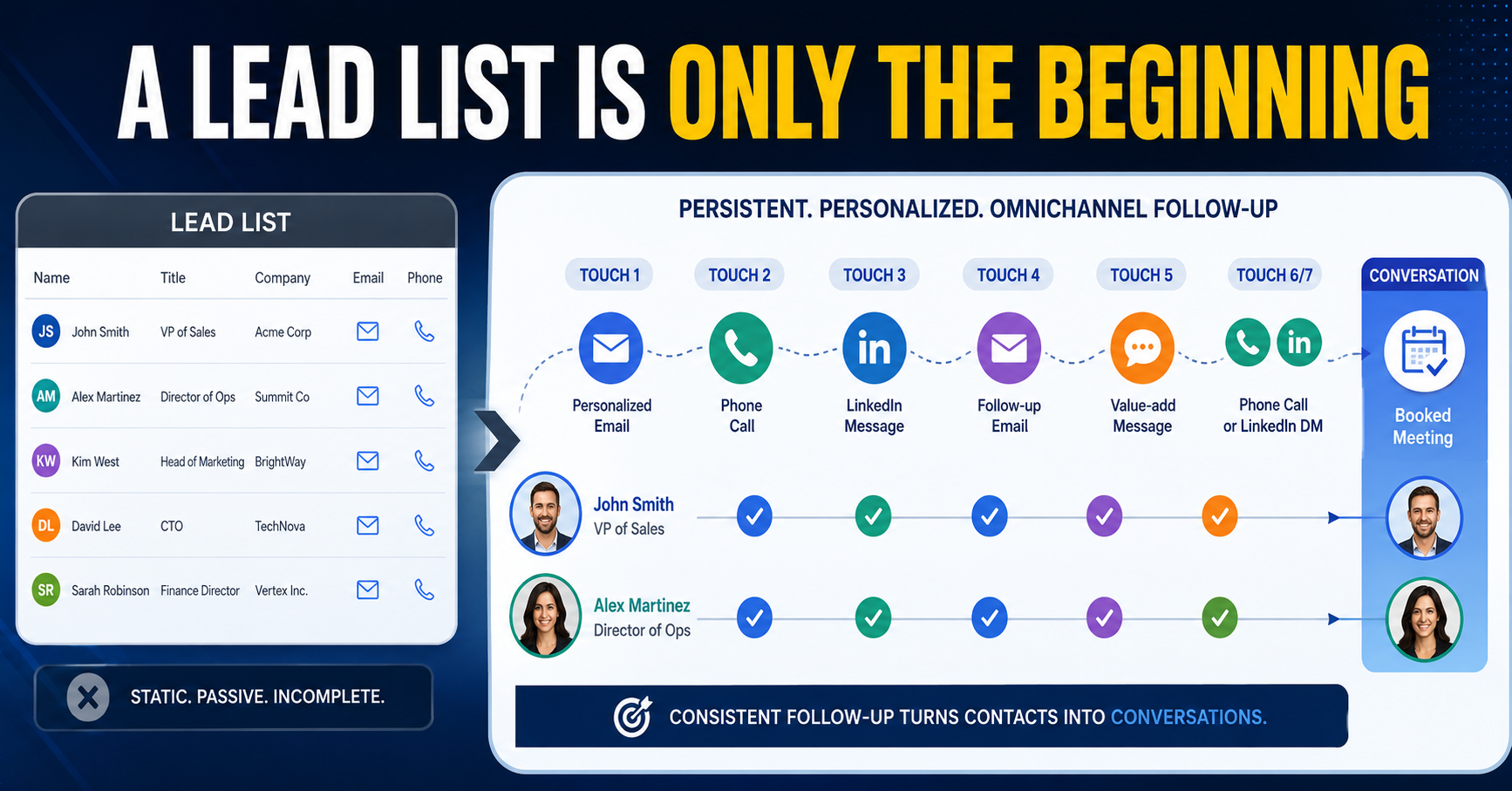
Modern buyers interact across multiple communication channels before making decisions. Successful Intent-Based Prospecting strategies include email, LinkedIn, phone calls, and personalized follow-ups. Multi-channel outreach increases visibility and creates multiple opportunities for engagement. Consistent messaging across channels builds familiarity and trust. Businesses that use a multi-channel outbound sales development strategy often achieve stronger pipeline performance.
What Are Common Mistakes That Hurt Precision Prospecting?
Common mistakes that hurt precision prospecting include relying too heavily on automation, ignoring buyer timing, focusing only on lead volume, and failing to personalize outreach. Even companies investing in modern prospecting strategies can make these mistakes that reduce effectiveness.
Why is Relying Too Heavily on Automation a Mistake in Prospecting?
Automation helps scale outreach, but excessive automation can make communication feel impersonal. Buyers can quickly recognize generic templates and mass messaging tactics. Over-automation often leads to lower engagement and reduced trust. The best prospecting strategies use automation to improve efficiency while keeping human personalization at the center of outreach efforts. A balanced Human-AI sales approach is essential.
Why is Ignoring Buyer Timing a Mistake in Prospecting?
Timing plays a major role in prospecting success. Reaching out too early or too late can reduce engagement opportunities. Intent-Based Prospecting helps identify when buyers are actively researching or evaluating solutions. Businesses that align outreach with buyer timing create more productive conversations. Understanding timing improves both response rates and conversion rates.
Why is Focusing Only on Lead Volume a Mistake in Prospecting?
Many sales teams still measure success based on activity metrics rather than actual outcomes. Large lead lists and high email volumes may look impressive but often fail to generate meaningful revenue. Precision prospecting focuses on quality opportunities instead of vanity metrics. Companies that prioritize relevance and buyer fit consistently outperform those focused only on volume.
Why is Failing to Personalize Outreach a Mistake in Prospecting?
Personalization is essential in modern outbound sales development. Buyers expect relevant messaging that addresses their industry, challenges, and goals. Generic outreach damages credibility and reduces engagement. Intent-Based Prospecting provides the insights needed to personalize communication effectively. Personalized outreach improves response rates and strengthens buyer relationships.
What Services Does Salaria Sales Provide?
Salaria Sales helps businesses implement Intent-Based Prospecting strategies that improve pipeline quality and drive predictable revenue growth. As a Full-Service B2B Sales & SDR Outsourcing Agency, Salaria Sales combines outbound sales development, SDR outsourcing, appointment setting, and B2B lead generation into a strategic growth engine. The team uses a Human-AI sales approach to identify high-intent prospects, analyze buyer signals, and deliver personalized outreach across email, phone, and LinkedIn. Instead of relying on outdated high-volume tactics, Salaria Sales focuses on precision targeting and meaningful engagement. This approach helps businesses generate better meetings, improve conversion rates, and create stronger sales pipelines. Salaria Sales also provides continuous optimization, reporting, and strategic guidance to ensure campaigns remain aligned with business goals. With experienced SDR professionals and a focus on quality over quantity, businesses can scale outbound efforts without sacrificing personalization. The result is a more predictable and sustainable approach to revenue growth that aligns with modern buyer expectations.
If you want to improve your Intent-Based Prospecting strategy and build a predictable sales pipeline, book a meeting with the Salaria Sales team here: https://salariasales.com/book/
What is the Conclusion on Intent-Based Prospecting and Revenue Growth?
Intent-Based Prospecting is reshaping how businesses approach outbound sales development and B2B lead generation. Modern buyers expect personalized, relevant, and timely communication, making precision prospecting more important than ever. Companies that continue relying on high-volume outreach strategies often struggle with poor conversion rates and inefficient pipelines. By focusing on buyer intent, businesses can prioritize the right opportunities, improve engagement quality, and create predictable revenue growth. Combining intent data with a Human-AI sales approach allows SDR teams to scale outreach while maintaining personalization and authenticity. Precision prospecting also improves forecasting, pipeline quality, and overall sales performance. As competition increases in the B2B sales landscape, companies that adopt Intent-Based Prospecting strategies will gain a significant advantage. Sustainable growth is no longer about reaching the most people. It is about reaching the right people at the right time with the right message.
Frequently Asked Questions (FAQs)
1. What is Intent-Based Prospecting?
Intent-Based Prospecting is a sales strategy that uses buyer intent signals and behavioral data to identify prospects who are actively researching or considering solutions related to your services.
2. Why is Intent-Based Prospecting important in outbound sales development?
Intent-Based Prospecting improves targeting accuracy, engagement rates, and conversion rates by focusing outreach on prospects who are more likely to buy.
3. How does Intent-Based Prospecting improve pipeline quality?
It helps businesses prioritize qualified opportunities that match their Ideal Customer Profile and demonstrate buying intent, leading to stronger conversion rates and more efficient pipelines.
4. What is a Human-AI sales approach?
A Human-AI sales approach combines AI-driven data analysis and automation with human personalization and relationship-building to improve sales performance and buyer engagement.
5. How does SDR outsourcing support Intent-Based Prospecting?
SDR outsourcing provides experienced sales development professionals who can identify high-intent prospects, qualify opportunities, and execute personalized outreach strategies efficiently.
6. What are common mistakes in modern prospecting strategies?
Common mistakes include relying too heavily on automation, focusing only on lead volume, ignoring buyer intent, and failing to personalize outreach efforts.
7. How can businesses improve outbound sales development results?
Businesses can improve results by refining their Ideal Customer Profile, using intent data strategically, adopting multi-channel outreach, and combining AI insights with human expertise.
8. Why is personalization important in B2B lead generation?
Personalization helps create relevant conversations that align with buyer needs, increasing trust, engagement, and the likelihood of conversion.