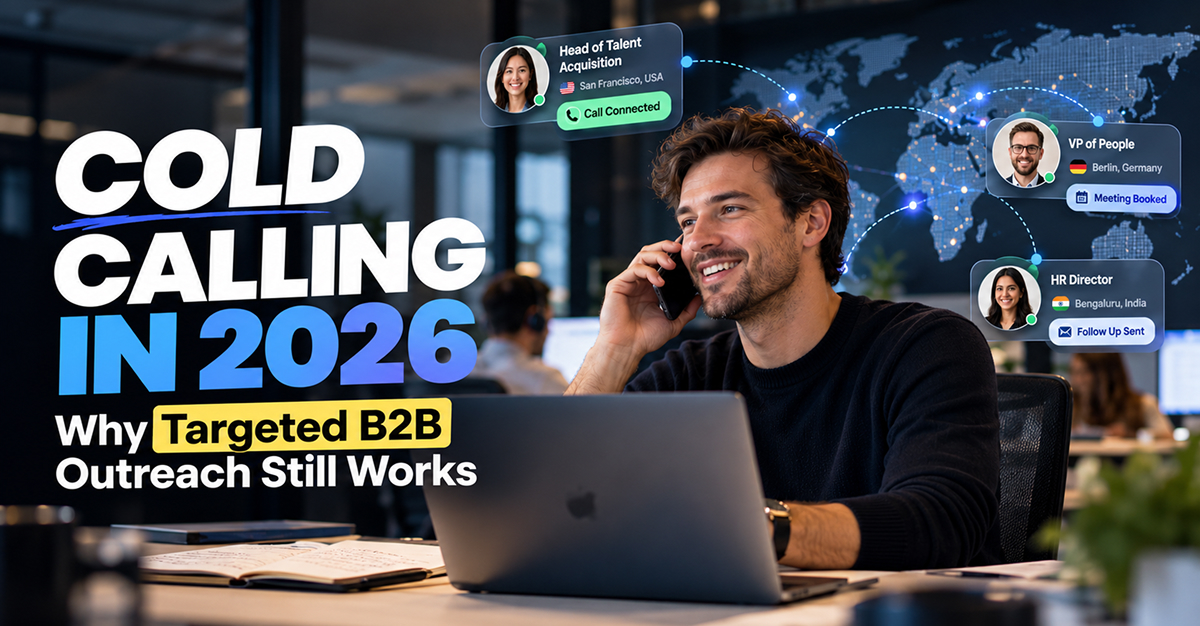
Cold calling in 2026 faces call blockers, spam labels and prospects who are selective about answering unfamiliar numbers. These challenges have encouraged the claim that cold calling is dead. But that claim treats every approach to calling as the same. Aimless, indiscriminate calling is outdated. Strategic, professional B2B calling still has a purpose.
People continue to use their phones, receive calls and notice who is trying to reach them. At Salaria Sales, our position is that the phone remains useful when the caller has a relevant reason for making contact. The approach matters: whom you call, how you introduce yourself and how the call connects with your other outreach.
1. Targeted Calling Starts with a Reason to Make Contact
Working through a list without considering who is on it gives the recipient little reason to listen. The caller may generate activity, but the conversation starts without a clear business purpose. More dialling does not correct that problem.
Professional B2B cold calling requires a more deliberate approach. Before making contact, the caller should be able to answer three questions:
- Who are we calling? Understand the person and business being approached.
- Why are we calling them? Establish a relevant reason for contact.
- How will we explain that reason? Prepare a clear, professional introduction.
This is the difference between aimless calling and targeted outreach. The phone is a way to begin a business conversation, and the caller needs to give that conversation a purpose.
2. People Still Notice Their Calls
People may answer fewer unfamiliar calls, but they still have their phones. They see calls arrive, receive voicemails and choose which messages deserve attention. Selective answering does not mean the channel has disappeared.
A missed call can still contribute to outreach when it is followed by a relevant message. The prospect may listen to a voicemail, read its transcription or recognize the company from an earlier email. None of those responses is guaranteed, but each provides a possible route into a conversation.
The practical question is how to make the contact relevant enough to notice. That requires more thought than simply placing another call.
3. AI SDR Calling Raises Questions About Results and Consent
The businesses that have approached Salaria after trying AI SDRs have described negative experiences. That feedback gives us reason to question promises that automated calling will handle outbound sales effectively. A tool’s ability to place calls does not establish that the conversations will go well.
There is also a distinction between calling a lead who has provided the required consent and using an AI voice agent for unsolicited outreach. In the United States, the FCC treats AI-generated voices as artificial voices under the TCPA. These calls are subject to applicable restrictions and consent requirements; an AI calling tool does not provide unrestricted permission to contact prospects.
The experience created by the call matters too. An irrelevant or poorly handled automated conversation can damage how a prospect views the company. Businesses need to consider the recipient’s experience alongside the technology’s capabilities.
4. Keep Calls Short and Explain the Purpose Early
A cold call gives the caller a limited opportunity to earn attention. Spending that time on an extended warm-up or casual questions can delay the information the prospect needs most: why you are calling.
The transcript’s direction is clear: be shorter and get to the point. A focused opening should:
- Identify the caller and company.
- State the reason for reaching out.
- Give the prospect room to respond.
Being direct can still be courteous. The aim is to explain the purpose without making the recipient sit through unnecessary small talk. Preparation helps the caller communicate clearly and use the conversation well.
5. Use Calling to Support Other Outreach
Cold calling can serve as an attention-building tool within a broader outreach approach. It does not need to close the sale or produce a meeting on its own to contribute.
For example, a prospect might receive an email, miss a subsequent call and then notice the voicemail. That message could prompt them to return to the email and respond there. The call has helped bring attention to the outreach, even though the conversation continues through another channel.
This gives voicemail a useful role. A concise, relevant message can connect the call with earlier contact and make the purpose easier to recognize. The caller should think about that connection rather than treat every call as an isolated attempt to secure a meeting.
6. Call Screening Can Give Human Callers an Opportunity
Some screening systems ask callers to identify themselves or explain why they are calling. The recipient may then hear or read that explanation before deciding whether to answer. When that opportunity exists, a professional human caller can demonstrate relevance.
This is why screening can sometimes help thoughtful outreach stand out. A prepared caller has something useful to say and can explain the business purpose directly. The screening step becomes another opportunity to communicate clearly.
Blocking and screening systems vary, and some prevent the call from progressing altogether. The useful principle is to be ready with a concise explanation whenever the system allows one.
A Focused Role for Cold Calling in 2026
Targeted prospect selection, direct conversations and coordinated follow-up give cold calling a practical role in B2B outreach. Human callers remain responsible for establishing relevance and handling the interaction professionally.
Salaria Sales uses calling as part of a broader approach to creating relevant business conversations. Contact Salaria Sales to discuss how targeted cold calling can support your B2B lead generation efforts.