Building a High-Performance SDR Team is no longer about maximizing activity. The best teams combine strategy, personalization, and a Human-AI sales approach to create better conversations and book higher-quality meetings.
Many businesses assume that increasing outbound activity automatically leads to better sales results. In reality, high-performing SDR teams focus less on volume and more on precision, personalization, and consistency. Modern buyers are overwhelmed with generic sales outreach, making it harder than ever for businesses to secure meaningful conversations. This is why Building a High-Performance SDR Team has become a critical priority for companies focused on predictable revenue growth. Successful SDR teams understand buyer intent, prioritize quality over quantity, and use technology strategically without losing the human element of sales. They combine outbound sales development best practices with a Human-AI sales approach to improve targeting, messaging, and engagement. Instead of simply filling calendars, they focus on booking meetings that have real conversion potential. Businesses that invest in building stronger SDR teams often experience better pipeline quality, higher conversion rates, and more efficient sales performance. In this article, we explore what separates high-performing SDR teams from average outbound sales organizations.
What Is a High-Performance SDR Team
A high-performance SDR team is a sales development organization that consistently generates qualified opportunities, creates meaningful buyer engagement, and contributes directly to revenue growth. These teams focus on strategic prospecting, personalization, and long-term pipeline quality.
1. The Role of SDR Teams in Outbound Sales Development
Sales Development Representatives play a critical role in the early stages of the sales funnel. Their primary responsibility is to identify prospects, engage decision-makers, qualify opportunities, and schedule meetings for account executives. SDR teams act as the foundation of outbound sales development by ensuring that sales pipelines remain active and targeted. Effective SDR teams improve productivity across the entire sales organization. Businesses with strong SDR processes often achieve more predictable revenue growth.
2. Why SDR Performance Impacts Revenue Growth
The quality of SDR outreach directly impacts pipeline quality and conversion rates. Poor prospecting and generic messaging create low-quality meetings that rarely convert into revenue. High-performing SDR teams focus on engaging prospects who fit the Ideal Customer Profile and demonstrate buying intent. This improves efficiency and reduces wasted time for sales teams. Companies with stronger SDR performance typically experience shorter sales cycles and better forecasting accuracy.
3. How Buyer Expectations Have Changed
Modern buyers expect personalized communication and relevant engagement from the first interaction. Generic cold emails and mass outreach strategies are becoming less effective every year. Buyers now research solutions independently and often engage with multiple channels before responding to sales outreach. SDR teams must adapt by using smarter targeting, personalization, and intent-based prospecting. Businesses that understand these changes are more likely to secure meaningful conversations and higher-quality meetings.
What High-Performing SDR Teams Do Differently
The most successful SDR teams follow structured strategies that prioritize quality, consistency, and buyer relevance.
1. They Prioritize Quality Over Activity Metrics
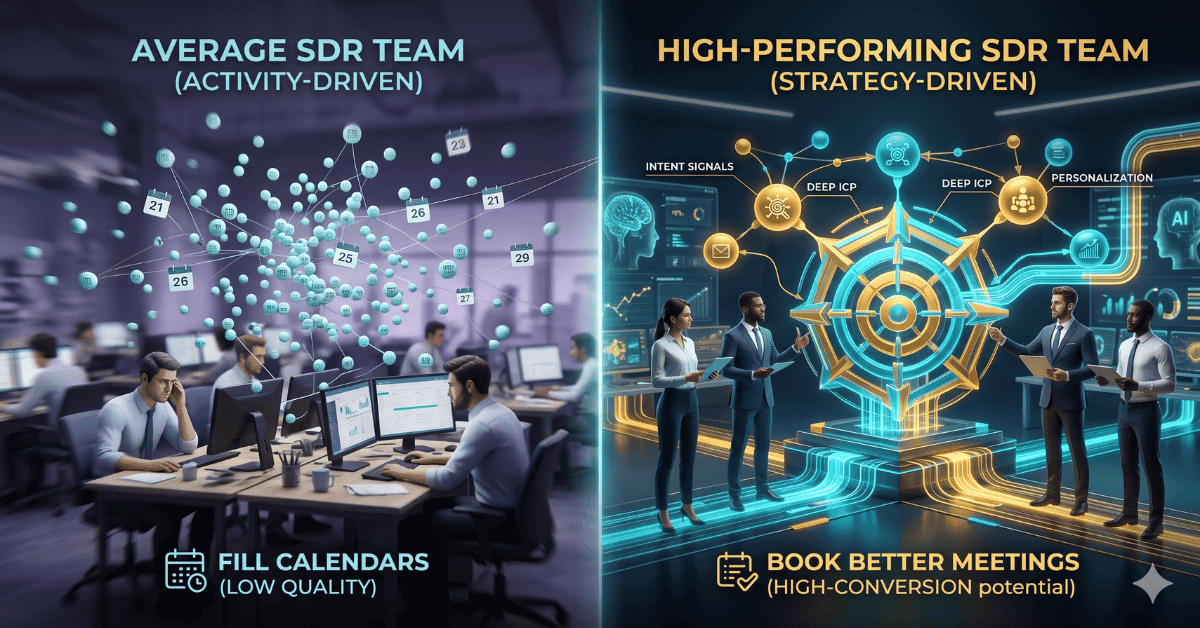
Many sales organizations focus heavily on vanity metrics such as email volume, dial counts, or total meetings booked. High-performing SDR teams take a different approach by focusing on meeting quality and conversion potential. They understand that a smaller number of highly qualified meetings often produces better results than a calendar filled with unqualified prospects. This mindset improves pipeline efficiency and helps account executives focus on real opportunities. Businesses that prioritize quality over quantity often achieve stronger revenue outcomes.
2. They Build Deep Ideal Customer Profiles
Strong SDR teams spend time understanding their Ideal Customer Profile in detail. They identify specific industries, company sizes, buyer roles, pain points, and growth indicators that align with their solutions. This allows them to target prospects more effectively and personalize outreach with greater relevance. A detailed ICP also reduces wasted effort on poor-fit prospects. Companies that continuously refine their ICP typically improve engagement and conversion rates over time.
3. They Use Intent-Based Prospecting
Intent-Based Prospecting has become a major advantage for high-performing SDR teams. Instead of contacting random leads, they prioritize prospects showing buying signals such as website visits, content engagement, or active research behavior. This improves outreach timing and increases the chances of securing meaningful conversations. SDR teams that align messaging with buyer intent create stronger engagement and better response rates. Precision prospecting also improves overall pipeline quality.
4. They Personalize Every Interaction
Personalization is one of the biggest differences between average SDR teams and high-performing ones. Successful SDRs tailor messaging to each prospect’s industry, business challenges, and goals. Personalized communication makes outreach feel more relevant and authentic. Buyers are more likely to respond when they feel understood rather than targeted by mass messaging campaigns. Consistent personalization helps build trust and improves conversion rates throughout the sales funnel.
The Role of the Human-AI Sales Approach in SDR Success
Modern SDR teams rely on a balance of automation, data, and human interaction to scale effectively without sacrificing personalization.
1. AI Improves Efficiency and Targeting
AI technology helps SDR teams identify high-potential prospects, analyze engagement patterns, and prioritize outreach efforts. It can automate repetitive tasks such as research, lead scoring, and data organization. This allows SDRs to focus more time on conversations and relationship building. AI also improves campaign optimization by identifying what messaging and channels perform best. Businesses using AI strategically often improve SDR productivity and outbound sales performance.
2. Human Expertise Creates Meaningful Conversations
While AI improves operational efficiency, human interaction remains essential for successful appointment setting and buyer engagement. Skilled SDRs understand tone, emotion, and conversational nuance in ways automation cannot replicate. Human engagement builds trust and creates more natural sales conversations. Buyers still prefer speaking with knowledgeable professionals who understand their challenges and goals. High-performing SDR teams combine technology with authentic human communication to create stronger relationships.
3. Better Decision-Making Through Data
AI-powered analytics provide SDR teams with valuable insights into campaign performance, buyer behavior, and conversion trends. High-performing teams use this data to refine outreach strategies and improve targeting accuracy. Data-driven decision-making helps SDR managers identify opportunities for optimization and coaching. Teams that regularly analyze performance metrics can adapt faster to changing market conditions. Continuous improvement is a key characteristic of successful SDR organizations.
4. Scalable Personalization
The Human-AI sales approach allows SDR teams to personalize outreach at scale. AI tools can gather prospect insights and identify intent signals, while SDRs use those insights to create relevant messaging. This combination improves efficiency without sacrificing authenticity. Personalized outreach creates stronger engagement and improves response rates. Businesses that successfully scale personalization gain a significant advantage in competitive B2B markets.
Common Mistakes That Prevent SDR Teams from Performing
Many businesses struggle with SDR performance because they rely on outdated strategies or focus on the wrong metrics.
1. Focusing Only on Volume
One of the most common mistakes is measuring SDR success based only on activity levels. High email volumes and large call counts do not automatically produce better results. SDR teams that focus purely on volume often generate low-quality meetings and weak pipelines. This creates frustration for account executives and reduces conversion rates. Successful SDR organizations focus on quality conversations and qualified opportunities instead.
2. Poor Training and Coaching
SDR teams require continuous training and development to remain effective. Businesses that neglect coaching often experience inconsistent messaging and weak prospect engagement. High-performing SDR teams regularly review calls, optimize messaging, and improve objection handling skills. Continuous coaching creates stronger communication and better appointment-setting performance. Investing in SDR development leads to long-term sales success.
3. Over-Automating Outreach
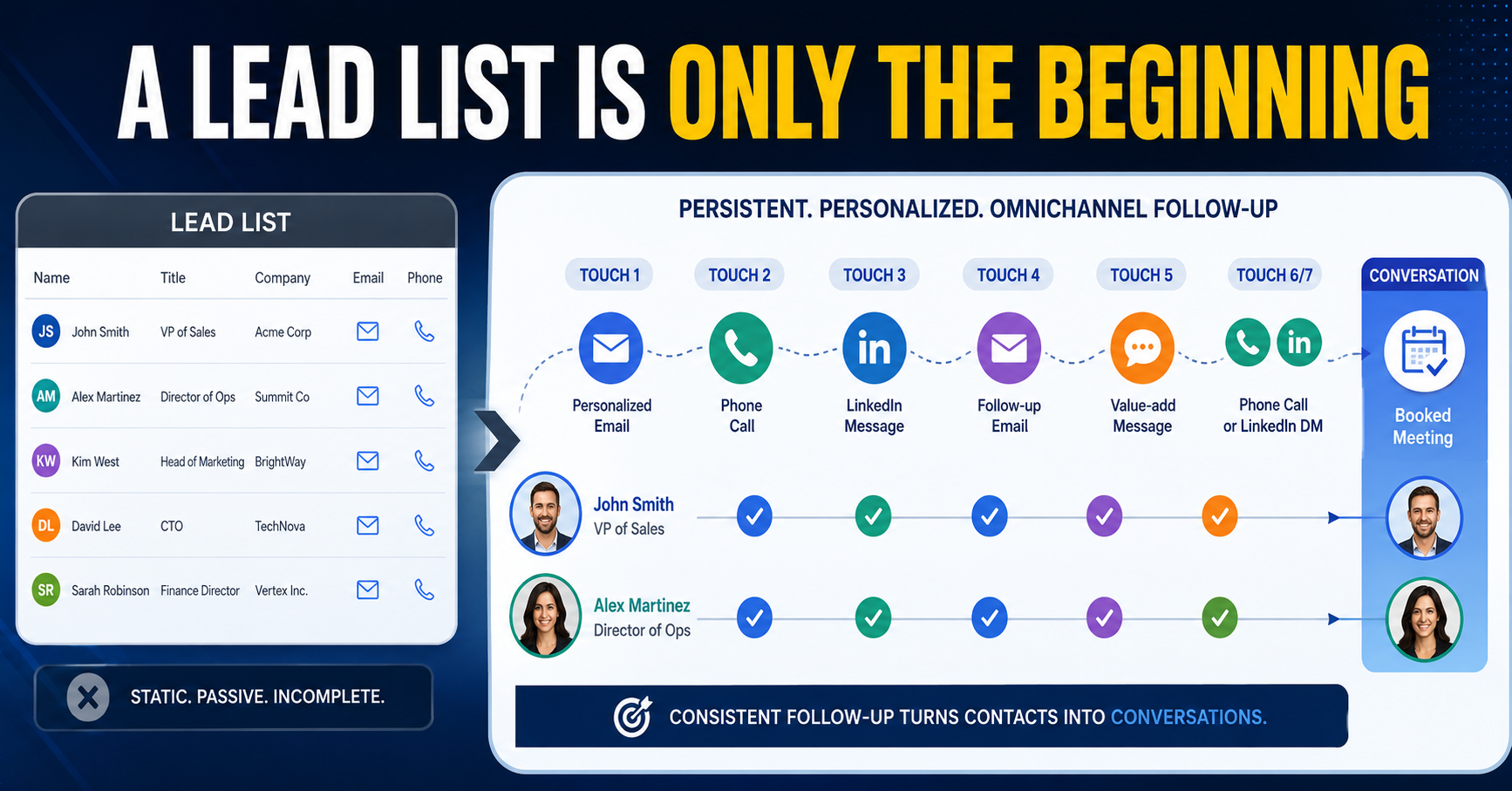
Automation tools are useful for scaling outbound efforts, but excessive automation reduces authenticity. Buyers can easily recognize generic templates and automated messaging. Over-automation often leads to lower response rates and reduced trust. Successful SDR teams use automation strategically while maintaining personalized human engagement. A balanced Human-AI sales approach creates better buyer experiences.
4. Ignoring Meeting Quality
Not every booked meeting contributes equally to pipeline growth. SDR teams that focus only on meeting quantity often create pipelines filled with unqualified opportunities. High-performing teams prioritize conversations with decision-makers who fit the Ideal Customer Profile and show genuine interest. Better qualification leads to stronger sales outcomes and improved close rates. Meeting quality should always be a priority.
Services Provided by Salaria Sales
Salaria Sales helps businesses succeed in Building a High-Performance SDR Team through a combination of SDR outsourcing, outbound sales development, and strategic B2B lead generation. As a Full-Service B2B Sales & SDR Outsourcing Agency, Salaria Sales focuses on helping businesses improve pipeline quality and book better meetings through personalized outreach and precision prospecting. The team uses a Human-AI sales approach to combine data-driven targeting with authentic human conversations across email, LinkedIn, and cold calling. Salaria Sales provides experienced SDR professionals who are trained to identify buyer intent, qualify opportunities effectively, and create meaningful engagement with decision-makers. Businesses also benefit from campaign optimization, analytics reporting, and strategic sales guidance designed to improve conversion rates and pipeline consistency. Instead of relying on outdated high-volume outreach tactics, Salaria Sales prioritizes quality conversations and scalable personalization. This modern outbound sales development strategy helps businesses generate stronger opportunities, shorten sales cycles, and build predictable revenue growth through high-performing SDR execution.
If you want to improve your outbound sales development strategy and build a high-performing SDR team that consistently books better meetings, book a meeting with the Salaria Sales team.
Conclusion
Building a High-Performance SDR Team requires more than simply increasing outreach activity. The best SDR teams focus on personalization, buyer intent, strategic prospecting, and meaningful engagement. Modern buyers expect relevant conversations and authentic interactions throughout the sales process. Businesses that continue relying on generic high-volume outreach strategies often struggle with poor conversion rates and low-quality pipelines. High-performing SDR organizations use a Human-AI sales approach to combine operational efficiency with authentic human communication. This creates stronger buyer relationships, better meetings, and more predictable revenue growth. Companies that invest in training, personalization, and data-driven optimization position themselves for long-term outbound sales success. SDR teams are no longer just appointment setters. They are strategic contributors to pipeline growth and business performance. Organizations that prioritize quality over quantity will continue to outperform competitors in today’s evolving B2B sales environment.
Frequently Asked Questions (FAQs)
1. What does Building a High-Performance SDR Team mean?
Building a High-Performance SDR Team involves creating a sales development organization focused on qualified prospecting, personalized outreach, and consistent pipeline generation.
2. Why are SDR teams important in outbound sales development?
SDR teams help businesses identify prospects, qualify opportunities, and schedule meetings that contribute directly to pipeline growth and revenue generation.
3. What makes high-performing SDR teams different?
High-performing SDR teams prioritize quality over volume, personalize outreach, use intent-based prospecting, and continuously optimize their sales development strategy.
4. What is a Human-AI sales approach?
A Human-AI sales approach combines AI-driven insights and automation with human communication and relationship-building to improve sales engagement and conversion rates.
5. How does AI improve SDR performance?
AI improves SDR performance by identifying buying signals, analyzing engagement trends, prioritizing leads, and automating repetitive prospecting tasks.
6. Why is personalization important in B2B lead generation?
Personalized outreach creates more relevant conversations, improves buyer engagement, and increases the likelihood of booking qualified meetings.
7. How does SDR outsourcing help businesses scale?
SDR outsourcing provides experienced sales professionals, scalable outbound sales development support, and structured prospecting processes without the need for internal hiring.
8. What metrics should SDR teams focus on?
SDR teams should focus on meeting quality, conversion rates, pipeline contribution, engagement levels, and qualified opportunities instead of just activity metrics.