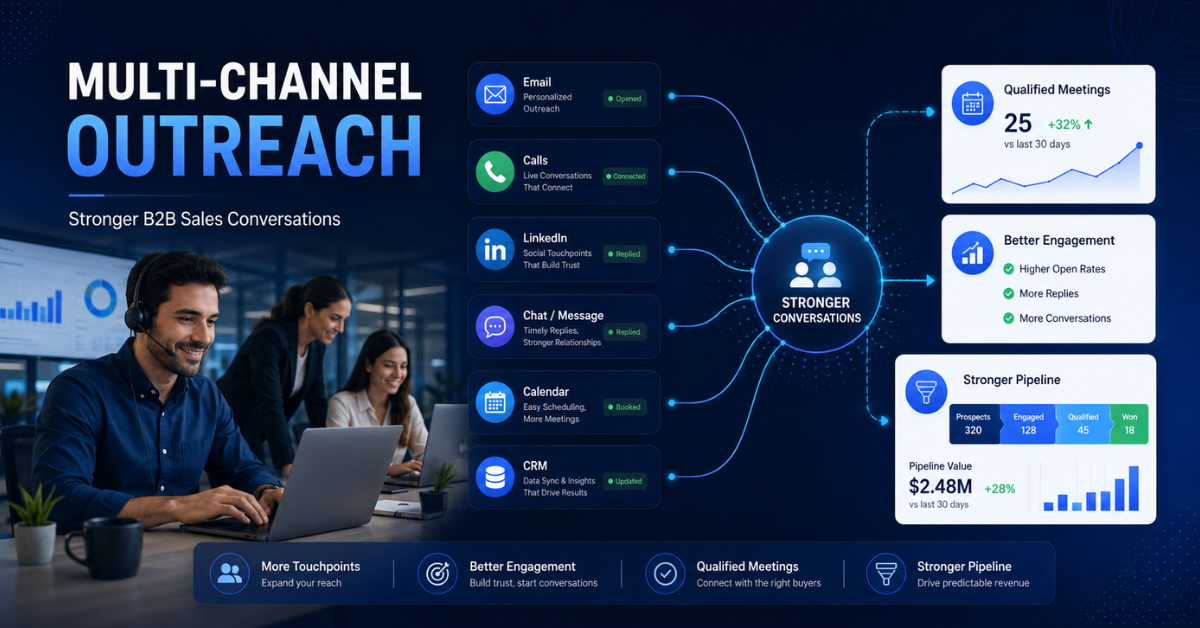
Multi-Channel Outreach helps B2B teams stop depending on one message, one channel, or one lucky reply. Salaria Sales helps businesses combine phone, email, LinkedIn, and Human-AI precision to create stronger sales conversations.
Modern B2B buyers are harder to reach because they are busier, more selective, and exposed to more sales outreach than ever before. A single email, call, or LinkedIn message is rarely enough to create a meaningful conversation. This is why Multi-Channel Outreach has become essential in outbound sales development. It allows sales teams to build familiarity, create context, and engage buyers through the channels they actually use. The goal is not to overwhelm prospects with more messages. The goal is to create relevant touchpoints that work together and move the buyer toward a useful conversation. Strong Multi-Channel Outreach supports B2B lead generation by improving visibility, timing, personalization, and trust. When combined with SDR outsourcing and a Human-AI Sales Approach, it helps businesses target better accounts, qualify prospects more effectively, and create stronger pipeline outcomes. In this article, we explain why multi-channel engagement creates better B2B sales conversations and how sales teams can use it strategically.
What Is Multi-Channel Outreach
Multi-Channel Outreach is an outbound sales development strategy that uses multiple communication channels to engage prospects in a coordinated, personalized, and value-driven way. These channels often include email, cold calling, LinkedIn, voicemail, content sharing, and structured follow-up.
1. Multi-Channel Outreach Connects Multiple Buyer Touchpoints
Multi-Channel Outreach is not about randomly contacting prospects everywhere. It is about creating a coordinated sequence where each touchpoint supports the next one. An email may introduce the problem, a LinkedIn interaction may build familiarity, and a phone call may start the live conversation. When these channels work together, the buyer experience feels more natural and intentional. This creates stronger engagement than relying on one disconnected message.
2. It Helps Buyers Recognize Your Message
B2B buyers often need to see a message more than once before they respond. A single email may be missed, a call may go unanswered, and a LinkedIn message may be ignored. Multi-Channel Outreach increases the chances that prospects recognize your company, your message, and your reason for reaching out. Recognition matters because buyers are more likely to engage with outreach that feels familiar and credible. This familiarity helps turn cold outreach into a warmer conversation.
3. It Supports Different Buyer Preferences
Not every buyer prefers the same communication channel. Some decision-makers respond quickly to email, while others are more reachable by phone or LinkedIn. Multi-Channel Outreach gives prospects more ways to engage based on their preferred communication style. This is especially important in complex B2B sales where multiple stakeholders may respond differently. A flexible outreach strategy helps SDR teams reach more of the right people without depending on one channel alone.
4. It Creates a Better Buyer Journey
A strong outreach process should guide buyers from awareness to interest and then toward sales readiness. Multi-Channel Outreach supports this journey by using each touchpoint to add value, build context, or create a reason for the next step. The buyer does not feel like they are receiving the same message repeatedly. Instead, they receive a sequence of useful interactions that help them understand why the conversation matters. This improves both engagement quality and pipeline quality.
Why Single-Channel Outreach Is No Longer Enough
Single-channel outreach limits visibility and reduces the chance of creating meaningful engagement. Modern B2B buyers often need multiple relevant touchpoints before they are ready to respond.
Why Can Email Alone Get Lost in B2B Outreach?
Email is still valuable, but inboxes are crowded. Even well-written emails can be missed because buyers receive a high volume of messages every day. If email is the only channel, the campaign depends entirely on inbox visibility, subject lines, and timing. This creates unnecessary risk for outbound sales development. Multi-Channel Outreach strengthens email by supporting it with calls, LinkedIn activity, and follow-up.
Why Can Cold Calling Alone Feel Abrupt?
Cold calling works best when the prospect has some context before the call. A buyer who has already seen a relevant email or LinkedIn touchpoint may be more open to a phone conversation. Without that context, the call can feel unexpected or disconnected. Multi-Channel Outreach helps make cold calling feel more intentional. This improves the quality of the first conversation and gives the SDR a stronger reason for calling.
Why Can LinkedIn Alone Be Too Passive for Outreach?
LinkedIn is useful for research, visibility, and relationship-building, but it does not always create urgency. Many prospects scroll through LinkedIn casually and may not respond to messages quickly. If LinkedIn is used alone, outreach can become slow and uncertain. Combining LinkedIn with email and cold calling creates a more complete engagement strategy. Each channel adds a different layer of visibility and context.
How Does Using One Channel Limit Learning in Sales Outreach?
When sales teams use only one channel, they receive limited feedback. Multi-channel engagement shows which buyers respond to which messages, which channels create interest, and which touchpoints lead to meetings. This helps SDR teams optimize campaigns more effectively. Better learning leads to better targeting, stronger messaging, and improved follow-up. A multi-channel strategy gives sales leaders a clearer view of buyer behavior.
How Multi-Channel Outreach Creates Stronger B2B Sales Conversations
Multi-Channel Outreach improves conversations by creating familiarity, relevance, and timing before the buyer speaks with the sales team. It helps SDRs start conversations with better context.
1. It Builds Familiarity Before the First Call
A buyer is more likely to engage when they have already seen your name, message, or company before the call. Multi-Channel Outreach builds this familiarity through coordinated email, LinkedIn, and phone touchpoints. The prospect may not respond immediately, but each relevant interaction increases recognition. When the SDR finally connects, the conversation does not feel completely cold. Familiarity creates a stronger starting point for trust.
2. It Gives SDRs More Context
Multi-channel activity helps SDRs understand how prospects are engaging. If a prospect opens emails, views a profile, accepts a LinkedIn request, or responds to a voicemail, that information can guide the next step. SDRs can use these signals to personalize the conversation and ask better questions. This creates a more relevant buyer experience. Context turns outreach from a generic pitch into a more informed conversation.
3. It Improves Timing
Timing is one of the most important factors in outbound sales development. A prospect may be a good fit but not ready to respond through the first channel. Multi-Channel Outreach gives SDR teams more opportunities to reach the buyer at a better moment. It also allows sales teams to adjust follow-up based on engagement signals. Better timing increases the chance of starting a useful conversation.
4. It Creates More Natural Follow-Up
Follow-up is stronger when each touchpoint adds something new. A follow-up email can reference a previous call, a LinkedIn message can share a relevant insight, and a voicemail can direct the prospect to a useful email. This feels more thoughtful than repeating the same ask again and again. Natural follow-up helps buyers feel respected rather than pressured. This creates better conversations and stronger long-term engagement.
What Channels Should Be Used in Multi-Channel Outreach
The best Multi-Channel Outreach strategy uses channels intentionally. Each channel should have a clear purpose and contribute to the buyer journey.
1. Email Outreach
Email is useful for delivering clear, written context. It allows SDR teams to introduce a relevant business problem, explain the reason for outreach, and provide a simple next step. A strong email should be concise, personalized, and focused on the buyer’s likely priorities. Email also gives prospects something they can revisit or forward internally. In multi-channel campaigns, email often acts as the foundation for the broader outreach sequence.
2. Cold Calling
Cold calling creates direct human interaction. It allows SDRs to hear tone, understand objections, ask questions, and qualify interest in real time. Calls are especially useful in complex B2B sales because they can uncover information that is not available online. When supported by email and LinkedIn context, cold calling becomes more relevant and effective. It remains one of the strongest channels for creating real B2B sales conversations.
3. LinkedIn Outreach
LinkedIn helps SDRs research prospects, build familiarity, and engage buyers in a professional environment. It can be used for profile views, connection requests, thoughtful messages, and content engagement. LinkedIn should not be treated as a place for aggressive pitching. It works best when it supports credibility and relationship-building. When combined with email and calling, LinkedIn strengthens recognition and trust.
4. Voicemail and Follow-Up Messaging
Voicemail can be useful when it is short, clear, and connected to the broader outreach sequence. A good voicemail can reinforce the reason for outreach and point the prospect back to an email or LinkedIn message. Follow-up messaging should continue the conversation rather than repeat the same request. Each follow-up should add value, share a new angle, or clarify the next step. This keeps outreach professional and useful.
How to Build a Strong Multi-Channel Outreach Strategy
A strong Multi-Channel Outreach strategy requires clear targeting, relevant messaging, coordinated timing, and consistent measurement. The goal is to create better conversations, not just more activity.
1. Define the Ideal Customer Profile First
Every effective outreach strategy starts with a clear Ideal Customer Profile. SDR teams need to know which companies, industries, buyer roles, pain points, and triggers matter most. Without this clarity, multi-channel campaigns can become scattered and inefficient. A strong ICP helps teams focus on the prospects most likely to convert. Better targeting creates stronger conversations across every channel.
2. Map the Buyer Journey
Different touchpoints should support different stages of awareness. Early messages may focus on problem recognition, while later messages may focus on relevance, credibility, and next steps. Mapping the buyer journey helps SDR teams send the right message at the right time. This prevents outreach from feeling random. A clear journey improves buyer experience and increases the chance of engagement.
3. Create Channel-Specific Messaging
Each channel should have messaging that fits the platform. Emails should be concise and useful. Calls should be conversational and focused on discovery. LinkedIn messages should be professional and low-pressure. Voicemails should be brief and direct. Channel-specific messaging makes the outreach sequence feel natural and improves response quality.
4. Use a Consistent but Respectful Cadence
Multi-Channel Outreach requires persistence, but it should not overwhelm the buyer. Too many touchpoints in a short period can damage trust. A strong cadence balances consistency with respect for the prospect’s time. Each touchpoint should have a purpose and should give the buyer a reason to respond. The best outreach feels helpful, not aggressive.
The Role of a Human-AI Sales Approach in Multi-Channel Outreach
A Human-AI Sales Approach helps SDR teams scale Multi-Channel Outreach while keeping buyer engagement personal, relevant, and human-centered.
1. AI Helps Identify Better Prospects
AI can help analyze account data, buyer signals, and engagement patterns to identify prospects that match the Ideal Customer Profile. This improves targeting and reduces wasted outreach. AI can also help prioritize accounts based on fit, timing, and potential intent. However, AI should not replace human judgment. Human SDRs still need to validate insights and decide how to approach each buyer.
2. AI Supports Better Timing and Sequencing
AI can help track engagement across email, phone, LinkedIn, and other touchpoints. This allows SDR teams to understand which prospects are showing activity and when follow-up may be most useful. Better timing improves response rates and conversation quality. AI can support the sequence, but the message still needs human relevance. A Human-AI Sales Approach helps teams engage more intelligently without sounding automated.
3. Human SDRs Create Meaningful Conversations
Human SDRs remain essential because B2B buyers need trust, understanding, and thoughtful communication. SDRs can adapt to objections, ask better questions, and guide conversations based on what the prospect says. This is especially important in complex sales where buyer concerns are often nuanced. AI can support preparation, but humans create the relationship. The human element turns data into dialogue.
4. Human-AI Feedback Loops Improve Performance
Multi-Channel Outreach improves when teams learn from every campaign. AI and analytics can show which channels, messages, and sequences are performing best. Human SDRs and sales leaders can interpret those insights based on real buyer conversations. This creates a continuous improvement loop. Over time, campaigns become more targeted, relevant, and effective.
Common Mistakes in Multi-Channel Outreach
Multi-Channel Outreach can fail when teams focus on more touchpoints instead of better touchpoints. Avoiding common mistakes helps protect buyer experience and improve pipeline quality.
Why is Repeating the Same Message Across Every Channel a Mistake?
Sending the same message through email, LinkedIn, voicemail, and calls can make outreach feel robotic. Each channel should add something different. Email can explain the problem, a call can ask discovery questions, and LinkedIn can build familiarity. When every channel has a purpose, the sequence feels more thoughtful. Repetition without value reduces trust and engagement.
Why is Using Too Many Touchpoints Too Quickly a Mistake?
Persistence is important, but aggressive outreach can frustrate buyers. Too many messages in a short time can make the company look desperate or careless. A strong cadence gives buyers room to respond while keeping the conversation active. The quality of each touchpoint matters more than the number of attempts. Respectful persistence creates better long-term engagement.
Why is Ignoring Buyer Intent Signals a Mistake in Outreach?
Buyer intent signals can help SDRs understand when a prospect may be more open to conversation. These signals may include content engagement, website activity, hiring trends, company growth, or relevant market changes. Ignoring these signals can lead to poor timing and weak results. Multi-Channel Outreach becomes stronger when it is guided by buyer behavior. Better timing creates better conversations.
Why is Measuring Activity Instead of Outcomes a Mistake in Outreach?
Emails sent, calls made, and LinkedIn messages delivered are useful activity metrics, but they do not prove success. Businesses should also measure response quality, qualified meetings, sales accepted meetings, meeting-to-opportunity conversion, and pipeline contribution. These metrics show whether the outreach is creating real business value. Outcome-based measurement encourages better strategy. Strong Multi-Channel Outreach should be measured by pipeline impact.
How Multi-Channel Outreach Supports B2B Lead Generation
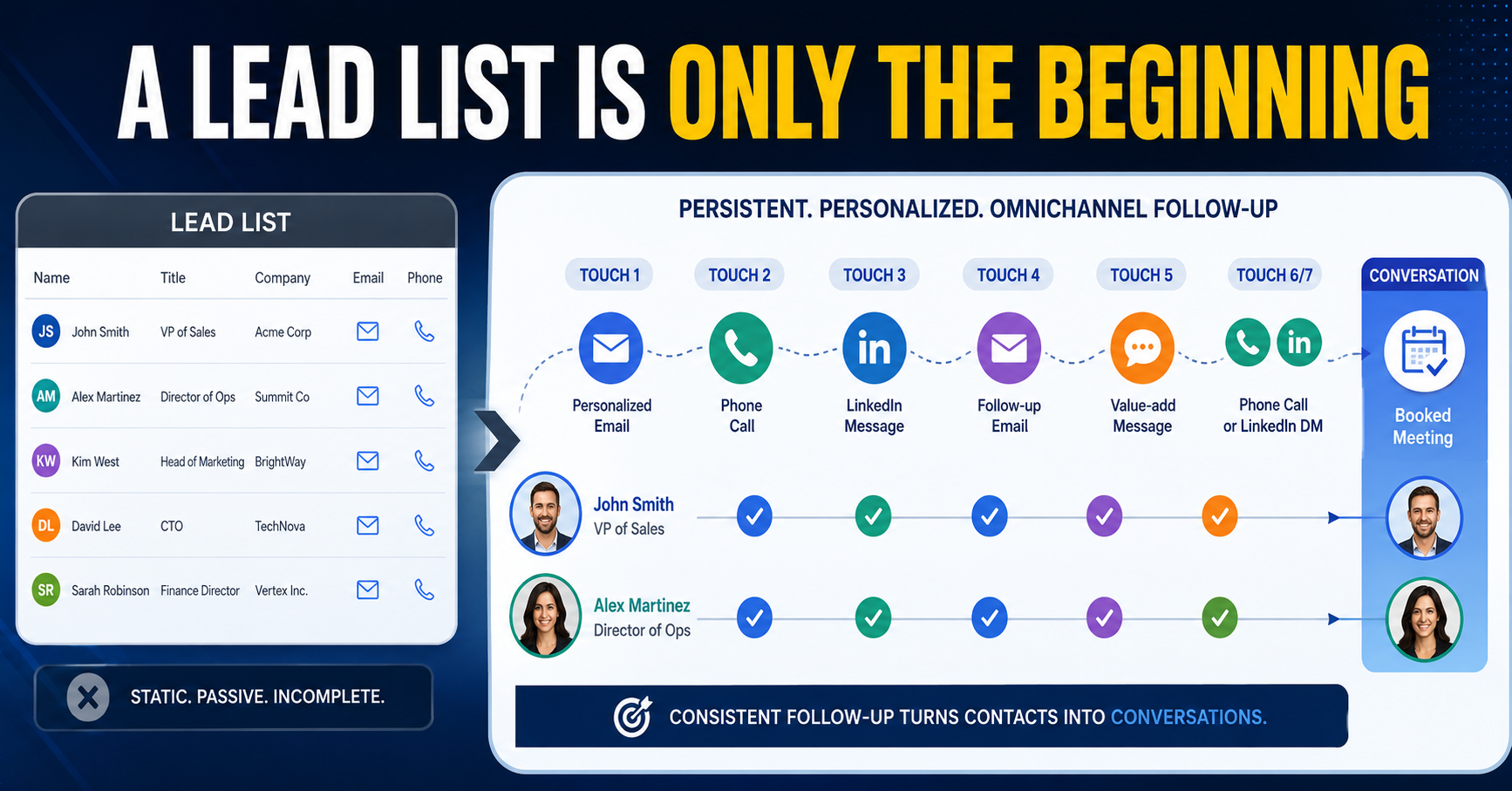
Multi-Channel Outreach improves B2B lead generation by turning static prospect lists into active conversations. It helps sales teams identify which buyers are relevant, engaged, and ready for the next step.
1. It Improves Prospect Engagement
Prospects are more likely to engage when outreach reaches them through the right channel with the right message. Multi-channel campaigns create more opportunities for buyers to notice and respond. This improves engagement without relying on one touchpoint. When outreach is personalized and well-timed, prospects are more likely to see the value of the conversation. Strong engagement is the first step toward stronger pipeline.
2. It Helps Qualify Leads More Effectively
Multi-channel activity gives SDRs more information about buyer interest and fit. A prospect who engages across multiple touchpoints may be more open to conversation than one who never responds. Calls can then be used to clarify need, timing, authority, and next steps. This makes qualification more accurate. Better qualification improves meeting quality and reduces wasted sales time.
3. It Supports Nurturing Over Time
Not every prospect is ready for a meeting immediately. Multi-Channel Outreach helps SDR teams nurture prospects over time with useful, relevant touchpoints. A buyer may not respond today but may become ready later due to a business change or internal priority shift. Structured nurturing keeps the relationship open. This helps businesses turn future interest into future pipeline.
4. It Improves Sales Handoffs
When a prospect becomes sales-ready, the SDR can provide account executives with valuable context from multiple touchpoints. This may include email replies, call notes, LinkedIn engagement, objections, and buyer priorities. Better context helps the sales team prepare for the meeting. Stronger handoffs improve buyer experience and increase the chance of opportunity creation. Multi-channel engagement makes the sales handoff more informed and useful.
Services Provided by Salaria Sales
Salaria Sales helps businesses use Multi-Channel Outreach to create stronger B2B sales conversations and higher-quality pipeline. As a Full-Service B2B Sales & SDR Outsourcing Agency, Salaria Sales combines SDR outsourcing, outbound sales development, B2B lead generation, appointment setting, cold calling, personalized email outreach, LinkedIn engagement, prospect research, and campaign optimization into a complete growth system. The team works with clients to define Ideal Customer Profiles, identify high-value accounts, build targeted prospect lists, and create messaging that fits the buyer’s role and business priorities. Salaria Sales uses a Human-AI Sales Approach to improve research, buyer intent analysis, prioritization, and reporting while keeping skilled human SDRs responsible for relationship-building, qualification, and conversations. This ensures outreach remains efficient without becoming generic or robotic. Clients benefit from coordinated multi-channel campaigns that connect email, phone, LinkedIn, and follow-up into one clear buyer journey. Salaria Sales helps businesses move beyond disconnected outreach and build a strategic sales development system focused on qualified conversations and revenue impact.
If you want Multi-Channel Outreach that creates stronger B2B sales conversations and better pipeline outcomes, book a meeting with the Salaria Sales team here: https://salariasales.com/book/
Conclusion
Multi-Channel Outreach creates stronger B2B sales conversations because it matches how modern buyers actually engage. Prospects do not always respond to one email, one call, or one LinkedIn message. They need relevance, familiarity, timing, and a clear reason to continue the conversation. A coordinated multi-channel strategy helps SDR teams build context across touchpoints and reach buyers through the channels they prefer. When supported by a Human-AI Sales Approach, outreach becomes more precise, personalized, and scalable. AI improves research, targeting, and timing, while human SDRs create the conversations that build trust and qualify real opportunities. Businesses that rely on one channel risk being ignored, while businesses that coordinate email, phone, LinkedIn, and follow-up create stronger buyer engagement. In modern outbound sales development, success is not about more noise. It is about better conversations with the right buyers at the right time.
Frequently Asked Questions (FAQs)
1. What is Multi-Channel Outreach?
Multi-Channel Outreach is an outbound sales strategy that uses multiple communication channels such as email, phone, LinkedIn, voicemail, and follow-up to engage prospects.
2. Why is Multi-Channel Outreach important in B2B sales?
Multi-Channel Outreach is important because B2B buyers engage across different channels and often need multiple relevant touchpoints before responding.
3. How does Multi-Channel Outreach improve B2B sales conversations?
It improves conversations by creating familiarity, adding context, improving timing, and giving SDRs more insight into buyer engagement.
4. What channels should be included in Multi-Channel Outreach?
Common channels include email, cold calling, LinkedIn, voicemail, content sharing, and structured follow-up sequences.
5. How does a Human-AI Sales Approach support Multi-Channel Outreach?
A Human-AI Sales Approach uses AI for targeting, timing, and insights while human SDRs personalize communication and build buyer relationships.
6. What mistakes should businesses avoid in Multi-Channel Outreach?
Businesses should avoid repeating the same message everywhere, using too many touchpoints too quickly, ignoring buyer intent, and measuring only activity.
7. How does Multi-Channel Outreach support B2B lead generation?
It supports B2B lead generation by improving engagement, strengthening qualification, nurturing prospects, and creating better sales handoffs.
8. How can Salaria Sales help with Multi-Channel Outreach?
Salaria Sales helps businesses execute coordinated email, phone, LinkedIn, and follow-up campaigns through SDR outsourcing and Human-AI sales development.