Multi-Channel Outreach helps B2B teams stop relying on one touchpoint and start creating real buyer conversations. Salaria Sales combines phone, email, LinkedIn, and Human-AI precision to turn outreach into qualified pipeline.
Modern B2B buyers rarely respond after one email, one call, or one LinkedIn message. They are busy, selective, and constantly receiving outreach from vendors competing for their attention. This is why Multi-Channel Outreach has become essential in outbound sales development. Instead of relying on one channel to carry the entire conversation, businesses use coordinated touchpoints across email, phone, LinkedIn, and follow-up sequences to build familiarity and trust. The goal is not to overwhelm buyers with more messages. The goal is to create timely, relevant, and useful interactions that help prospects understand why a conversation matters. A strong Multi-Channel Outreach strategy improves B2B lead generation by increasing visibility, improving response rates, and creating better sales conversations. When supported by SDR outsourcing and a Human-AI Sales Approach, multi-channel outreach becomes more precise, scalable, and personalized. In this article, we explain how businesses can use multi-channel engagement to create stronger buyer relationships and better pipeline outcomes.
What Is Multi-Channel Outreach
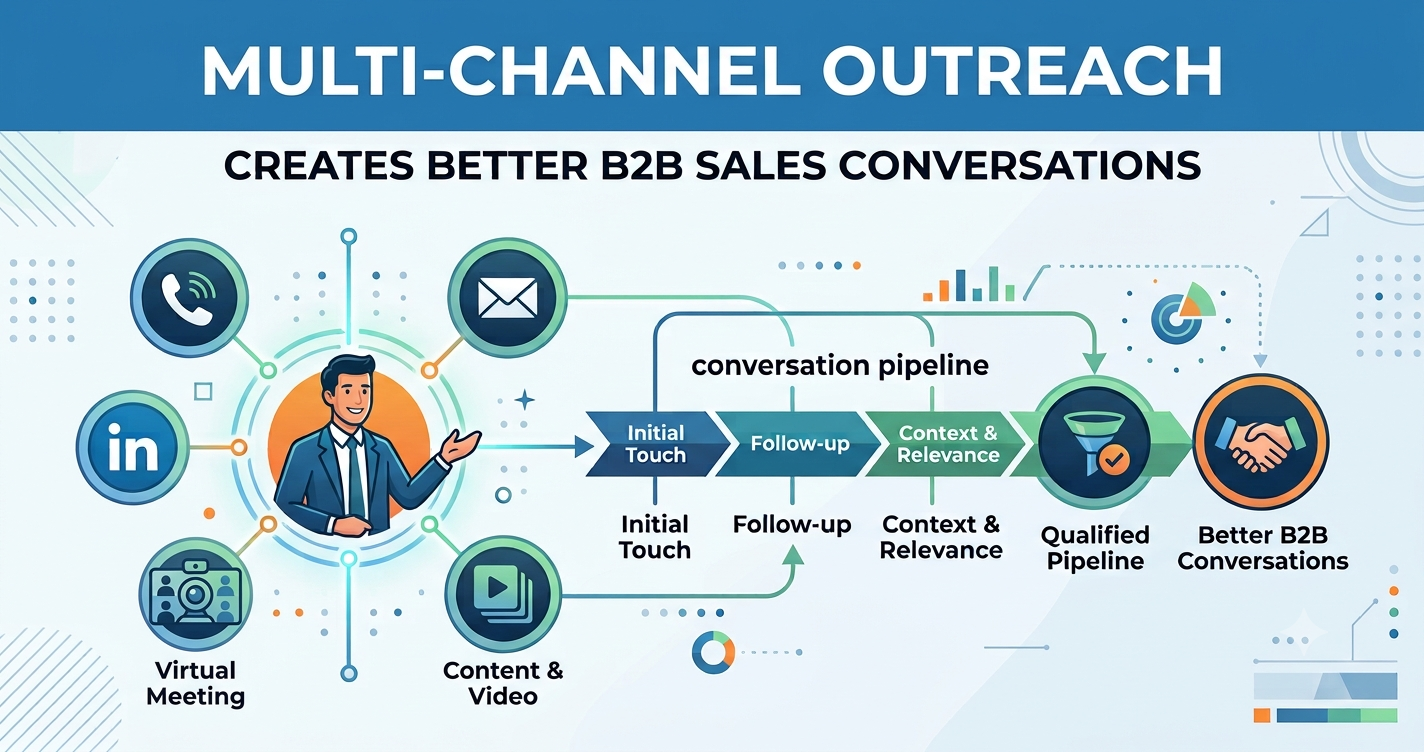
Multi-Channel Outreach is an outbound sales development strategy that uses multiple communication channels to engage prospects in a coordinated and personalized way. These channels often include email, cold calling, LinkedIn, voicemail, content sharing, and follow-up sequences.
1. Multi-Channel Outreach Means Coordinated Buyer Engagement
Multi-Channel Outreach is not simply sending the same message across different platforms. It requires a coordinated strategy where each touchpoint supports the next one. For example, an email may introduce a relevant business problem, a LinkedIn view may create familiarity, and a phone call may start a real conversation. When each channel has a purpose, the buyer experience feels more natural and less repetitive. This approach helps SDR teams build trust gradually instead of relying on one aggressive pitch.
2. It Helps Buyers Recognize and Remember Your Brand
B2B buyers are more likely to engage when they have seen a company name or message more than once. A single cold email can easily be missed, but a thoughtful sequence across multiple channels creates familiarity. Familiarity matters because buyers are more likely to respond to outreach that feels credible and recognizable. Multi-Channel Outreach allows businesses to appear in the right places without becoming intrusive. When done correctly, it creates awareness before the sales conversation begins.
3. It Supports Different Buyer Preferences
Not every buyer prefers the same communication channel. Some respond to email, some engage on LinkedIn, and others prefer a direct phone conversation. Multi-Channel Outreach respects these differences by giving prospects multiple ways to respond. This improves the chance of creating a conversation with the right decision-maker. A flexible outreach strategy is especially important in complex B2B sales where different stakeholders may engage differently.
4. It Turns Outreach Into a Conversation Journey
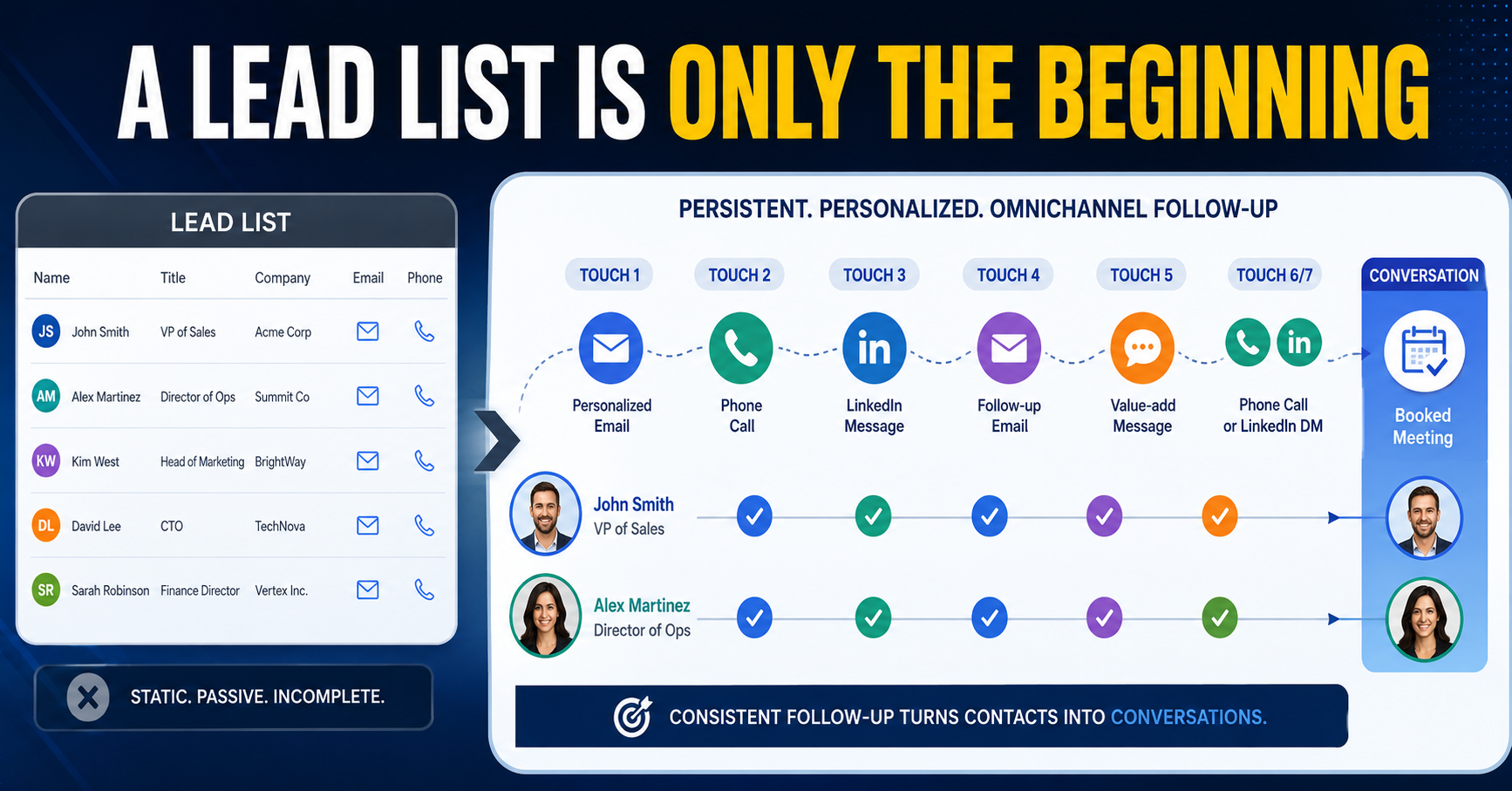
A strong outreach sequence should feel like a progression, not a series of disconnected messages. Each touchpoint should add context, reinforce value, or offer a new reason to engage. This helps move prospects from awareness to interest and then toward sales readiness. Multi-Channel Outreach gives SDR teams more opportunities to educate, qualify, and build trust. When the journey is structured properly, conversations feel more relevant and more likely to convert.
Why Single-Channel Outreach Is No Longer Enough
Many businesses still rely too heavily on one outbound channel, usually email or cold calling. While each channel can be valuable, depending on one alone limits reach, weakens engagement, and reduces pipeline quality.
1. Email Alone Gets Lost in Crowded Inboxes
B2B buyers receive large volumes of emails every day, which makes it easy for even relevant messages to go unnoticed. If email is the only outreach channel, sales teams depend entirely on open rates and inbox visibility. That creates risk because timing, filters, and buyer attention can all work against the campaign. Multi-Channel Outreach reduces this dependency by supporting email with calls, LinkedIn engagement, and follow-up. This gives prospects more opportunities to notice and respond.
2. Cold Calling Alone Can Feel Disconnected
Cold calling still works in B2B sales, but it performs better when supported by context. A buyer may be more receptive to a call if they have already seen a relevant email or LinkedIn touchpoint. Without that context, the call may feel too abrupt. Multi-Channel Outreach helps cold calls feel less random because they become part of a broader engagement sequence. This improves the quality of the conversation and increases the chance of a positive response.
3. LinkedIn Alone Does Not Always Create Urgency
LinkedIn is useful for visibility, research, and soft engagement, but it does not always create immediate sales conversations. Many prospects browse LinkedIn casually and may not respond to messages quickly. If LinkedIn is used alone, outreach can become passive and slow. Combining LinkedIn with email and phone creates a more complete outbound sales development strategy. Each channel reinforces the others and helps move the buyer closer to engagement.
4. One Channel Limits Learning and Optimization
When SDR teams rely on only one channel, they have limited insight into buyer behavior. Multi-channel engagement provides more data about what prospects respond to, which messages resonate, and which touchpoints create movement. This information helps improve future campaigns and refine targeting. A broader outreach strategy creates better feedback loops for sales development strategy. More touchpoints create more opportunities to learn and optimize.
How Multi-Channel Outreach Creates Better B2B Sales Conversations
The purpose of Multi-Channel Outreach is not just to increase activity. It is to improve the quality of conversations by making outreach more visible, relevant, and buyer-focused.
1. It Builds Familiarity Before the First Conversation
Buyers are more likely to engage when they recognize the company or understand the reason for outreach. A coordinated sequence can help create that recognition before a live conversation happens. For example, a prospect may first see a LinkedIn profile view, then receive a relevant email, then answer a phone call with more context. This makes the interaction feel less cold and more familiar. Familiarity improves trust and increases the likelihood of engagement.
2. It Creates More Context for SDRs
Multi-channel engagement gives SDRs more information about the prospect’s behavior. If a buyer opens an email, views a profile, replies to a message, or engages with content, that activity can guide the next touchpoint. SDRs can use this context to personalize conversations and ask better questions. This makes the conversation more relevant and less scripted. Context helps SDRs move from generic outreach to consultative engagement.
3. It Improves Response Rates Through Relevance
Prospects may miss one message, ignore another, and respond to a third. Multi-Channel Outreach increases the chances of connecting by reaching buyers through the channels they prefer. However, the key is relevance. Every touchpoint must be connected to a specific business reason or buyer need. Relevant multi-channel engagement improves response rates because it gives prospects more than one reason to engage.
4. It Supports Better Lead Qualification
Better conversations lead to better qualification. When SDRs engage prospects across multiple channels, they can gather more signals about interest, urgency, and fit. A prospect who interacts across email and LinkedIn may be more engaged than someone who never responds. Phone conversations can then be used to clarify need, decision-making authority, and next steps. This helps SDR teams book meetings that are more likely to convert into real opportunities.
What Channels Should Be Included in a Multi-Channel Outreach Strategy
A strong Multi-Channel Outreach strategy should include the channels most relevant to the buyer, the sales cycle, and the outreach objective. The best results come from using each channel intentionally.
1. Email Outreach
Email is one of the most important channels in outbound sales development because it allows SDR teams to introduce value clearly and directly. A strong email should be concise, personalized, and focused on the buyer’s likely problem. Email also creates a written record that prospects can revisit when they are ready. However, email should not carry the entire campaign alone. It works best when supported by calls, LinkedIn, and thoughtful follow-up.
2. Cold Calling
Cold calling creates direct human conversations that email cannot replicate. It allows SDRs to hear objections, ask questions, and uncover real-time feedback. A call can quickly clarify whether a prospect is a fit and whether a meeting makes sense. In a Multi-Channel Outreach strategy, cold calling works best when it connects to previous or future touchpoints. This makes the call feel more relevant and improves the buyer experience.
3. LinkedIn Engagement
LinkedIn helps SDRs research prospects, create visibility, and support relationship-building. It can be used for profile views, connection requests, thoughtful messages, and content engagement. LinkedIn is especially useful for warming up outreach before or after email and phone touches. The channel should be used professionally and with restraint. When used strategically, LinkedIn strengthens recognition and trust.
4. Voicemail and Follow-Up Messaging
Voicemail and follow-up messages can reinforce outreach when used thoughtfully. A short voicemail can create familiarity and direct prospects to a useful email or LinkedIn message. Follow-up messages should not simply repeat the same request. Each follow-up should add a new insight, question, or reason to engage. This keeps the outreach sequence useful rather than repetitive.
The Role of the Human-AI Sales Approach in Multi-Channel Outreach
A Human-AI Sales Approach helps businesses scale Multi-Channel Outreach without sacrificing personalization. AI supports research, targeting, sequencing, and performance analysis, while human SDRs guide buyer engagement.
1. AI Helps Identify the Right Prospects
AI can help analyze large sets of account and buyer data to identify prospects that match the Ideal Customer Profile. It can also support prioritization by surfacing engagement signals and patterns. This helps SDR teams focus on accounts that are more likely to convert. However, AI should not be used as a replacement for human judgment. Human SDRs still need to validate insights and decide how to approach each buyer.
2. AI Supports Better Timing Across Channels
Timing matters in outbound sales development. AI can help track engagement, identify active prospects, and recommend when follow-up may be most effective. This improves the coordination of email, phone, LinkedIn, and other touchpoints. Better timing makes outreach feel more relevant and less random. A Human-AI Sales Approach helps teams engage buyers when interest is more likely to be present.
3. Human SDRs Create the Conversation Quality
AI can support outreach preparation, but human SDRs create the actual buyer conversation. They understand tone, questions, objections, and relationship-building. This is critical because B2B sales conversations often involve nuance and business context. Human SDRs can adapt based on what the buyer says and guide the conversation toward a useful next step. The human element keeps Multi-Channel Outreach from becoming robotic.
4. Performance Data Improves Future Outreach
A Human-AI Sales Approach creates a feedback loop between data and execution. AI and analytics can show which channels, messages, and sequences perform best. Sales leaders and SDR teams can use that information to improve targeting, messaging, and follow-up strategy. Continuous optimization helps campaigns get stronger over time. This makes Multi-Channel Outreach more predictable and more effective.
Common Mistakes in Multi-Channel Outreach
Multi-Channel Outreach can fail when teams focus on activity instead of coordination, relevance, and buyer experience. Avoiding common mistakes helps improve performance.
1. Repeating the Same Message Everywhere
Sending the same message across email, LinkedIn, and voicemail can make outreach feel lazy and automated. Each channel should have a distinct purpose. Email may explain the value, LinkedIn may create familiarity, and a call may open the conversation. When every channel adds something useful, outreach feels more thoughtful. Repetition without value reduces buyer trust.
2. Using Too Many Touchpoints Too Quickly
Multi-channel does not mean overwhelming prospects. Too many messages in a short period can frustrate buyers and damage brand perception. Outreach should be persistent but respectful. The timing between touchpoints should allow prospects space to engage naturally. A balanced cadence is more effective than aggressive follow-up.
3. Ignoring Buyer Intent Signals
Buyer intent helps SDR teams understand when a prospect may be more open to conversation. Ignoring intent signals can result in poor timing and weak engagement. Intent signals may include content engagement, website visits, company growth, hiring activity, or market changes. Multi-Channel Outreach becomes more effective when it is guided by buyer behavior. Better timing leads to better conversations.
4. Measuring Activity Instead of Outcomes
Some teams measure success by counting emails sent, calls made, or LinkedIn messages delivered. These metrics show activity but not impact. A better approach is to measure response rates, conversation quality, meeting conversion, sales acceptance, and pipeline contribution. Outcome-based measurement helps teams understand what is actually working. Multi-Channel Outreach should be judged by the quality of opportunities it creates.
How to Build a Strong Multi-Channel Outreach Strategy
A successful strategy requires clear targeting, coordinated messaging, thoughtful timing, and continuous optimization. The goal is to create a repeatable system that improves buyer engagement and pipeline quality.
1. Define the Ideal Customer Profile First
A strong Ideal Customer Profile gives direction to every outreach channel. It helps SDR teams understand which accounts to target and what problems to reference. Without a clear ICP, multi-channel campaigns can become scattered and inefficient. The ICP should include firmographic details, buyer roles, pain points, buying triggers, and common objections. Better targeting leads to better conversations across every channel.
2. Map the Buyer Journey
Different touchpoints should support different stages of buyer awareness. Early outreach may focus on relevance and problem identification, while later outreach may focus on proof, qualification, or meeting readiness. Mapping the buyer journey helps SDR teams send the right message at the right time. This prevents outreach from feeling random or disconnected. A clear journey improves both buyer experience and conversion rates.
3. Create Channel-Specific Messaging
Each channel should have messaging that fits the format and buyer expectation. Emails should be concise and useful. Calls should be conversational and focused on discovery. LinkedIn messages should be professional and not overly sales-heavy. Voicemails should be short and clear. Channel-specific messaging makes the full sequence feel natural and intentional.
4. Review and Optimize Regularly
Multi-Channel Outreach should improve over time based on real performance data. Teams should review which channels create responses, which sequences lead to meetings, and which messages produce qualified opportunities. This helps refine the sales development strategy and improve future campaigns. Regular optimization keeps outreach aligned with changing buyer behavior. Strong teams treat outreach as a system that can always get better.
Services Provided by Salaria Sales
Salaria Sales helps businesses build and execute Multi-Channel Outreach strategies that create better B2B sales conversations and stronger pipeline outcomes. As a Full-Service B2B Sales & SDR Outsourcing Agency, Salaria Sales combines SDR outsourcing, outbound sales development, B2B lead generation, appointment setting, and strategic prospecting into a complete growth system. The team uses a Human-AI Sales Approach to improve targeting, research, buyer intent analysis, and campaign optimization while keeping experienced human SDRs at the center of prospect engagement. Salaria Sales executes coordinated outreach across email, cold calling, LinkedIn, and structured follow-up to help clients reach the right buyers through the right channels. Instead of relying on generic one-channel campaigns, Salaria Sales focuses on personalized messaging, high-touch engagement, and qualified conversations. Clients benefit from stronger targeting, better meeting quality, and ongoing performance reporting that improves results over time. This approach helps businesses build predictable pipeline while creating a more professional and relevant buyer experience.
If you want to improve your Multi-Channel Outreach strategy and create better B2B sales conversations, book a meeting with the Salaria Sales team.
Conclusion
Multi-Channel Outreach creates better B2B sales conversations because it reflects how modern buyers actually engage. Prospects rarely respond to a single touchpoint, and they often need familiarity, relevance, and timing before agreeing to a conversation. Businesses that rely only on email, cold calling, or LinkedIn limit their ability to connect with buyers effectively. A stronger approach combines channels into a coordinated outbound sales development strategy supported by research, personalization, and buyer intent. When powered by a Human-AI Sales Approach, multi-channel engagement becomes both scalable and human-centered. AI improves targeting and timing, while skilled SDRs create meaningful conversations and qualify real opportunities. The best outreach strategies are not about sending more messages. They are about creating better interactions across the channels buyers already use. Companies that invest in Multi-Channel Outreach are more likely to build trust, improve meeting quality, and generate predictable pipeline growth.
Frequently Asked Questions (FAQs)
1. What is Multi-Channel Outreach?
Multi-Channel Outreach is a sales development strategy that uses multiple communication channels such as email, phone, LinkedIn, and follow-up messaging to engage prospects.
2. Why is Multi-Channel Outreach important in B2B sales?
Multi-Channel Outreach is important because B2B buyers engage across different platforms and often need multiple relevant touchpoints before responding.
3. What channels should be included in Multi-Channel Outreach?
Common channels include email, cold calling, LinkedIn, voicemail, content sharing, and structured follow-up sequences.
4. How does Multi-Channel Outreach improve B2B sales conversations?
It improves conversations by creating familiarity, adding context, supporting personalization, and giving prospects multiple ways to engage.
5. What is the role of SDR outsourcing in Multi-Channel Outreach?
SDR outsourcing provides trained sales development professionals who can manage prospecting, outreach, follow-up, qualification, and appointment setting across channels.
6. How does a Human-AI Sales Approach support Multi-Channel Outreach?
A Human-AI Sales Approach uses AI for targeting, timing, and insights while human SDRs personalize communication and build buyer relationships.
7. What are common mistakes in Multi-Channel Outreach?
Common mistakes include repeating the same message across channels, sending too many touches too quickly, ignoring buyer intent, and measuring only activity.
8. How can businesses measure Multi-Channel Outreach success?
Businesses should measure response rates, conversation quality, meeting conversion, sales acceptance, pipeline contribution, and revenue impact.