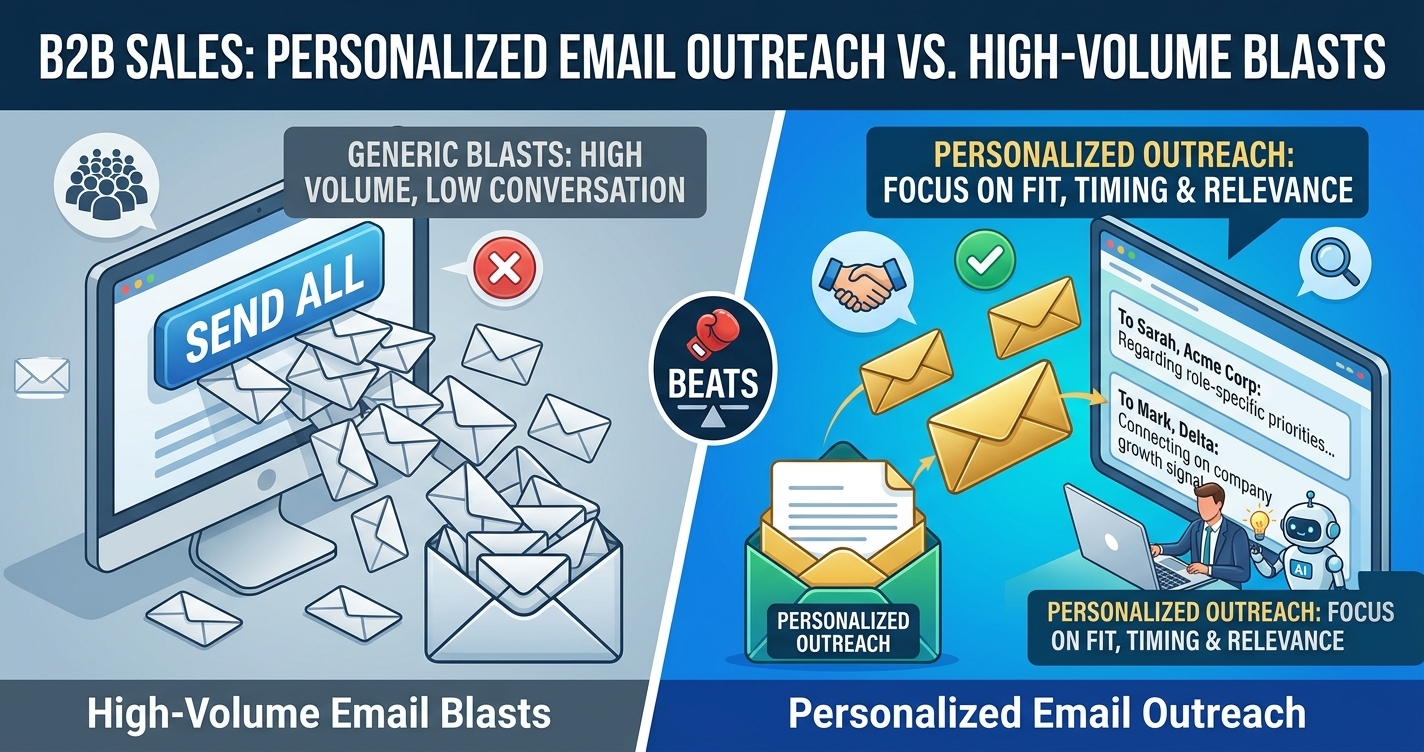
Personalized Email Outreach is not about sending fewer emails. It is about sending smarter emails to the right buyers. Salaria Sales helps B2B teams replace generic blasts with Human-AI outreach that creates real conversations.
B2B buyers receive more sales emails than ever, but most of those messages are easy to ignore. Generic email blasts often sound the same, offer little relevance, and fail to connect with the buyer’s actual priorities. This is why Personalized Email Outreach has become essential in modern outbound sales development. Businesses can no longer rely on high-volume email campaigns that push the same message to large contact lists. Buyers expect outreach that shows research, context, and a clear reason for the conversation. Personalized outreach helps SDR teams improve response rates, protect brand reputation, and create stronger sales opportunities. It also supports better B2B lead generation because outreach is focused on fit, timing, and buyer relevance rather than raw email volume. When supported by a Human-AI Sales Approach, personalized email outreach becomes scalable without losing the human insight required to build trust. In this article, we explain why personalization outperforms volume and how businesses can use it to build better pipeline.
What Is Personalized Email Outreach
Personalized Email Outreach is a targeted outbound sales strategy where emails are customized based on the prospect’s role, company, industry, pain points, and buyer journey stage. It focuses on relevance and value instead of mass messaging.
1. Personalization Means More Than Using a First Name
Many businesses mistake basic merge fields for personalization. Adding a first name, company name, or job title does not make an email truly relevant. Real personalization connects the message to the buyer’s business context, current challenges, and likely priorities. This may include referencing company growth, market changes, role-specific pain points, or a relevant operational problem. Strong Personalized Email Outreach makes the prospect feel that the message was written for them, not simply generated for a list.
2. Personalized Outreach Is Built Around Buyer Relevance
The purpose of personalization is to make the outreach useful to the buyer. A strong message should quickly explain why the email matters and why the recipient is the right person to receive it. This requires research into the account, the buyer’s role, and the likely business problem being addressed. When outreach is relevant, prospects are more likely to read, respond, and engage. Relevance turns a cold email from an interruption into a potential business conversation.
3. Personalization Supports Better Qualification
Personalized Email Outreach improves qualification because it begins with stronger targeting. Instead of sending to broad contact lists, SDR teams focus on prospects who match the Ideal Customer Profile and have a reason to care. This helps reduce low-quality replies and improves the quality of booked meetings. Personalized emails also create a better first impression, which can influence how prospects view the sales conversation. Better targeting and better messaging lead to better pipeline quality.
4. Personalized Email Outreach Works Best in a Multi-Channel Strategy
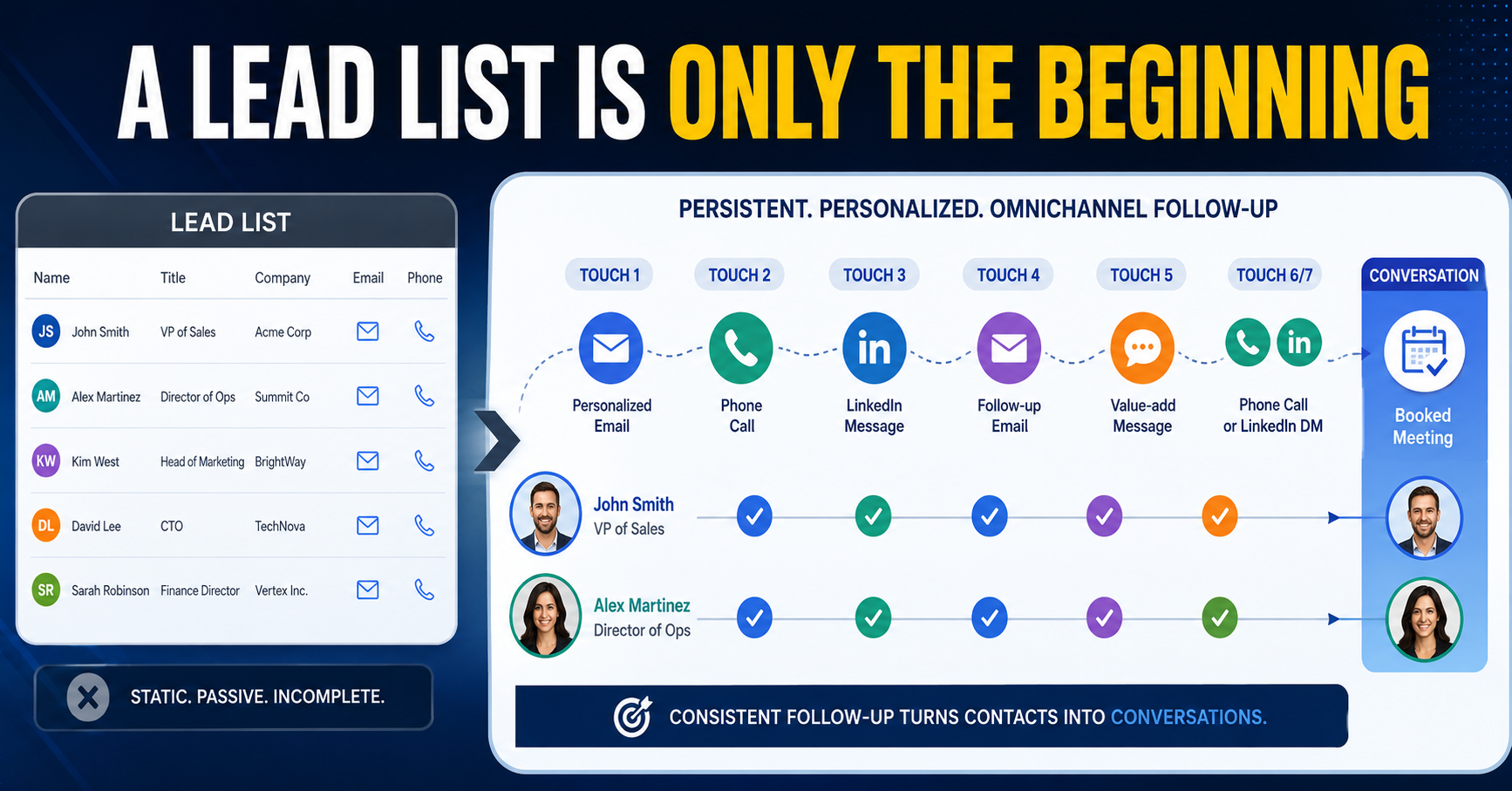
Email is powerful, but it works even better when combined with phone calls, LinkedIn engagement, and structured follow-up. A buyer may not respond to the first email, but they may recognize the company after seeing a LinkedIn touchpoint or receiving a relevant call. Multi-channel outreach creates familiarity and improves the chances of engagement. Personalized email should support the broader outbound sales development process, not operate in isolation. When every channel carries a consistent and relevant message, conversations become easier to start.
Why High-Volume Email Blasts Fail in B2B Sales
High-volume email blasts often create activity but fail to generate meaningful sales conversations. They focus on scale before relevance, which can hurt engagement and pipeline quality.
1. Generic Emails Are Easy to Ignore
Most high-volume email blasts rely on broad templates that are sent to large groups of prospects. These messages often fail because they do not reflect the buyer’s industry, role, or business needs. Decision-makers can quickly recognize when an email was not written with them in mind. Once buyers identify a message as generic, they are unlikely to engage. Personalized Email Outreach performs better because it gives the buyer a reason to keep reading.
2. Mass Emailing Can Damage Brand Perception
Every outbound message represents your brand. When prospects receive irrelevant or repetitive email blasts, they may associate the company with low-quality outreach. This can damage trust before a sales conversation even begins. In competitive B2B markets, brand perception matters because buyers often compare multiple vendors before engaging. A thoughtful personalized email creates a stronger impression and shows that your team respects the buyer’s time.
3. High-Volume Blasts Can Hurt Deliverability
Email providers are increasingly sensitive to sending behavior that looks like spam. High-volume blasts, low engagement rates, and repeated ignored emails can affect sender reputation. Once deliverability declines, even better emails may struggle to reach the inbox. Personalized outreach helps reduce this risk because it focuses on smaller, more relevant prospect groups and stronger engagement. Better email quality supports better long-term outbound performance.
4. Volume Does Not Equal Pipeline Quality
Sending more emails does not automatically create better opportunities. A campaign may generate replies, but those replies may come from poor-fit prospects or buyers who are not ready for a sales conversation. Pipeline quality depends on targeting, buyer fit, and message relevance. High-volume blasts often produce shallow engagement and unqualified meetings. Personalized Email Outreach improves pipeline quality by focusing on prospects with stronger conversion potential.
Why Personalized Email Outreach Wins
Personalized Email Outreach works because it aligns with how modern B2B buyers evaluate vendors. It creates more relevant conversations and supports a stronger sales development strategy.
1. It Improves Buyer Engagement
Buyers are more likely to engage when outreach connects directly to their situation. Personalized emails can reference business priorities, industry challenges, or role-specific problems. This shows the prospect that the sender has done more than pull their name from a database. Strong personalization creates curiosity and increases the chance of a reply. Higher engagement is usually the first sign of a healthier outbound sales development strategy.
2. It Builds Trust Earlier in the Buyer Journey
Trust begins before the first meeting. A relevant email can show professionalism, preparation, and credibility from the first touchpoint. Buyers are more likely to trust sales teams that demonstrate understanding of their business. This matters especially in complex B2B sales where prospects need confidence before agreeing to a conversation. Personalized outreach helps create that confidence by making the first interaction feel useful and informed.
3. It Supports Stronger Appointment Setting
Appointment setting should focus on sales readiness, not just calendar fills. Personalized Email Outreach helps SDR teams book better meetings because the conversation starts with relevance. Prospects are more likely to agree to a meeting when they understand why the topic matters to them. This improves meeting quality and reduces wasted time for account executives. Stronger appointment setting leads to better pipeline progression and higher conversion rates.
4. It Creates Better Sales Intelligence
Personalized outreach encourages SDR teams to research accounts and understand buyer context. That research produces valuable insights about target markets, common objections, and buyer priorities. Even when a prospect does not respond immediately, the process improves the team’s understanding of the market. This intelligence can improve future campaigns, messaging, and sales conversations. Personalized outreach is not just a communication tactic, it is also a learning system for outbound sales development.
How to Build a Personalized Email Outreach Strategy
A strong Personalized Email Outreach strategy requires better targeting, stronger research, clear messaging, and consistent execution. The goal is to create emails that feel relevant without becoming slow or difficult to scale.
1. Start With a Clear Ideal Customer Profile
Personalization begins with knowing who you should target. A strong Ideal Customer Profile should include company size, industry, buyer roles, pain points, buying triggers, and common challenges. Without a clear ICP, personalization becomes random and inconsistent. SDR teams need to know which accounts are worth researching and why those accounts matter. A clear ICP helps teams focus on prospects who are more likely to convert.
2. Research the Account Before Writing
Effective personalization requires account-level research. SDR teams should look for company news, leadership changes, product launches, hiring trends, funding events, or operational signals. These details help create a stronger reason for outreach. The goal is not to write a long email filled with research, but to use one or two relevant insights to make the message more meaningful. Account research helps buyers understand why the outreach is timely and relevant.
3. Write Around the Buyer’s Problem
The best personalized emails focus on the buyer’s likely problem rather than the seller’s service. Prospects care less about what a company offers and more about whether it can solve a meaningful challenge. Messaging should connect the buyer’s role or business situation to a specific outcome. This makes the email more useful and easier to understand. Problem-led messaging often performs better than product-led messaging in B2B email outreach.
4. Keep the Message Clear and Concise
Personalized emails do not need to be long. In fact, shorter messages often perform better when they are clear and relevant. A strong email should quickly explain why you are reaching out, what problem you may help solve, and what simple next step makes sense. Overloaded emails can reduce response rates because buyers do not want to read long sales pitches. Clear and concise messaging respects the buyer’s time and improves engagement.
The Role of a Human-AI Sales Approach in Personalized Outreach
A Human-AI Sales Approach helps businesses scale Personalized Email Outreach without turning it into robotic automation. AI supports research, segmentation, and efficiency, while human SDRs guide messaging and buyer engagement.
1. AI Helps Identify Better Prospects
AI can help analyze account data, detect buying signals, and prioritize prospects that match the Ideal Customer Profile. This improves targeting and allows SDR teams to focus on accounts with stronger potential. AI can also help uncover patterns that may not be obvious through manual research alone. However, AI should support decision-making rather than replace human judgment. The best results come when SDR teams validate AI insights and apply them strategically.
2. AI Can Speed Up Research, But Humans Create Relevance
AI can summarize company information, organize account data, and surface useful insights quickly. This saves time and helps SDR teams prepare more efficiently. However, human SDRs still need to decide which insight matters and how to use it in a natural message. Relevance requires judgment, tone, and context. A Human-AI Sales Approach allows teams to move faster while keeping the outreach thoughtful and buyer-focused.
3. Human SDRs Protect Tone and Authenticity
Personalized Email Outreach must sound like it came from a real person. Human SDRs understand nuance, tone, and relationship-building in ways automation cannot fully replicate. They can adjust messaging based on buyer role, industry, and previous engagement. This protects the quality of communication and reduces the risk of sounding generic. Authenticity is one of the main reasons personalized outreach beats high-volume email blasts.
4. AI and Human Feedback Improve Performance Over Time
A strong outbound system improves through testing and feedback. AI and analytics can show which messages, segments, and outreach sequences generate the best engagement. Human sales teams can interpret that data and adjust strategy based on real buyer conversations. This creates a continuous improvement loop. Over time, the Human-AI Sales Approach helps teams improve response rates, meeting quality, and pipeline contribution.
Common Mistakes in B2B Email Outreach
Many businesses struggle with email outreach because they focus too much on scale and not enough on relevance. Avoiding these mistakes can improve results quickly.
1. Using Fake Personalization
Fake personalization happens when emails include shallow details that do not add real value. Examples include generic compliments, irrelevant LinkedIn references, or obvious merge-field statements. Buyers can easily recognize this type of outreach. It often feels automated even when it includes personal details. Real personalization should connect to the buyer’s business problem or decision-making context.
2. Sending the Same Message to Every Segment
Different buyers care about different things. A CFO, VP of Sales, operations leader, and founder will not respond to the same message in the same way. Sending one message to every segment reduces relevance and weakens performance. Strong B2B email outreach should adapt based on role, industry, company stage, and business challenge. Segmentation makes personalization more accurate and effective.
3. Focusing on Features Instead of Outcomes
Many sales emails focus too much on product features or service descriptions. Buyers are more interested in outcomes, problems solved, and business value. A strong personalized email connects the offer to a measurable or meaningful result. This makes the message more compelling and easier to act on. Outcome-focused messaging helps prospects understand why the conversation is worth their time.
4. Not Following Up Strategically
A single email rarely creates enough engagement in B2B sales. Follow-up is essential, but it must add value instead of repeating the same message. Each follow-up should provide a new angle, insight, question, or reason to reconnect. Strategic follow-up improves response rates and helps build familiarity over time. Poor follow-up, on the other hand, can make even personalized outreach feel repetitive.
Services Provided by Salaria Sales
Salaria Sales helps businesses build Personalized Email Outreach strategies that improve response rates, meeting quality, and pipeline performance. As a Full-Service B2B Sales & SDR Outsourcing Agency, Salaria Sales combines SDR outsourcing, outbound sales development, B2B lead generation, appointment setting, and multi-channel outreach into a complete sales development strategy. The team works with clients to define the Ideal Customer Profile, identify high-value prospects, create personalized messaging, and execute outreach across email, phone, and LinkedIn. Salaria Sales uses a Human-AI Sales Approach to improve account research, prospect prioritization, and campaign optimization while keeping skilled human SDRs at the center of communication. This ensures outreach remains relevant, professional, and authentic. Instead of relying on generic high-volume email blasts, Salaria Sales focuses on quality conversations that move prospects toward sales readiness. Clients benefit from better targeting, stronger personalization, structured follow-up, and reporting that helps improve performance over time. The result is a smarter outbound system built for meaningful engagement and predictable pipeline growth.
If you want to improve your Personalized Email Outreach strategy and turn more email conversations into qualified meetings, book a meeting with the Salaria Sales team.
Conclusion
Personalized Email Outreach beats high-volume email blasts because modern B2B buyers expect relevance, context, and value. Generic mass emails may create activity, but they often fail to generate meaningful conversations or qualified pipeline. A stronger approach begins with precise targeting, deeper account research, buyer-focused messaging, and strategic follow-up. When supported by a Human-AI Sales Approach, businesses can scale personalization without losing authenticity. AI can improve research and prioritization, while human SDRs bring judgment, tone, and relationship-building to every interaction. Personalized email also strengthens appointment setting because prospects are more likely to meet when the message reflects their actual business needs. In today’s outbound sales development environment, the best results come from quality over quantity. Businesses that invest in personalization will create better buyer experiences, stronger engagement, and more predictable revenue growth.
Frequently Asked Questions (FAQs)
1. What is Personalized Email Outreach?
Personalized Email Outreach is a B2B sales strategy where emails are tailored to the prospect’s role, company, industry, pain points, and likely business priorities.
2. Why does Personalized Email Outreach work better than email blasts?
Personalized outreach works better because it is more relevant to the buyer, improves engagement, and creates stronger opportunities for meaningful sales conversations.
3. What is the difference between personalization and automation?
Personalization focuses on relevance and buyer context, while automation focuses on efficiency. The best outreach uses automation to support personalization, not replace it.
4. How does a Human-AI Sales Approach improve email outreach?
A Human-AI Sales Approach uses AI for research, prioritization, and data analysis while human SDRs create authentic, relevant, and personalized communication.
5. Why do high-volume email blasts fail in B2B sales?
High-volume email blasts often fail because they are generic, poorly targeted, and easy for buyers to ignore. They can also damage deliverability and brand perception.
6. How can SDR outsourcing support Personalized Email Outreach?
SDR outsourcing gives businesses access to trained sales development professionals who can research prospects, personalize messaging, manage follow-up, and book qualified meetings.
7. What should be included in a personalized sales email?
A personalized sales email should include a relevant reason for outreach, a buyer-focused problem, a clear value statement, and a simple next step.
8. How does Personalized Email Outreach improve pipeline quality?
Personalized outreach improves pipeline quality by targeting better-fit prospects, increasing meaningful engagement, and booking meetings with buyers who are more likely to convert.