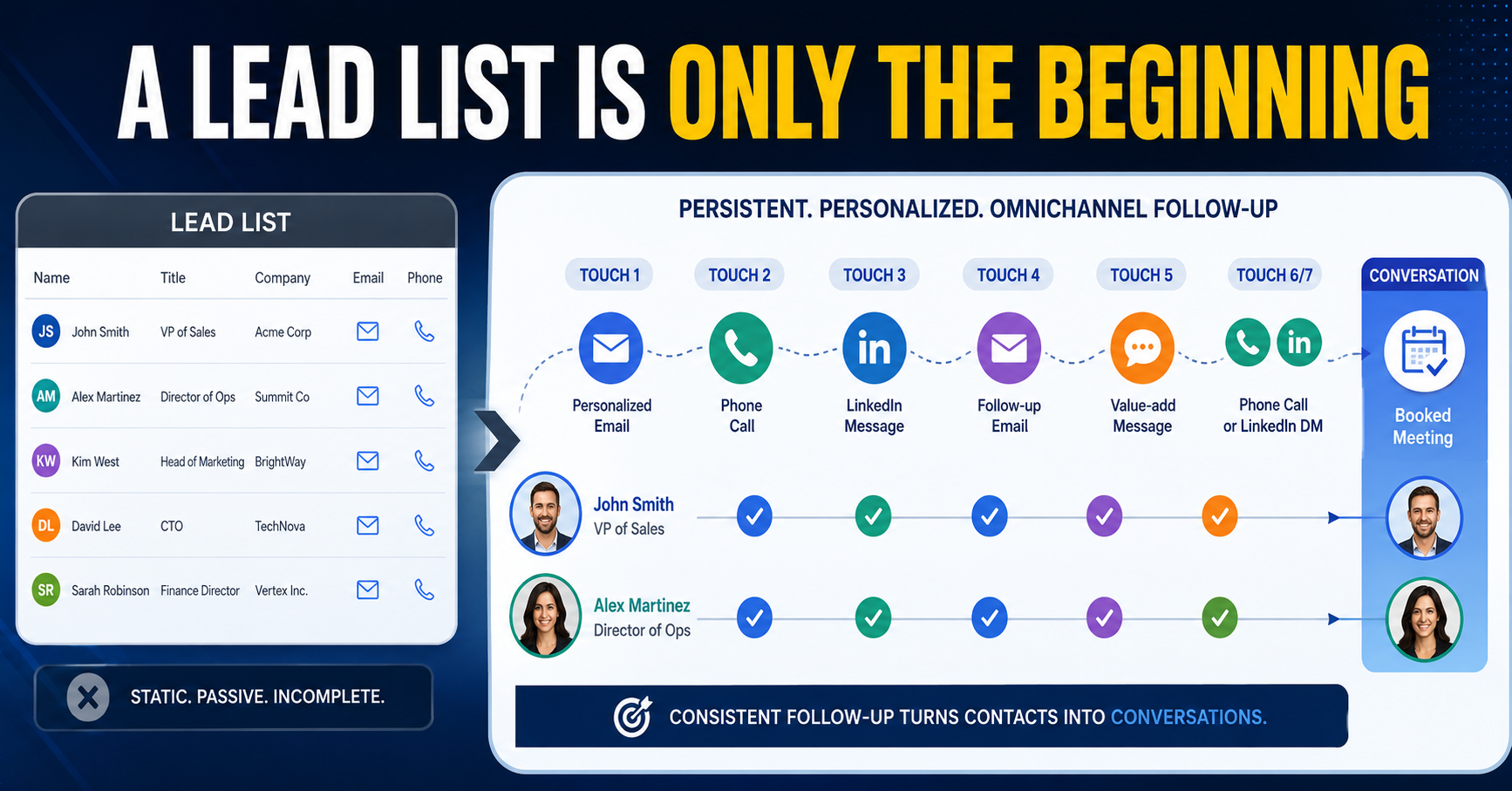
AI can be extremely useful in B2B sales development, but there is an important difference between using AI to improve the work and allowing AI to completely automate it. Salaria Sales Solutions uses AI extensively for research, personalization, curation and data analysis, but we do not use it to independently run outreach without human intervention. There is still a human involved in the process because the purpose of AI should be to help sales development teams work more intelligently, not to remove human judgment from communication with prospects.
The temptation to automate everything is understandable. Automation allows companies to send more outreach while requiring fewer people to manage it. But that does not necessarily result in better sales development. In fact, relying too heavily on automation can create exactly the opposite outcome. Email providers are becoming better at identifying automated outreach, prospects are increasingly exposed to machine-generated communication, and the smallest mistake can quickly reveal that nobody actually reviewed what was sent.
AI Should Support Outreach, Not Run It Independently
At Salaria, AI is used to support the parts of sales development where it can make people more effective. It can help research a prospect, identify information that may be useful for personalization, curate data and analyze information. What it does not do is independently decide everything that should be communicated and then automatically send that outreach without human involvement.
That distinction matters because automation can become damaging when volume replaces judgment. As automated sales tools have become more common, email inboxes have also become better at filtering the kinds of messages those systems generate. If email providers did not become better at detecting automated outreach, inboxes would quickly become overwhelmed by it. The result is that relying heavily on automation can work against the deliverability of the very emails a sales development team is trying to send.
The strongest opportunity to get through is still communication that is highly personalized and has meaningful human involvement before it is sent. AI can help a salesperson find the information required to create that personalization, but there is a major difference between assisting personalization and automatically manufacturing it.
Automated Personalization Can Still Feel Fake
One of the problems with AI-driven outreach is that automated personalization does not necessarily create genuine personalization. A system can collect information about a prospect and insert it into a message, but that does not mean the communication will feel as though somebody actually understood the person receiving it.
AI is valuable for researching personalization and helping a salesperson determine what may be relevant. The problem begins when the system is allowed to use that information entirely on its own. The resulting email may technically contain personal information while still feeling automated because nobody has applied the human judgment needed to decide whether the information actually belongs in the conversation.
That is why Salaria uses AI to help direct personalization rather than allowing it to operate independently. The technology can make the research process better and more efficient, but a human still needs to determine whether the final message makes sense.
The Simplest AI Mistake Can Sink the Entire Message
The smallest error can be enough to damage a sales email. AI can use the wrong word, pull the wrong information or make a hallucination that appears minor to the system but immediately looks wrong to the person receiving the message. When the process is fully automated, those mistakes can continue without anyone realizing what is happening.
We have seen outreach templates where a very small flaw gives away the fact that the communication was generated by AI. The company using the template may not even recognize the problem and may simply wonder why nobody is responding. But a prospect can notice something that feels unnatural almost immediately.
This is where human recognition and intuition remain important. A person reviewing an email can see details that simply do not fit, even when the rest of the message looks technically correct. Fully automated systems can miss those small contextual problems and continue sending them at scale.
“Humanizing Bots” Are an Oxymoron
An increasingly ironic response to obviously automated communication is the use of so-called humanizing bots. These tools attempt to make machine-generated writing appear more human by introducing elements such as informal language, slang, grammatical imperfections or other characteristics associated with natural communication.
There is an obvious oxymoron in using a bot to humanize another bot. If the objective is genuine human communication, trying to manufacture human behavior through another layer of automation does not solve the underlying problem.
It can also create additional risk. A bot specifically designed to make communication appear more human may introduce wording or details that do not belong, creating another opportunity for hallucination. Instead of making the outreach more authentic, another layer of automation can make it more unpredictable.
Responsible AI Requires Human Judgment
The better use of AI is to allow it to support the salesperson rather than replace the salesperson. It can help research personalization, organize information and identify useful details. The salesperson can then decide how that information should actually be used.
Some sales development providers are moving heavily toward automation because automation can improve their own economics. If fewer people are needed, they can reduce the amount of time and human resources invested in each campaign, spread employees across more accounts and potentially improve their margins. But what improves the provider’s profitability does not automatically improve the client’s sales development.
There is a different path. AI can be used responsibly while maintaining the human involvement required for effective outreach. The technology can make people faster and more informed without allowing it to go rogue and independently manage communication with prospects.
The Future Is Human-Led and AI-Supported
The question is not whether B2B sales development should use AI. Salaria already uses a great deal of it. The question is where AI belongs in the process.
AI is valuable when it helps salespeople research, personalize, curate and analyze. It becomes a problem when the goal shifts from supporting humans to automating them out of the outreach process. That is when fake personalization, deliverability problems, hallucinations and subtle mistakes can begin undermining the campaign.
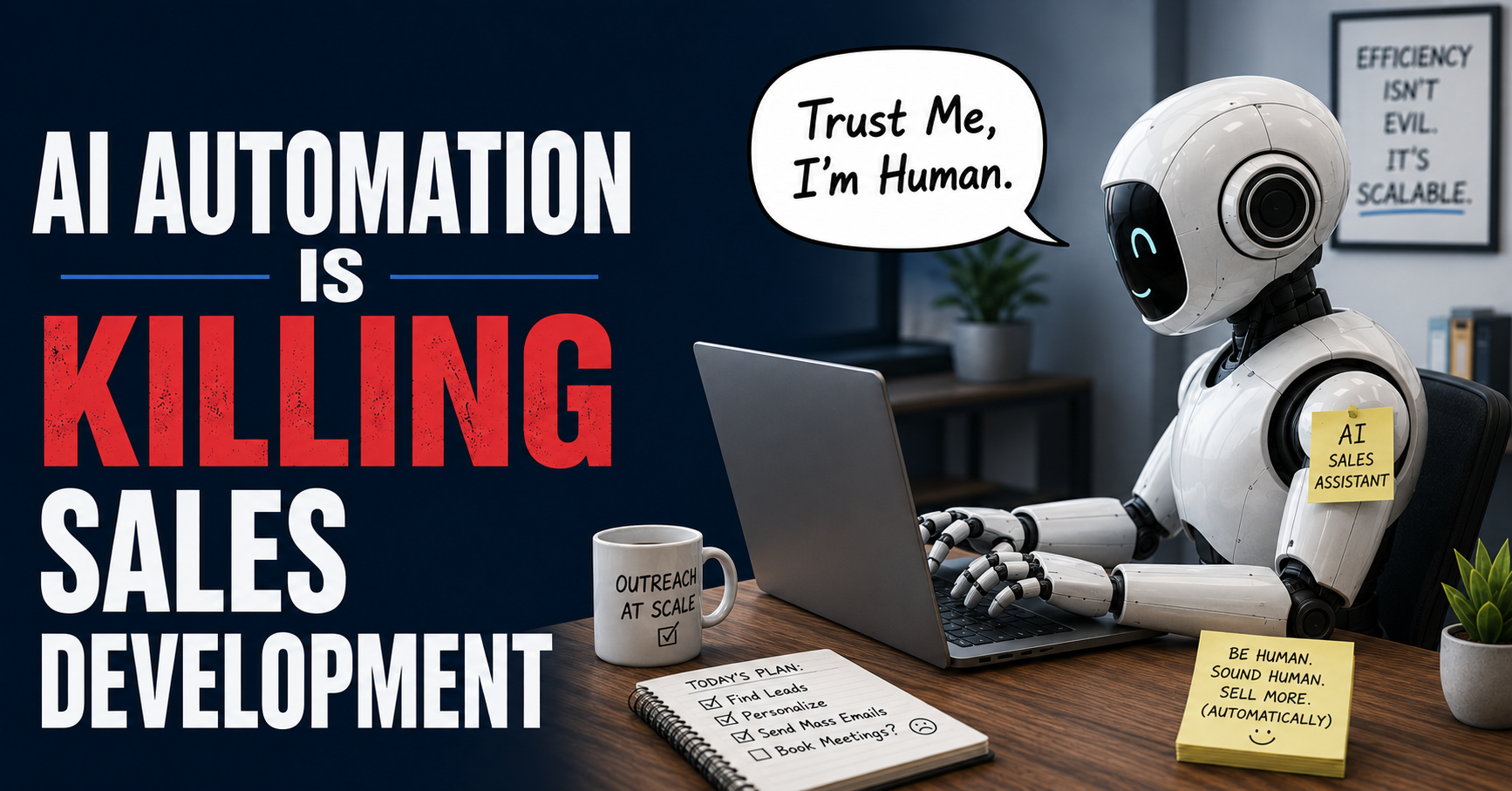
The sales development companies that understand how to use AI responsibly will have the advantage. AI should make human-led sales development more effective, not replace the judgment and intuition that make communication genuinely personal. Otherwise, sales teams risk becoming the robot at the keyboard trying to convince every prospect of the same thing: “Trust me, I’m human.”