
The future of outbound sales belongs to companies that prioritize relevance over volume. Salaria Sales helps businesses replace outdated mass outreach with high-touch prospecting powered by a Human-AI sales approach.
For years, outbound sales teams relied heavily on volume-based prospecting strategies to generate leads and meetings. The idea was simple. More calls, more emails, and more outreach activity would eventually create more opportunities. However, modern B2B buyers have changed dramatically. Decision-makers are now more selective, more informed, and less responsive to generic outbound messaging. This shift has accelerated the debate around the High-Touch vs High-Volume Model in outbound sales development. Businesses that continue relying on mass outreach often struggle with low engagement, declining response rates, and poor pipeline quality. In contrast, companies adopting high-touch prospecting strategies are creating stronger buyer relationships, more qualified conversations, and higher conversion rates. The future of B2B lead generation is moving toward personalization, intent-driven targeting, and meaningful engagement. Combined with a Human-AI sales approach, high-touch prospecting enables businesses to scale outreach while maintaining quality and relevance. In this article, we explore why high-touch outbound sales strategies are replacing high-volume models and how modern B2B teams can adapt successfully.
What Is the High-Touch vs High-Volume Model
The High-Touch vs High-Volume Model refers to two fundamentally different approaches to outbound sales development and prospect engagement.
1. Understanding the High-Volume Model
The high-volume outbound model focuses on reaching as many prospects as possible through automated emails, mass cold calling, and generic messaging sequences. Sales teams using this strategy prioritize outreach quantity over personalization and relevance. The assumption is that a small percentage of responses from a large prospect pool will generate enough pipeline opportunities. While this model can create activity quickly, it often leads to poor engagement and weak conversion rates. Buyers increasingly ignore generic outreach that fails to address their specific business challenges.
2. Understanding the High-Touch Model
The high-touch outbound model focuses on personalized engagement, strategic targeting, and meaningful conversations. Instead of reaching thousands of prospects with the same message, sales teams identify high-fit accounts and tailor outreach based on buyer intent, industry challenges, and business priorities. This approach prioritizes quality over quantity and builds stronger relationships throughout the sales process. High-touch prospecting creates better buyer experiences and improves pipeline quality. Businesses using this strategy often generate more qualified meetings and stronger conversion performance.
3. Why the Shift Is Happening Now
Buyer expectations have evolved significantly in recent years. Decision-makers are overwhelmed with generic sales outreach and increasingly value relevance and personalization. At the same time, advancements in AI and data analytics allow sales teams to target prospects more accurately than ever before. These changes are pushing companies away from outdated mass prospecting methods toward precision-based outbound sales development. Businesses that adapt to this shift are gaining a competitive advantage in modern B2B sales.
Why High-Volume Outreach Is Losing Effectiveness
The traditional high-volume outbound model is becoming less effective as buyers become more resistant to generic outreach tactics.
1. Buyers Ignore Generic Outreach
Modern buyers receive hundreds of cold emails and sales messages every week. Generic messaging that lacks personalization often gets deleted immediately or ignored completely. Decision-makers expect outreach that demonstrates understanding of their business goals and challenges. High-volume campaigns rarely provide this level of relevance because they rely on standardized messaging. As a result, response rates and engagement levels continue to decline across mass outbound campaigns.
2. Poor Targeting Damages Pipeline Quality
High-volume prospecting often relies on broad targeting criteria instead of detailed Ideal Customer Profiles. SDR teams may contact prospects who have little interest, no buying authority, or no need for the solution being offered. This creates bloated pipelines filled with low-quality opportunities that rarely convert into revenue. Poor targeting also wastes valuable sales resources and increases customer acquisition costs. Businesses focused on precision targeting consistently build stronger pipelines.
3. Domain Reputation and Deliverability Issues
Mass email campaigns frequently create deliverability problems and damage sender reputation. Email providers increasingly detect and filter high-volume outbound messages that resemble spam behavior. Once domain reputation declines, even legitimate sales outreach becomes less effective. Businesses relying heavily on automated outreach may experience declining inbox placement and lower engagement rates over time. High-touch outreach reduces these risks by focusing on smaller, more relevant prospect groups.
4. Buyers Want Meaningful Conversations
Modern B2B buyers value conversations that provide insight, relevance, and strategic value. Generic outreach focused solely on booking meetings often fails to create trust or meaningful engagement. Buyers are more likely to respond when outreach demonstrates understanding of their industry, operational challenges, or growth objectives. High-touch prospecting supports stronger relationship building and creates more productive sales conversations. This shift reflects broader changes in buyer behavior across B2B markets.
Why High-Touch Prospecting Delivers Better Results
High-touch prospecting creates stronger engagement and more sustainable pipeline growth by focusing on relevance and personalization.
1. Personalized Outreach Improves Response Rates
Personalization is one of the most effective ways to increase outbound sales engagement. Buyers are more likely to respond when messaging addresses their specific challenges, market conditions, or operational goals. High-touch outreach demonstrates preparation and genuine interest in the prospect’s business. This creates stronger first impressions and encourages more meaningful conversations. Businesses that personalize outreach consistently achieve better response and meeting conversion rates.
2. Intent-Based Prospecting Increases Efficiency
Buyer Intent in Outbound Sales helps SDR teams identify prospects actively researching solutions or showing signs of purchase readiness. High-touch prospecting strategies use intent data to prioritize outreach toward accounts with stronger conversion potential. This improves efficiency by focusing sales efforts on the right buyers at the right time. Businesses using intent-driven targeting often shorten sales cycles and improve close rates. Better timing creates stronger engagement opportunities.
3. High-Touch Outreach Builds Trust
Trust has become a critical factor in modern B2B sales. Buyers are more cautious about engaging with vendors and expect authenticity throughout the sales process. High-touch outreach creates stronger trust because communication feels more thoughtful and relevant. Personalized engagement also positions sales teams as strategic advisors rather than transactional sellers. Businesses that build trust early in the buyer journey often create stronger long-term customer relationships.
4. Better Pipeline Quality Leads to Predictable Revenue
Pipeline quality matters more than pipeline size in modern outbound sales development. High-touch prospecting generates more qualified opportunities because targeting and messaging are aligned with buyer intent. This improves meeting quality, conversion rates, and forecasting accuracy. Businesses focusing on quality over volume often achieve more predictable revenue growth. Sustainable outbound success comes from consistency and relevance rather than outreach scale alone.
The Role of the Human-AI Sales Approach
The Human-AI sales approach is helping businesses scale high-touch outbound sales strategies more effectively.
1. AI Improves Prospecting Accuracy
AI tools help outbound sales teams analyze large amounts of data to identify high-fit prospects and buying signals. These insights improve targeting precision and help SDR teams prioritize the most valuable accounts. AI also supports account segmentation, engagement analysis, and outreach timing optimization. Businesses using AI strategically improve efficiency without sacrificing quality. Better data creates smarter outbound strategies.
2. Human SDRs Create Authentic Engagement
While AI improves efficiency, human SDRs remain essential for building relationships and handling complex conversations. Human communication brings emotional intelligence, adaptability, and strategic thinking that automation alone cannot replicate. Buyers still prefer authentic conversations with knowledgeable professionals who understand their challenges. The Human-AI sales approach combines the best aspects of technology and human expertise. This balance creates more effective outbound sales development.
3. Multi-Channel Outreach Enhances Buyer Experience
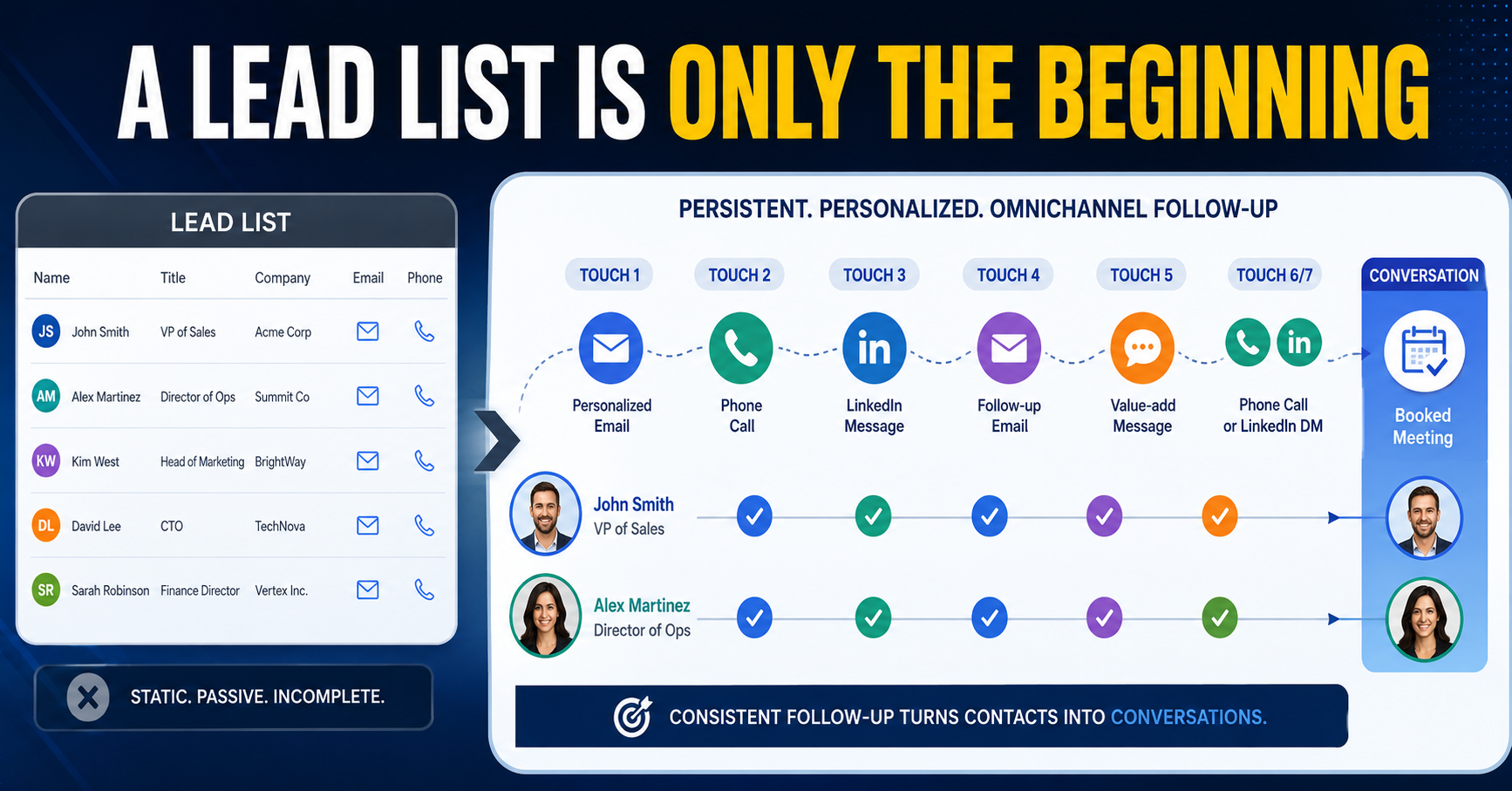
High-touch prospecting often combines multiple communication channels including email, phone, LinkedIn, and personalized follow-ups. AI tools help coordinate outreach timing and engagement tracking across channels. Human SDRs ensure each interaction feels relevant and valuable to the prospect. Multi-channel engagement creates stronger visibility and familiarity throughout the buyer journey. Businesses using coordinated outreach strategies often improve overall engagement rates.
4. Continuous Optimization Drives Long-Term Success
Successful outbound sales development requires ongoing testing and optimization. AI analytics help identify patterns in buyer behavior, response rates, and conversion performance. Human sales leaders use these insights to refine messaging, targeting, and prospecting strategies continuously. Businesses that embrace continuous improvement outperform organizations relying on static outbound playbooks. Long-term success depends on adaptability and data-driven decision-making.
Services Provided by Salaria Sales
Salaria Sales helps businesses transition from outdated high-volume prospecting strategies to modern high-touch outbound sales development. As a Full-Service B2B Sales & SDR Outsourcing Agency, Salaria Sales combines SDR outsourcing, B2B lead generation, and personalized outbound sales strategies into a scalable growth model designed for today’s buyers. The company uses a Human-AI sales approach that combines advanced targeting technology with experienced SDR professionals who understand how to create meaningful buyer conversations. Instead of relying on mass outreach that frustrates prospects and weakens pipeline quality, Salaria Sales focuses on precision targeting, intent-based prospecting, and multi-channel engagement. The team continuously analyzes buyer behavior, campaign performance, and market signals to improve outreach effectiveness. Clients benefit from stronger meeting quality, higher engagement rates, and more predictable pipeline growth. Salaria Sales helps businesses build outbound systems that prioritize relevance, personalization, and long-term relationship building rather than short-term activity metrics.
If you want to modernize your outbound sales strategy and improve pipeline quality through high-touch prospecting, book a meeting with the Salaria Sales team.
Conclusion
The future of outbound sales is moving away from high-volume outreach and toward precision-driven, high-touch engagement strategies. Buyers no longer respond to generic mass messaging that prioritizes activity over relevance. Businesses relying on outdated outbound tactics often struggle with declining engagement, weak pipeline quality, and inconsistent conversion performance. The High-Touch vs High-Volume Model highlights a major shift in how successful B2B sales development now works. High-touch prospecting creates stronger relationships, more qualified conversations, and better alignment with Buyer Intent in Outbound Sales. Combined with a Human-AI sales approach, businesses can scale personalized outreach while maintaining efficiency and relevance. Companies that focus on thoughtful targeting, personalized messaging, and meaningful buyer engagement are more likely to achieve predictable revenue growth and long-term sales success. In modern B2B sales, quality conversations consistently outperform high-volume outreach.
Frequently Asked Questions (FAQs)
1. What is the High-Touch vs High-Volume Model in outbound sales?
The High-Touch vs High-Volume Model compares personalized, targeted outbound sales strategies with mass outreach approaches focused primarily on outreach quantity.
2. Why is high-volume outreach becoming less effective?
Modern buyers receive large amounts of generic sales outreach and increasingly ignore messaging that lacks relevance or personalization.
3. What is high-touch prospecting?
High-touch prospecting is a personalized outbound strategy focused on precise targeting, meaningful engagement, and relationship building with high-fit prospects.
4. How does Buyer Intent in Outbound Sales improve prospecting?
Buyer intent helps SDR teams identify prospects actively researching solutions, allowing businesses to prioritize outreach toward higher-converting opportunities.
5. What is a Human-AI sales approach?
A Human-AI sales approach combines AI-driven targeting and analytics with human relationship-building skills to improve outbound sales performance.
6. Why is pipeline quality more important than pipeline volume?
High-quality pipelines generate stronger conversion rates, shorter sales cycles, and more predictable revenue growth than pipelines filled with low-fit opportunities.
7. How can businesses improve outbound sales development?
Businesses can improve outbound sales development by refining their Ideal Customer Profile, personalizing outreach, using intent data, and adopting high-touch prospecting strategies.
8. What role does SDR outsourcing play in modern outbound sales?
SDR outsourcing provides experienced sales development professionals who help businesses scale prospecting, qualification, and appointment setting more efficiently.