Cold Calling still works when it is backed by research, buyer context, and human expertise. Salaria Sales helps B2B teams turn researched outreach into stronger conversations and better pipeline.
Cold Calling is often misunderstood because many businesses still associate it with generic scripts, random dial lists, and high-volume outreach. In complex sales cycles, that approach does not work because buyers expect relevance, preparation, and a clear business reason for the conversation. Complex B2B sales involve multiple stakeholders, longer decision timelines, higher deal values, and more careful evaluation. This means every outbound touchpoint must be informed, targeted, and useful. Research changes everything because it helps SDRs understand who they are calling, why the conversation matters, what business challenges may exist, and how to guide the call toward a meaningful next step. Modern B2B Cold Calling is not about interrupting buyers with a pitch. It is about using outbound sales development to start the right conversations with the right people at the right time. When combined with a Human-AI Sales Approach, Cold Calling becomes smarter, more personalized, and more effective in building quality pipeline.
What Is Cold Calling in Complex B2B Sales
Cold Calling in complex B2B sales is the process of reaching out to potential business buyers by phone before they have directly requested a conversation, using research, buyer context, and qualification to create meaningful sales engagement.
1. Cold Calling Is a Strategic Conversation Channel
Cold Calling should not be treated as a simple dialing activity. In complex sales cycles, the call is often the first direct human interaction between the company and the buyer. That makes preparation and relevance extremely important. A strong cold call should quickly communicate why the outreach matters and why the prospect is worth speaking with. When the call is supported by research, it becomes a strategic conversation channel rather than a random interruption.
2. Complex Sales Cycles Require More Buyer Understanding
Complex sales cycles usually involve several decision-makers, multiple departments, budget reviews, technical evaluations, and longer internal discussions. This makes it harder to rely on generic messaging or basic contact data. SDRs need to understand the prospect’s role, business context, likely pain points, and possible buying triggers. Research helps the caller enter the conversation with a stronger point of view. Better buyer understanding leads to better questions, better qualification, and stronger meeting outcomes.
3. Cold Calling Helps Uncover Information That Data Alone Cannot
Databases and online research can reveal titles, company size, funding, technology usage, and public signals, but they do not always reveal internal priorities. A cold call can uncover who owns the problem, what initiatives are active, what objections exist, and whether timing makes sense. This makes Cold Calling valuable in complex B2B sales because it creates live market feedback. SDRs can learn directly from prospects and adjust strategy based on what they hear. The call becomes both a prospecting tool and an intelligence-gathering channel.
4. Cold Calling Works Best With Research and Multi-Channel Context
Cold Calling performs better when it is not used alone. A prospect may respond more positively if they have already received a relevant email, seen a LinkedIn touchpoint, or engaged with useful content. Research helps connect these touchpoints into one coherent outreach strategy. The SDR can reference a relevant issue, company signal, or prior outreach in a natural way. This makes the call feel more intentional and less disconnected.
Why Generic Cold Calling Fails in Complex Sales Cycles
Generic Cold Calling fails because it does not respect the complexity of the buyer’s business, decision process, or priorities. In complex B2B sales, buyers need relevance before they give attention.
1. Generic Scripts Do Not Match Complex Buyer Needs
A generic script usually focuses on the seller’s offer rather than the buyer’s situation. In complex sales cycles, this creates immediate resistance because the prospect does not see why the call matters. Buyers are more likely to engage when the SDR can connect the conversation to a specific business challenge, role, or market trend. Scripts can provide structure, but they should not replace research or critical thinking. A strong cold calling framework gives SDRs room to personalize the conversation.
2. Poor Targeting Leads to Weak Conversations
Cold Calling becomes ineffective when SDRs call prospects who are not a strong fit. Poor targeting creates conversations with people who lack authority, relevance, budget, or a real need. This wastes SDR time and damages the buyer experience. In complex sales cycles, targeting should be based on the Ideal Customer Profile, buyer role, company signals, and likely business fit. Research improves targeting and helps SDRs focus on accounts with real potential.
3. High-Volume Calling Can Damage Brand Perception
Calling more people does not automatically create more revenue. If calls are poorly researched and repetitive, prospects may associate the brand with low-quality outreach. This is especially risky in complex B2B markets where reputation and trust matter. A buyer who has a poor first experience may be less likely to engage later, even when the timing is better. Research-led Cold Calling protects brand perception by making outreach more professional and relevant.
4. Weak Qualification Creates Low-Quality Meetings
Generic cold calling often prioritizes booking meetings quickly instead of confirming whether the prospect is sales-ready. This creates calendar fills that do not convert into real opportunities. In complex B2B sales, a bad meeting can waste significant time because account executives may need to prepare, research, and follow up with multiple stakeholders. Strong qualification helps confirm fit, interest, timing, and business need before a meeting is passed to sales. Better qualification creates stronger pipeline quality.
Why Research Changes Everything in Cold Calling
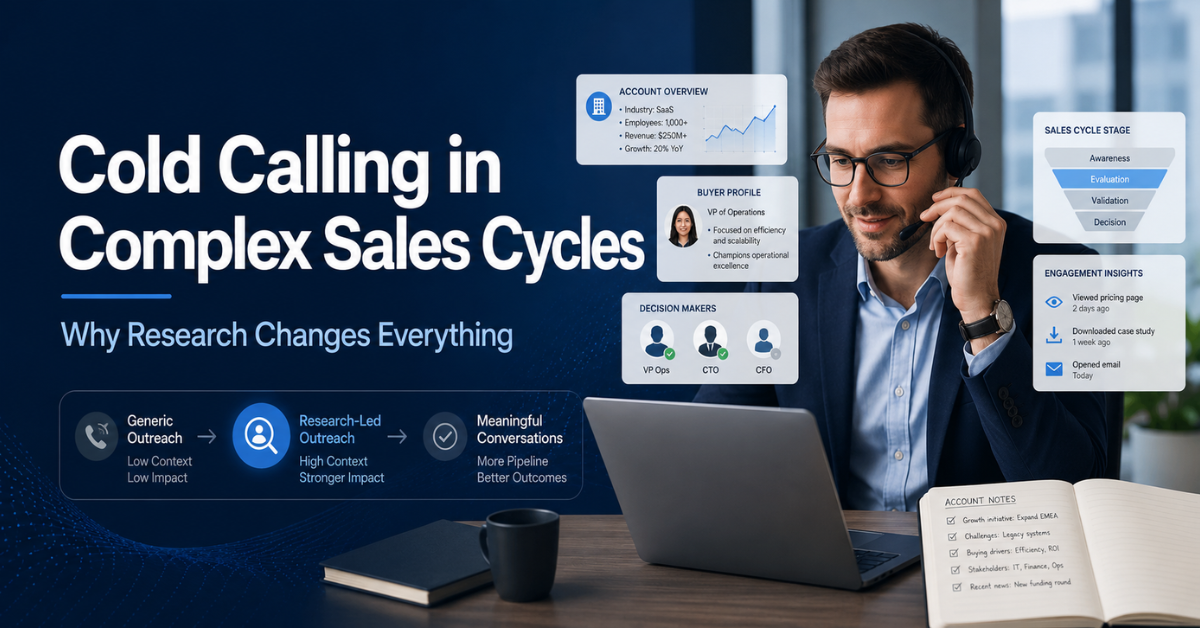
Research transforms Cold Calling from a volume-based activity into a relevance-based sales development strategy. It gives SDRs the context needed to create better conversations.
1. Research Helps Identify the Right Buyers
The first benefit of research is better buyer identification. SDRs can use company data, role information, business signals, and market context to determine who is most likely to care about the outreach. This prevents wasted effort on poor-fit contacts. In complex sales cycles, the right buyer may not always have the most obvious title. Research helps uncover decision-makers, influencers, and stakeholders who may be involved in the buying process.
2. Research Creates a Stronger Reason for Calling
A prospect is more likely to stay on the phone when the caller gives a relevant reason for the conversation. Research helps SDRs identify that reason before dialing. It may be tied to company growth, recent hiring, market changes, operational challenges, or a likely pain point. A clear reason for calling makes the outreach feel more professional and less random. This is one of the biggest differences between generic Cold Calling and strategic B2B Cold Calling.
3. Research Improves Discovery Questions
Good discovery starts before the meeting. During a cold call, SDRs can ask sharper questions when they understand the account and buyer context. Instead of asking vague questions, they can ask about specific challenges or priorities that are likely relevant. This helps the prospect feel understood and makes the conversation more valuable. Better discovery questions improve qualification and increase the chance of booking a meaningful next step.
4. Research Helps Handle Objections More Effectively
Objections are common in Cold Calling, especially in complex sales cycles. Prospects may say they are busy, already have a provider, lack budget, or are not focused on the problem right now. Research gives SDRs a better way to respond because they can connect the objection to context. For example, if the company is expanding, hiring, or changing systems, the SDR can reference why the topic may still be worth discussing. Research makes objection handling more thoughtful and less scripted.
How Cold Calling Fits Into Outbound Sales Development
Cold Calling is one part of a broader outbound sales development strategy. It works best when connected to email, LinkedIn, buyer intent, account research, and structured follow-up.
1. Cold Calling Adds Human Context to Outbound Outreach
Email and LinkedIn can create awareness, but a phone conversation adds human context. SDRs can hear tone, clarify interest, and understand objections in real time. This helps determine whether the prospect is a fit and whether a meeting makes sense. A call can often reveal more in a few minutes than several unanswered emails. This is why Cold Calling remains valuable in outbound sales development.
2. Cold Calling Supports Multi-Channel Engagement
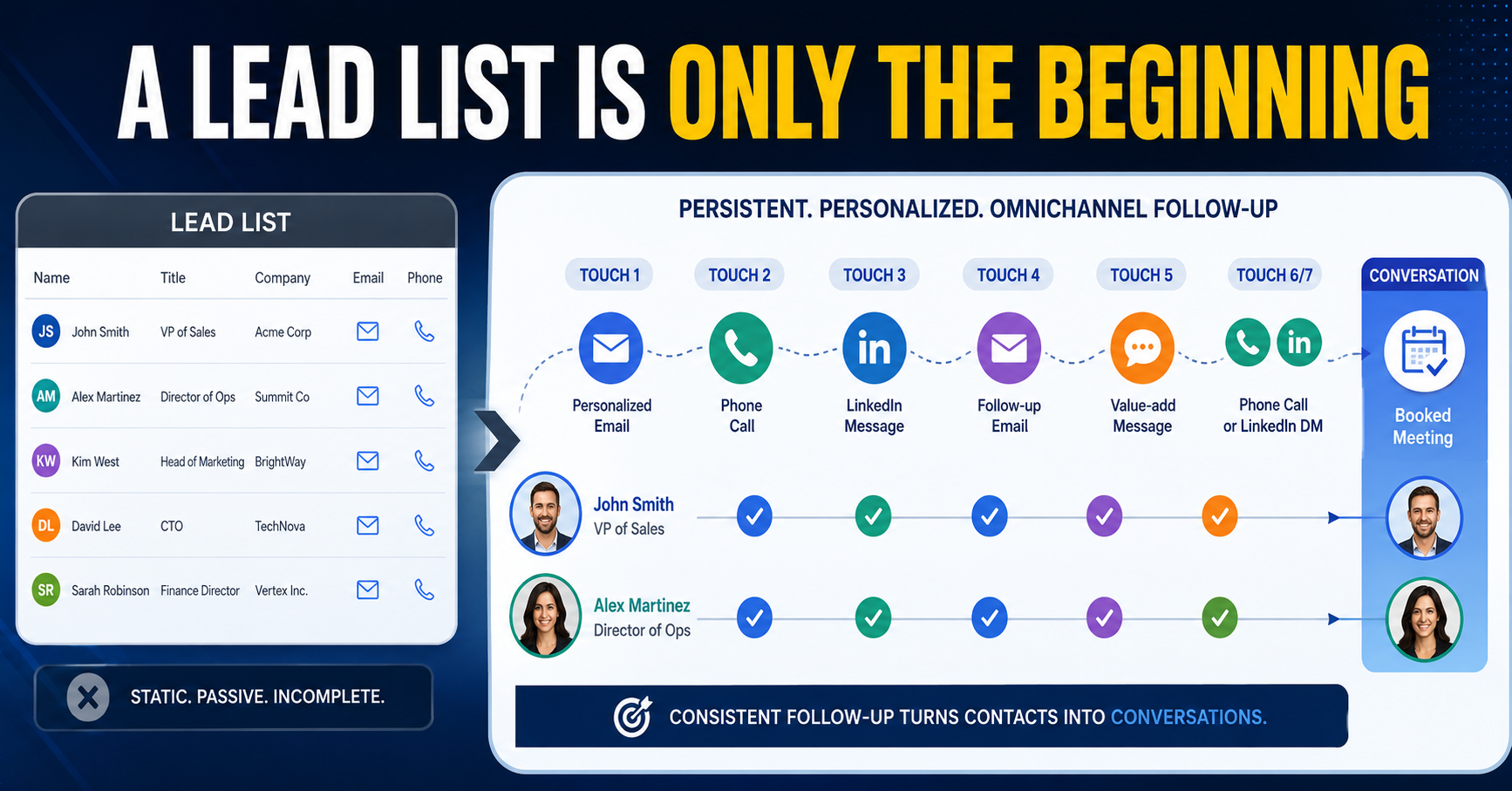
Multi-channel outreach works because buyers engage in different ways. Some prospects respond to email, others engage through LinkedIn, and some only become reachable by phone. Cold Calling adds urgency and directness to the outreach sequence. When combined with relevant email and LinkedIn touchpoints, calls feel less cold and more connected. This creates better buyer familiarity and stronger response rates.
3. Cold Calling Helps Validate Messaging
Outbound campaigns improve when SDRs learn what prospects actually say. Cold calls provide direct feedback on messaging, positioning, objections, and market fit. If prospects regularly misunderstand the value proposition, the message needs to change. If they respond strongly to a specific pain point, that insight can improve future emails and calls. Cold Calling helps turn outbound sales development into a continuous learning system.
4. Cold Calling Improves Sales Readiness
A strong cold call can qualify whether a prospect is ready for a sales meeting. SDRs can confirm role, relevance, business need, timing, and interest before booking the appointment. This protects account executives from low-quality meetings. It also helps buyers enter the meeting with clearer expectations. Better sales readiness improves pipeline quality and meeting-to-opportunity conversion.
What Research Should SDRs Do Before a Cold Call
Cold Calling research does not need to be overly complicated, but it must be useful. The goal is to gather enough context to make the call relevant, not to delay outreach unnecessarily.
1. Research the Company
SDRs should understand what the company does, who it serves, and what may be happening in the business. Useful signals include growth, hiring, expansion, funding, new leadership, product launches, or operational changes. These details can help create a more relevant reason for outreach. Company research also helps SDRs avoid generic opening lines. A better understanding of the business leads to a more credible call.
2. Research the Buyer Role
The same solution may matter for different reasons depending on the buyer’s role. A sales leader may care about pipeline, a finance leader may care about cost efficiency, and an operations leader may care about process improvement. SDRs should understand the likely priorities of the person they are calling. This helps shape the opening, questions, and value statement. Role-based research makes the conversation more relevant from the beginning.
3. Research Possible Pain Points
SDRs should identify likely pain points before the call based on industry, company stage, and buyer role. This does not mean assuming the prospect has the problem, but it helps guide thoughtful questions. A strong SDR can say what they often see in similar companies and ask whether it is relevant. This makes the call feel consultative rather than pushy. Pain point research helps create more meaningful discovery.
4. Research the Account Path
In complex sales cycles, the first person reached may not be the final decision-maker. SDRs should understand the possible buying committee and account structure. This helps them ask better questions about who else is involved and how decisions are typically made. Researching the account path improves stakeholder mapping. It also helps SDRs turn one conversation into a broader opportunity.
The Role of a Human-AI Sales Approach in Research-Led Cold Calling
A Human-AI Sales Approach helps SDRs research faster, prioritize better, and personalize outreach while keeping human judgment at the center of Cold Calling.
1. AI Helps SDRs Find Useful Signals Faster
AI can help summarize company information, detect patterns, and surface relevant account signals. This saves time and helps SDRs prepare more efficiently before calls. AI can support research into company growth, recent news, hiring patterns, and buyer context. However, AI should not replace the SDR’s judgment about what matters. Human review ensures the insight is relevant and appropriate for the call.
2. AI Supports Better Call Prioritization
Not every prospect deserves the same level of attention at the same time. AI can help identify accounts that show stronger fit, engagement, or possible buyer intent. This allows SDRs to prioritize calls that have a higher chance of creating meaningful conversations. Better prioritization improves productivity and reduces wasted dialing. A Human-AI Sales Approach helps teams focus effort where it is most likely to produce value.
3. Human SDRs Create the Actual Conversation
AI can prepare the SDR, but the human caller creates the relationship. Cold Calling requires tone, timing, listening, curiosity, and adaptability. Human SDRs can respond to objections, change direction, and ask follow-up questions based on the prospect’s answers. This is especially important in complex sales cycles where buyers often have nuanced concerns. The human element turns research into trust-building dialogue.
4. Human-AI Feedback Loops Improve Performance
AI and analytics can help identify which call openings, messages, industries, and buyer personas produce better outcomes. Human SDRs and sales leaders can use this information to improve call strategy over time. Call feedback also reveals buyer objections and market trends that data alone may miss. This creates a continuous improvement loop. Over time, research-led Cold Calling becomes more precise and more effective.
Common Cold Calling Mistakes in Complex Sales Cycles
Many Cold Calling programs fail because they rely on outdated tactics. Avoiding these mistakes can improve engagement, qualification, and pipeline quality.
1. Calling Without a Clear Point of View
Prospects are unlikely to engage if the caller cannot explain why the conversation matters. A clear point of view gives the SDR a relevant opening and helps the buyer understand the purpose of the call. This point of view should be based on research, not a generic sales pitch. It may connect to a common industry challenge, company signal, or buyer priority. Calls with a clear point of view feel more professional and more useful.
2. Overloading the Prospect With Information
Some SDRs try to explain too much during the first call. This can overwhelm the prospect and reduce engagement. The goal of a cold call is not to deliver a full product presentation. The goal is to earn enough interest for a next step. Short, relevant, and conversational messaging works better than long explanations.
3. Treating Every Prospect the Same
Complex B2B sales require different messaging for different roles, industries, and buying stages. Treating every prospect the same creates generic conversations that fail to resonate. SDRs should adjust their approach based on the prospect’s role and likely priorities. Personalization does not need to be excessive, but it must be meaningful. A researched approach helps each call feel more relevant.
4. Measuring Only Dial Volume
Dial volume is important, but it should not be the only success metric. A team can make many calls and still generate weak results if targeting and messaging are poor. Better metrics include conversations with the right buyers, qualified meetings, sales accepted meetings, meeting-to-opportunity conversion, and pipeline contribution. Measuring quality helps improve behavior. Strong Cold Calling programs focus on outcomes, not just activity.
How to Build a Research-Led Cold Calling Strategy
A research-led Cold Calling strategy combines targeting, preparation, call structure, qualification, and continuous improvement. This helps businesses create better conversations and stronger pipeline.
1. Define the Ideal Customer Profile
Research-led calling starts with a clear Ideal Customer Profile. SDRs need to know which companies, industries, roles, and buying triggers matter most. Without ICP clarity, research becomes unfocused and calls become inconsistent. A strong ICP helps the team prioritize accounts and tailor messaging. Better targeting creates better conversations from the start.
2. Create Role-Specific Call Frameworks
Different buyer roles need different call angles. A CEO may care about growth and strategic outcomes, while a VP of Sales may care about pipeline and sales efficiency. SDR teams should create flexible call frameworks for each major buyer persona. These frameworks should include a relevant opening, discovery questions, common objections, and a simple next step. Role-specific frameworks help SDRs stay prepared without sounding scripted.
3. Use Multi-Channel Context Before and After Calls
Cold Calling works better when supported by email, LinkedIn, and follow-up. Before a call, an email or LinkedIn touchpoint can create familiarity. After a call, follow-up can reinforce the conversation and provide useful context. This makes outreach feel more coordinated and professional. Multi-channel context improves response rates and buyer experience.
4. Review Calls and Improve Continuously
Strong Cold Calling programs improve through regular review. Teams should listen to call recordings where allowed, analyze objections, review conversion rates, and refine messaging based on real feedback. SDR managers should coach around tone, pacing, questioning, and qualification. This helps the team improve over time. Continuous improvement turns Cold Calling into a repeatable sales development engine.
Services Provided by Salaria Sales
Salaria Sales helps businesses improve Cold Calling performance in complex B2B sales through research-led outbound sales development, SDR outsourcing, B2B lead generation, and appointment setting. As a Full-Service B2B Sales & SDR Outsourcing Agency, Salaria Sales combines strategic prospecting, cold calling, personalized email outreach, LinkedIn engagement, buyer research, and campaign optimization into a complete sales development system. The team works with clients to define Ideal Customer Profiles, identify target accounts, research decision-makers, and develop messaging that connects with real buyer priorities. Salaria Sales uses a Human-AI Sales Approach to improve account research, buyer intent analysis, prospect prioritization, and performance reporting while keeping experienced human SDRs responsible for conversations and qualification. This ensures Cold Calling remains relevant, professional, and personalized instead of generic or high-volume for its own sake. Clients benefit from better meeting quality, cleaner sales handoffs, stronger market feedback, and improved pipeline performance. Salaria Sales helps B2B teams create cold calls that start meaningful conversations and support revenue growth.
If you want to improve your Cold Calling strategy with research-led outreach and expert SDR execution, book a meeting with the Salaria Sales team.
Conclusion
Cold Calling still plays an important role in complex B2B sales, but only when it is supported by research, relevance, and skilled human execution. Generic calling fails because it treats every prospect the same and gives buyers little reason to engage. Research changes everything by helping SDRs understand the company, buyer role, likely pain points, and best reason for outreach. This creates stronger openings, better discovery questions, more effective objection handling, and higher-quality meetings. A Human-AI Sales Approach makes research-led Cold Calling even stronger by combining faster data analysis with human conversation skills. In complex sales cycles, where trust, timing, and stakeholder alignment matter, thoughtful calls can uncover valuable information and create real pipeline opportunities. The future of Cold Calling is not more dialing with less preparation. It is smarter outreach, better buyer context, and conversations that create measurable sales value.
Frequently Asked Questions (FAQs)
1. What is Cold Calling in B2B sales?
Cold Calling in B2B sales is the process of contacting potential business buyers by phone before they have directly requested a sales conversation.
2. Is Cold Calling still effective in complex sales cycles?
Yes, Cold Calling is effective in complex sales cycles when it is researched, targeted, personalized, and connected to a broader outbound sales development strategy.
3. Why does research matter in Cold Calling?
Research helps SDRs understand the prospect’s company, role, likely challenges, and reason for outreach, which improves relevance and engagement.
4. What makes generic Cold Calling ineffective?
Generic Cold Calling is ineffective because it uses broad scripts, poor targeting, and low-context outreach that fails to connect with modern B2B buyers.
5. How does a Human-AI Sales Approach improve Cold Calling?
A Human-AI Sales Approach uses AI for research, prioritization, and insights while human SDRs handle conversations, objections, and qualification.
6. What should SDRs research before a cold call?
SDRs should research the company, buyer role, possible pain points, recent business signals, and potential decision-making structure.
7. How does Cold Calling support outbound sales development?
Cold Calling supports outbound sales development by creating direct conversations, validating buyer interest, gathering feedback, and qualifying prospects for meetings.
8. How can businesses improve Cold Calling results?
Businesses can improve results by defining a clear ICP, researching accounts, using role-specific call frameworks, coordinating multi-channel outreach, and tracking quality metrics.