B2B Lead Generation is not about collecting the most names. Salaria Sales helps businesses build quality pipelines with better targeting, Human-AI outreach, and sales-ready conversations.
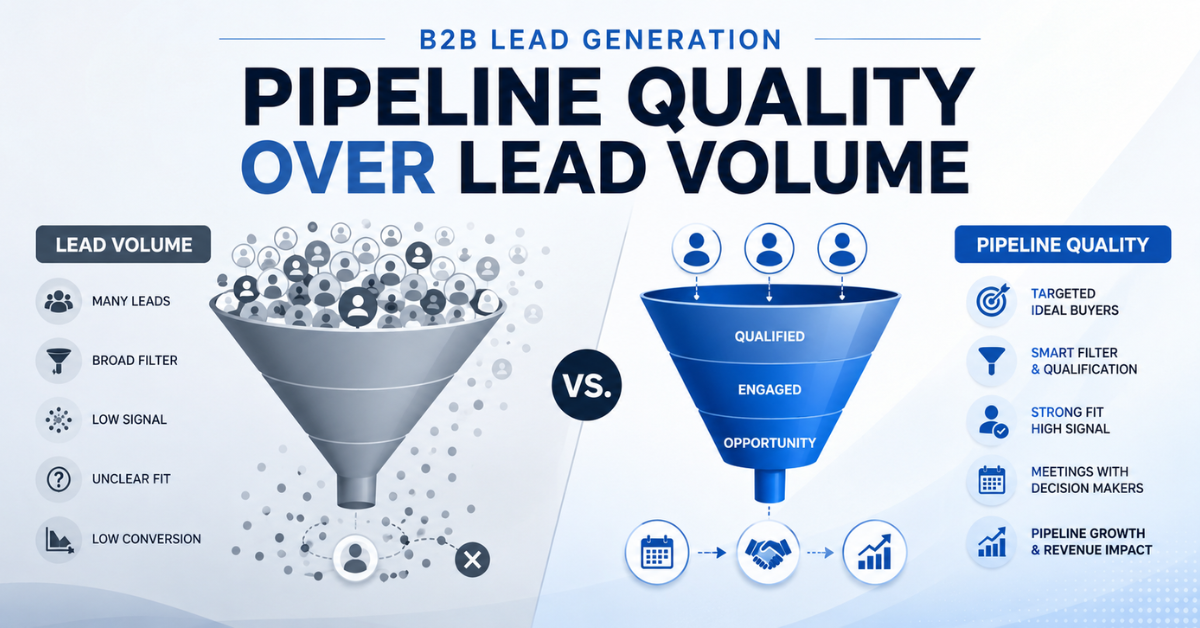
Many companies still measure B2B Lead Generation by how many leads enter the database. On the surface, this feels logical because more leads appear to create more opportunities. But in modern outbound sales development, lead volume can be misleading. A large list of poor-fit prospects often creates more noise, more wasted follow-up, and fewer real sales conversations. The better measure is pipeline quality. Businesses need to know whether their leads match the Ideal Customer Profile, show real intent, engage with relevant messaging, and convert into qualified meetings. Sales teams do not need more names if those names never become serious opportunities. They need better targeting, stronger qualification, and a clear connection between prospecting activity and revenue outcomes. This is why B2B Lead Generation should be evaluated by pipeline quality, not raw lead volume. A Human-AI Sales Approach can help companies scale smarter by combining better data with human judgment, personalization, and sales development expertise.
What Is B2B Lead Generation
B2B Lead Generation is the process of identifying, attracting, engaging, and qualifying potential business buyers for a company’s product or service. It supports the sales pipeline by helping businesses create conversations with prospects who may become future customers.
1. B2B Lead Generation Is the Starting Point of Pipeline Growth
B2B Lead Generation sits at the beginning of the revenue process. It helps companies identify target accounts, find relevant decision-makers, and create opportunities for sales conversations. However, the value of lead generation depends on the quality of the prospects being generated. A lead that does not match the Ideal Customer Profile may create activity but not revenue. Strong lead generation should support the full sales process, not simply increase the number of contacts in a CRM.
2. B2B Lead Generation Connects Marketing and Sales
Effective B2B Lead Generation helps align marketing activity with sales outcomes. Marketing may generate awareness, content engagement, and inbound interest, while sales development teams turn that interest into qualified conversations. When both teams agree on what a quality lead looks like, the pipeline becomes more efficient. Poor alignment often leads to disputes over lead quality and wasted follow-up. A shared focus on pipeline quality helps marketing and sales work toward the same revenue goals.
3. B2B Lead Generation Should Create Sales-Ready Opportunities
A strong lead generation strategy should move prospects toward sales readiness. This means identifying buyers who fit the target market, understand the problem, and have a reason to explore a solution. Not every lead is ready for a sales meeting immediately, but every lead should have a clear path toward qualification or nurturing. When lead generation is focused on sales readiness, account executives receive stronger opportunities. This improves conversion rates and reduces wasted selling time.
4. B2B Lead Generation Requires More Than Contact Data
Contact data is useful, but it is not enough to drive revenue. A name, email address, and job title do not reveal whether the prospect has a real business need, buying intent, or decision-making influence. Modern B2B Lead Generation requires account research, buyer context, intent signals, and personalized engagement. This is especially important in complex B2B sales where buyers expect relevance from the first interaction. Better intelligence creates better conversations.
Why Lead Volume Is a Misleading Metric
Lead volume can make a campaign look successful even when the pipeline is weak. Measuring only the number of leads generated often hides deeper problems in targeting, qualification, and conversion.
1. High Lead Volume Can Hide Poor Fit
A large number of leads may look impressive in a report, but many of those leads may not fit the company’s Ideal Customer Profile. Poor-fit leads create unnecessary work for SDRs and account executives. These prospects may lack budget, urgency, authority, or a relevant business problem. As a result, the sales team spends time chasing opportunities that were unlikely to convert from the start. Pipeline quality matters because it filters out weak-fit prospects before they drain sales resources.
2. Lead Volume Does Not Equal Buyer Intent
A prospect can be added to a lead list without showing any interest in the company’s solution. This is why lead volume alone is not a reliable measure of demand. Buyer intent signals, such as content engagement, website activity, business changes, or relevant pain points, help determine whether a prospect is more likely to respond. Without intent, outreach becomes a guessing game. B2B Lead Generation should prioritize prospects with stronger potential to engage and convert.
3. More Leads Can Increase Sales Waste
More leads can actually hurt sales productivity if those leads are not qualified. SDRs may spend time calling, emailing, and following up with prospects who are not relevant. Account executives may then attend meetings that never become real opportunities. This creates frustration across the sales organization and makes pipeline forecasting less reliable. A smaller number of high-quality leads can often produce better outcomes than a large number of weak leads.
4. Lead Volume Encourages the Wrong Behavior
When teams are rewarded only for generating more leads, they may prioritize quantity over quality. This can lead to broad targeting, generic messaging, and weak qualification standards. The result is a pipeline that looks active but does not convert. Measuring pipeline quality encourages better behavior because teams focus on prospects that are more likely to become revenue. Better metrics create better execution.
What Is Pipeline Quality in B2B Lead Generation
Pipeline quality refers to the strength, relevance, and revenue potential of the opportunities created through B2B Lead Generation. It measures whether leads are likely to become qualified meetings, sales opportunities, and closed deals.
1. Pipeline Quality Starts With Ideal Customer Profile Fit
The first sign of pipeline quality is whether the lead matches the Ideal Customer Profile. This includes industry, company size, buyer role, pain points, technology environment, and business need. If a lead does not fit the ICP, it is less likely to become a strong opportunity. ICP fit helps sales teams focus on prospects with the highest probability of success. Better fit creates stronger conversations and more efficient pipeline movement.
2. Pipeline Quality Includes Buyer Relevance
A quality lead should have a clear reason to care about the outreach. This reason may come from a current challenge, a growth initiative, a market shift, or a known operational pain point. Buyer relevance makes outreach more meaningful and improves engagement rates. Without relevance, even accurate contact data will not produce strong results. B2B Lead Generation should connect prospecting to real business priorities.
3. Pipeline Quality Requires Qualification
Qualification helps determine whether a lead should move forward in the sales process. Strong qualification considers need, authority, timing, fit, and level of interest. SDR teams play a major role in this process because they validate whether a lead is ready for a sales conversation. Without qualification, sales pipelines become crowded with weak opportunities. Better qualification improves meeting quality and sales team productivity.
4. Pipeline Quality Is Measured by Conversion
A quality pipeline produces measurable movement from lead to meeting, meeting to opportunity, and opportunity to revenue. If leads do not convert through these stages, the pipeline is not as healthy as it appears. Businesses should track conversion rates to understand whether B2B Lead Generation is producing real outcomes. Strong conversion data helps identify what is working and what needs improvement. Pipeline quality turns lead generation into a revenue-focused function.
Why Pipeline Quality Matters More Than Lead Volume
Pipeline quality matters because sales teams need opportunities that can move through the funnel, not just names that create activity. High-quality pipelines support better forecasting, stronger sales productivity, and more predictable growth.
1. Pipeline Quality Improves Sales Efficiency
Sales teams become more efficient when they spend time on prospects who are more likely to convert. High-quality leads reduce wasted calls, weak meetings, and unproductive follow-up. This allows SDRs and account executives to focus on meaningful conversations. Sales efficiency matters because time is one of the most expensive resources in B2B sales. A quality pipeline helps teams use that time better.
2. Pipeline Quality Creates Better Forecasting
Forecasting becomes difficult when the pipeline is filled with poor-fit or low-intent leads. Sales leaders may see a large pipeline number but still struggle to predict actual revenue. Pipeline quality improves forecasting because opportunities are more realistic and better qualified. This helps leadership make smarter decisions about hiring, marketing investment, and sales targets. Stronger forecasting starts with better lead generation inputs.
3. Pipeline Quality Improves Buyer Experience
Buyers are more likely to engage when outreach is relevant to their needs. Poor-quality lead generation often leads to generic messages that frustrate prospects and damage brand perception. Quality-focused lead generation creates more thoughtful outreach and better conversations. This improves the buyer experience from the first touchpoint. A better experience increases trust and makes prospects more open to future engagement.
4. Pipeline Quality Supports Revenue Growth
Revenue growth depends on moving qualified opportunities through the sales process. A high volume of weak leads does not create dependable revenue. High-quality leads are more likely to become qualified meetings, real opportunities, and closed deals. This is why pipeline quality is a better measure of B2B Lead Generation success. It connects top-of-funnel activity to actual business outcomes.
How to Measure B2B Lead Generation by Pipeline Quality
To measure B2B Lead Generation correctly, businesses need metrics that connect lead generation activity to sales outcomes. This means going beyond lead counts and focusing on quality indicators.
1. Measure Ideal Customer Profile Match Rate
ICP match rate shows how many leads fit the company’s target customer profile. This helps businesses understand whether their campaigns are reaching the right accounts. A high ICP match rate usually leads to better engagement and stronger conversion. A low match rate suggests the targeting strategy needs improvement. This metric is important because pipeline quality begins with fit.
2. Measure Sales Accepted Leads and Meetings
Sales accepted leads and meetings show whether the sales team believes the generated opportunities are worth pursuing. This metric creates accountability between marketing, SDRs, and account executives. If sales teams reject many leads or meetings, the issue may be poor targeting or weak qualification. Tracking sales acceptance helps improve alignment. It also ensures that lead generation is measured by usefulness, not just volume.
3. Measure Meeting-to-Opportunity Conversion
Meeting-to-opportunity conversion is one of the strongest indicators of pipeline quality. It shows whether booked meetings are turning into real sales opportunities. A strong conversion rate suggests that leads are relevant and properly qualified. A weak conversion rate may indicate poor fit, weak messaging, or premature appointment setting. This metric directly connects B2B Lead Generation to sales pipeline performance.
4. Measure Pipeline Contribution and Revenue Influence
Pipeline contribution measures the value of opportunities created from lead generation activity. Revenue influence shows how much closed revenue can be connected to those efforts. These metrics help businesses understand the true business impact of B2B Lead Generation. They also help justify investment in outbound sales development, SDR outsourcing, and campaign optimization. Revenue-based measurement encourages teams to focus on quality outcomes.
How to Improve Pipeline Quality in B2B Lead Generation
Improving pipeline quality requires better targeting, better data, better messaging, and stronger qualification. It also requires a shift in mindset from more leads to better opportunities.
1. Refine the Ideal Customer Profile
A clear Ideal Customer Profile helps teams identify which prospects are most likely to convert. Businesses should analyze their best customers to understand common patterns in industry, size, pain points, buying triggers, and decision-making structure. This information should guide targeting and outreach. A refined ICP reduces wasted effort and improves engagement. Better targeting is one of the fastest ways to improve pipeline quality.
2. Use Intent and Trigger Signals
Intent and trigger signals help identify prospects who may be more ready for engagement. These signals can include company growth, hiring activity, funding events, leadership changes, website engagement, or content interest. Using these signals improves outreach timing and relevance. SDR teams can prioritize accounts that show stronger potential instead of reaching out randomly. Better timing often leads to better conversations.
3. Personalize Outreach Around Buyer Problems
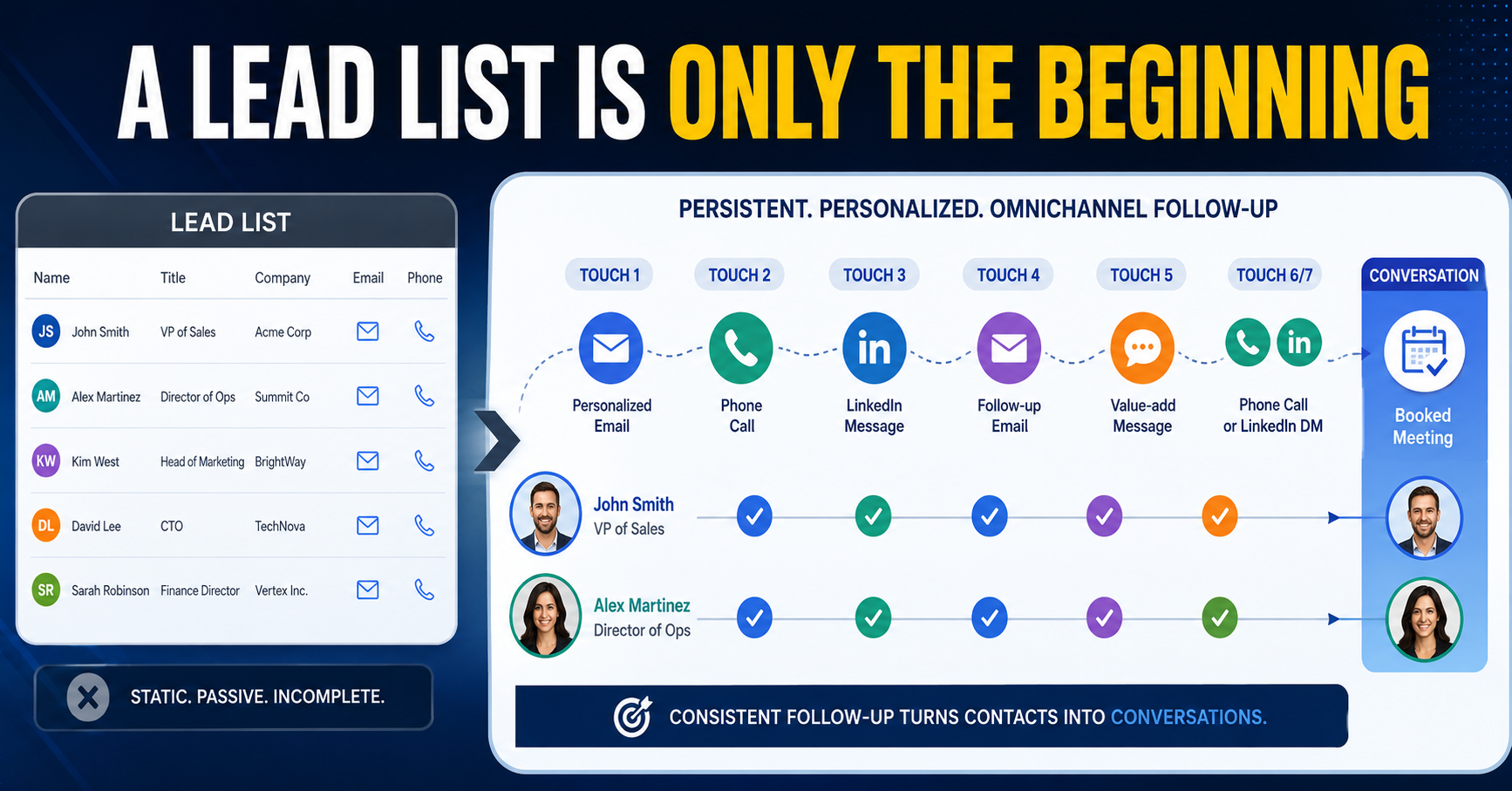
Personalized outreach improves pipeline quality because it speaks directly to the buyer’s situation. Instead of sending generic messages, SDR teams should connect outreach to a relevant business challenge or opportunity. This makes the conversation more useful and increases the chance of response. Personalization does not need to be long or complicated. It needs to show that the seller understands why the message matters.
4. Strengthen Qualification Standards
Qualification standards help determine which leads should move forward and which should be nurtured. Businesses should define what makes a lead sales-ready, including fit, need, role, timing, and interest. SDR teams should ask the right questions before booking meetings or passing leads to sales. Strong qualification prevents weak leads from entering the pipeline. This improves conversion rates and protects account executive time.
The Role of a Human-AI Sales Approach in Pipeline Quality
A Human-AI Sales Approach helps improve pipeline quality by combining AI-driven insights with human judgment and relationship-building. AI supports scale and analysis, while human SDRs ensure relevance, trust, and qualification.
1. AI Helps Identify Better Prospects
AI can help analyze large amounts of account and buyer data to identify patterns that support better targeting. It can help prioritize prospects based on fit, engagement, and potential intent signals. This improves efficiency and reduces wasted outreach. However, AI should not be used as a replacement for human review. Human SDRs still need to validate insights and decide how to engage each prospect.
2. Human SDRs Create Meaningful Conversations
Human SDRs bring judgment, empathy, listening skills, and adaptability to sales conversations. These qualities are essential in B2B Lead Generation because buyers need to feel understood before they engage seriously. SDRs can respond to objections, ask discovery questions, and qualify opportunities in real time. Automation cannot fully replace this level of interaction. Human expertise improves the quality of engagement and the strength of the pipeline.
3. AI Supports Personalization at Scale
AI can help summarize company information, identify relevant signals, and support message preparation. This helps SDRs personalize outreach more efficiently. The human SDR then uses those insights to write or deliver messages that feel natural and relevant. This balance allows businesses to scale personalization without sounding robotic. Personalized outreach improves engagement and supports stronger pipeline quality.
4. Human-AI Feedback Loops Improve Performance
AI tools and analytics can show which segments, messages, and channels are producing the best outcomes. Human teams can use that data to refine strategy and improve execution. This creates a feedback loop between campaign performance and sales development strategy. Over time, the team becomes better at identifying quality leads and converting them into opportunities. Continuous improvement is essential for long-term pipeline performance.
Common Mistakes in Measuring B2B Lead Generation
Many businesses measure B2B Lead Generation incorrectly because they focus on easy activity metrics instead of meaningful revenue indicators. Avoiding these mistakes helps improve sales outcomes.
1. Counting Every Contact as a Lead
Not every contact is a real lead. A contact becomes valuable only when it matches the target buyer profile and has a possible reason to engage. Counting every name in a database as a lead inflates performance and hides poor targeting. Businesses should separate raw contacts from qualified leads. This creates a more accurate view of pipeline health.
2. Celebrating Lead Volume Without Conversion
Lead volume can be useful, but only when those leads convert into meaningful opportunities. If a campaign generates many leads but few meetings or opportunities, the strategy is not working effectively. Businesses need to look at conversion from each funnel stage. This helps identify where quality breaks down. A conversion-focused view creates better accountability.
3. Ignoring Sales Team Feedback
Sales team feedback is essential for understanding lead quality. Account executives can often identify whether leads are relevant, prepared, and likely to progress. If sales feedback is ignored, poor-quality lead generation may continue unchecked. Regular communication between SDRs, marketing, and sales improves targeting and qualification. Feedback helps make B2B Lead Generation more practical and revenue-focused.
4. Using the Same Metrics for Every Campaign
Different campaigns may have different goals. Some campaigns are designed for direct appointment setting, while others are focused on nurturing, market learning, or account engagement. Using one simple lead volume metric for every campaign can distort results. Businesses should choose metrics based on campaign purpose and buyer journey stage. This creates a more accurate measurement system.
Services Provided by Salaria Sales
Salaria Sales helps businesses improve B2B Lead Generation by focusing on pipeline quality, qualified conversations, and revenue impact. As a Full-Service B2B Sales & SDR Outsourcing Agency, Salaria Sales combines SDR outsourcing, outbound sales development, appointment setting, cold calling, personalized email outreach, LinkedIn outreach, prospect research, and campaign optimization into a complete sales development system. The team works with clients to refine Ideal Customer Profiles, identify high-value accounts, create targeted prospect lists, and build messaging that speaks to buyer problems. Salaria Sales uses a Human-AI Sales Approach to improve research, account prioritization, buyer intent analysis, and performance reporting while keeping experienced human SDRs responsible for engagement and qualification. This helps businesses move beyond lead volume and focus on sales-ready opportunities. Clients benefit from better targeting, stronger meeting quality, improved handoffs, and clearer reporting on pipeline contribution. Salaria Sales helps companies generate pipeline that is more likely to convert into real revenue.
If you want to improve your B2B Lead Generation strategy and build a higher-quality pipeline, book a meeting with the Salaria Sales team here: https://salariasales.com/book/
Conclusion
B2B Lead Generation should not be measured by how many names enter a CRM. It should be measured by the quality of the pipeline those leads create. Lead volume can look impressive, but it often hides poor targeting, weak qualification, low buyer intent, and limited revenue potential. Pipeline quality gives businesses a better way to understand whether their lead generation efforts are creating real sales opportunities. Strong B2B Lead Generation focuses on Ideal Customer Profile fit, buyer relevance, sales readiness, and conversion through the funnel. A Human-AI Sales Approach makes this process more effective by combining better data with human judgment and personalized engagement. Companies that shift from lead volume to pipeline quality will improve sales productivity, forecasting accuracy, buyer experience, and revenue outcomes. In modern outbound sales development, success is not about generating the most leads. It is about generating the right leads that become qualified conversations, real opportunities, and closed revenue.
Frequently Asked Questions (FAQs)
1. What is B2B Lead Generation?
B2B Lead Generation is the process of identifying, engaging, and qualifying potential business buyers for a company’s products or services.
2. Why should B2B Lead Generation be measured by pipeline quality?
Pipeline quality shows whether leads are likely to become qualified meetings, sales opportunities, and revenue, while lead volume only measures quantity.
3. What is pipeline quality?
Pipeline quality refers to the fit, relevance, qualification, and revenue potential of the leads and opportunities moving through the sales funnel.
4. Why is lead volume not enough?
Lead volume does not show whether prospects are qualified, interested, sales-ready, or likely to convert into revenue.
5. How can businesses improve B2B Lead Generation quality?
Businesses can improve quality by refining their Ideal Customer Profile, using intent signals, personalizing outreach, and strengthening qualification standards.
6. What role does SDR outsourcing play in B2B Lead Generation?
SDR outsourcing provides trained sales development professionals who handle prospecting, outreach, qualification, and appointment setting to improve pipeline quality.
7. How does a Human-AI Sales Approach improve lead generation?
A Human-AI Sales Approach uses AI for research, targeting, and analysis while human SDRs manage personalization, qualification, and buyer conversations.
8. What metrics should companies track for B2B Lead Generation?
Companies should track ICP match rate, sales accepted meetings, meeting-to-opportunity conversion, pipeline contribution, and revenue influence.