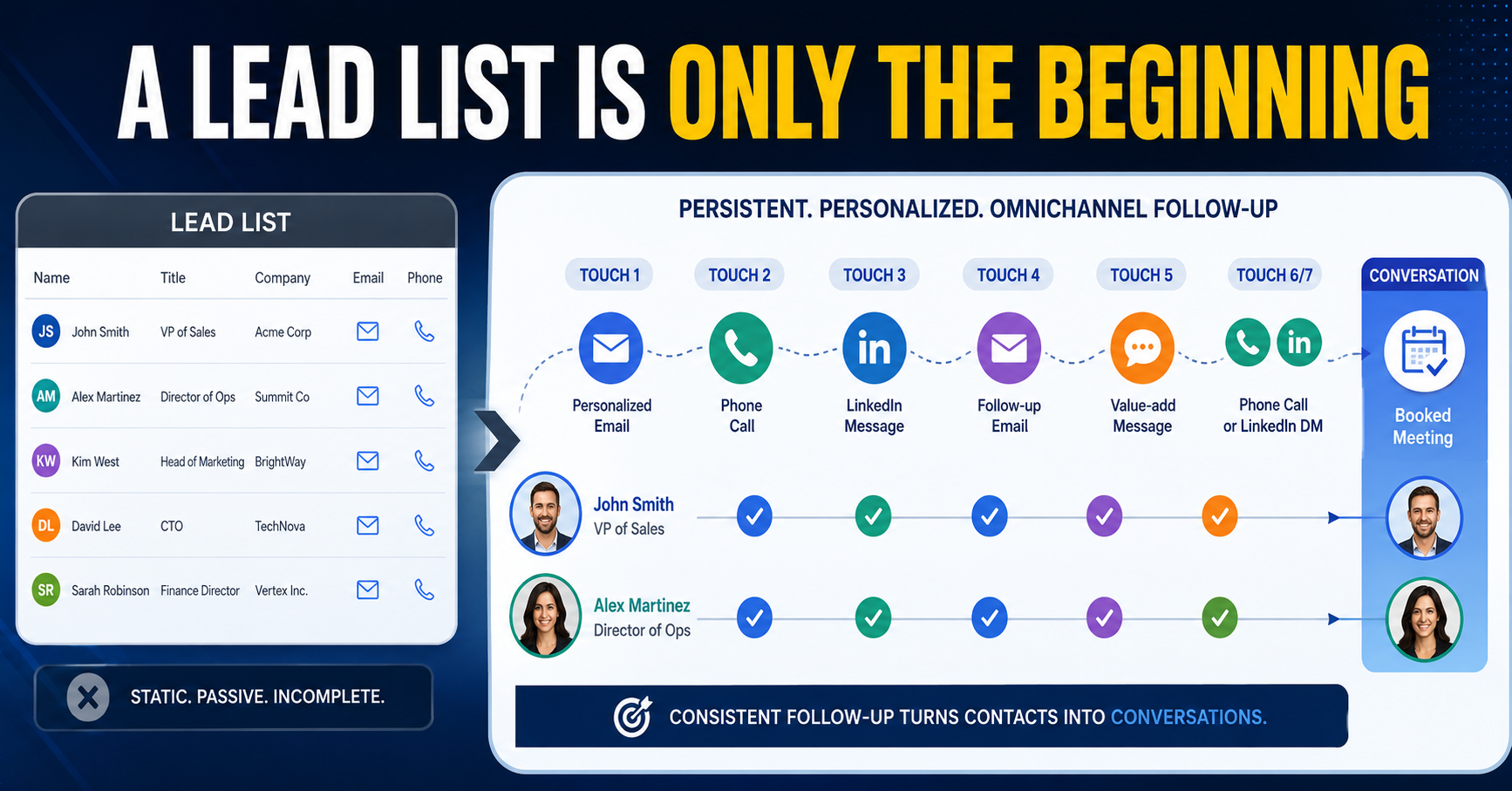

If your outbound strategy is built on blasting thousands of prospects instead of creating meaningful conversations, it is not surprising when results fall short. B2B Lead Generation Quality vs Volume is the difference between spam outreach and strategic pipeline generation. Salaria Sales helps companies win with a Human-AI approach that prioritizes quality conversations and real revenue outcomes.
Many companies believe that successful outbound sales is simply a numbers game. They assume that sending more emails, making more calls, and reaching more prospects will automatically produce better results. However, the reality of B2B Lead Generation Quality vs Volume tells a very different story. When outreach is built purely around volume, the quality of conversations often declines, brand reputation suffers, and conversion rates fall dramatically. Decision makers today are overwhelmed with generic sales messages that lack relevance or insight. This environment makes it difficult for organizations that rely on mass outreach strategies to build meaningful relationships with buyers. Successful B2B lead generation requires careful targeting, thoughtful messaging, and the ability to adapt strategies based on real market feedback. Companies that focus on quality engagement instead of mass outreach often generate stronger pipelines and long term customer relationships. Understanding the difference between quality driven outreach and volume driven campaigns helps organizations avoid common mistakes that cause most outreach campaigns to fail.
Understanding B2B Lead Generation Quality vs Volume
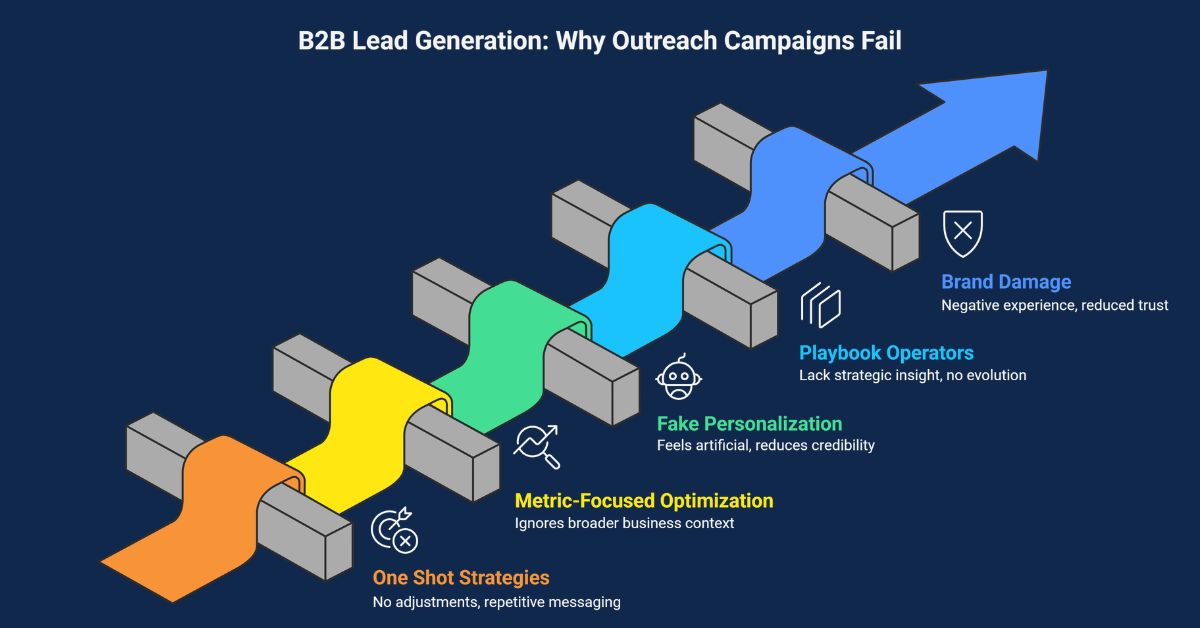
Outbound sales strategies often fall into two very different categories. Some organizations focus on sending as many messages as possible to large prospect lists. Others focus on building carefully targeted campaigns designed to create meaningful conversations with the right decision makers. The difference between these approaches defines the debate around B2B Lead Generation Quality vs Volume. While volume driven outreach can generate activity metrics, it rarely produces sustainable pipeline growth. The following factors explain why many outreach campaigns struggle to deliver results.
1. One Shot Strategies With No Adjustments
Many outbound programs fail because they rely on a single strategy that never evolves once the campaign begins. Agencies often launch an initial playbook and then continue executing it regardless of how prospects respond. When early results show that messaging or targeting is not resonating, the strategy still continues without meaningful adjustments.
This one shot approach often comes from organizations that operate using fixed playbooks rather than dynamic sales strategy. Teams may believe that the original plan must simply run longer in order to work. Unfortunately, prospects quickly recognize repetitive messaging patterns and disengage from the outreach.
Effective B2B lead generation requires continuous learning and adaptation. Outreach campaigns must evolve as new information about the market becomes available. Messaging should improve, targeting should refine, and strategies should adapt based on real conversations with prospects.
When teams treat outbound sales as an ongoing strategic process instead of a fixed script, they significantly increase the likelihood of generating high quality B2B leads.
2. Optimization That Focuses Only on Metrics
Another major problem in volume driven outreach is the misunderstanding of what optimization truly means. Many sales teams believe they are optimizing campaigns simply by adjusting numerical metrics such as email open rates or response rates. While these indicators can provide useful signals, they rarely explain the deeper reasons why outreach strategies succeed or fail.
True optimization requires examining the broader business context of the campaign. This includes evaluating whether the ideal customer profile is correct, whether the messaging clearly communicates value, and whether the outreach channels align with how buyers prefer to engage. Without addressing these strategic factors, improving surface level metrics rarely produces meaningful pipeline growth.
Sales conversations are influenced by many human factors that cannot be fully captured through simple metrics. The credibility of the message, the experience of the caller, and the relevance of the offer all play a critical role in determining whether a prospect engages.
Organizations that understand B2B Lead Generation Quality vs Volume focus on strategic improvements rather than simply chasing performance metrics.
3. Fake Personalization in Outreach
One of the most common trends in modern outbound sales is the use of automated personalization tools. These tools pull public information from sources such as LinkedIn profiles or company websites and insert small details into outreach messages. While this technique appears personalized on the surface, most decision makers immediately recognize that the message was generated automatically.
When prospects see references to their university, job title, or company news that clearly came from public data, the outreach often feels artificial. Instead of creating a genuine connection, this type of messaging can reduce credibility and cause recipients to disengage.
Authentic personalization requires deeper understanding of the prospect’s business challenges. It involves thoughtful research, tailored messaging, and an understanding of how the solution can create real value for that specific organization.
Companies that prioritize quality over volume invest time in building meaningful communication rather than relying on automated personalization shortcuts.
4. Consultants vs Playbook Operators
Another critical difference in B2B Lead Generation Quality vs Volume is the level of expertise guiding the outreach strategy. Some organizations treat outbound sales as a repetitive task that can be executed by anyone following a predefined script. In these environments account managers and SDRs simply operate from a standard playbook without providing strategic insight.
When outreach is managed this way, the program rarely evolves or improves over time. Teams may report activity numbers but lack the experience required to analyze complex market dynamics or refine the messaging strategy.
A more effective approach treats outbound sales development as a consulting discipline. Experienced professionals evaluate industry conditions, analyze prospect behavior, and continuously adjust outreach strategies based on feedback from the market.
Organizations that work with strategic sales consultants gain insights that go far beyond activity metrics. This expertise allows them to build campaigns that resonate with decision makers and generate high quality opportunities.
5. Damage to Brand Reputation and Domain Health
High volume outreach campaigns can also create long term risks for a company’s brand reputation and digital infrastructure. When prospects receive repetitive or irrelevant sales messages, they often associate that negative experience with the brand itself.
Over time this can damage the company’s reputation within its industry and reduce trust among potential buyers. Poorly targeted outreach may also lead to increased spam complaints or domain reputation issues that affect email deliverability.
Once domain reputation is damaged, it becomes much harder for legitimate communications to reach inboxes. This can impact not only outbound campaigns but also important communications with customers and partners.
Organizations that focus on B2B Lead Generation Quality vs Volume recognize that protecting brand credibility is just as important as generating new leads.
Services Provided by Salaria Sales
Salaria Sales helps companies overcome the challenges of B2B Lead Generation Quality vs Volume by delivering strategic outbound sales programs built around quality engagement. As a Full-Service B2B Sales & SDR Outsourcing Agency, Salaria Sales focuses on generating meaningful conversations with decision makers rather than simply increasing outreach activity.
The Salaria Sales methodology is built on a Human-AI Approach that combines experienced sales consultants with advanced sales technology orchestration. Instead of relying on a single outreach tactic, the team builds multi channel strategies that integrate phone outreach, email engagement, LinkedIn prospecting, and targeted messaging campaigns.
Each client program is supported by a sophisticated network of sales tools and analytics platforms that allow campaigns to be continuously monitored and refined. At the same time human expertise remains central to the process. Sales consultants evaluate messaging, analyze prospect feedback, and make strategic adjustments that improve campaign performance over time.
Salaria Sales also emphasizes deep research and genuine personalization when engaging prospects. This ensures that outreach messages reflect a clear understanding of the prospect’s business challenges and opportunities. The result is a more credible and effective sales conversation.
By combining technology with human expertise, Salaria Sales helps organizations generate high quality B2B leads, build stronger pipelines, and create sustainable revenue growth through modern outbound sales strategies.
If your company wants to move beyond volume based outreach and build a strategic outbound program focused on real results, schedule a conversation with the Salaria Sales team.
Conclusion
The debate around B2B Lead Generation Quality vs Volume ultimately comes down to the difference between activity and impact. High volume outreach strategies may produce impressive numbers of emails sent or calls made, but they rarely translate into meaningful sales opportunities. Decision makers today expect thoughtful communication that reflects genuine understanding of their business challenges.
Companies that focus on quality engagement build stronger relationships with prospects and create a more credible presence in their markets. This requires continuous strategy refinement, deeper research, and a willingness to adapt outreach approaches based on real feedback from buyers.
A Human-AI Approach allows organizations to scale their outbound programs while maintaining the authenticity and expertise required for successful B2B sales. Technology provides valuable insights and efficiency, but human judgment ensures that outreach remains relevant and strategic.
Businesses that prioritize quality over volume position themselves for stronger pipelines, better conversion rates, and more sustainable growth. By adopting a strategic approach to lead generation, organizations can transform outbound sales from a noisy activity into a powerful engine for revenue generation.