Sales development in 2026 will not belong to the loudest automation stack. It will belong to the teams that combine human judgment, strong research, and smart use of AI without drowning buyers in generic outreach.
For the last few years, sales development has been flooded with hype.
Every few months, a new tool has arrived promising to replace SDRs, automate pipeline creation, personalize outreach at scale, and make human sales effort look outdated. The pitch has been hard to miss. Buy the AI tool. Cut headcount. Scale activity. Watch meetings appear.
That story sounded exciting. It was also incomplete.
Now that the market has had time to test these promises, a more realistic picture is emerging. Sales teams have learned that while AI can absolutely improve parts of the workflow, it does not eliminate the need for judgment, preparation, context, or actual selling skill. Buyers are more aware of spam than ever. Platforms are more aggressive in cracking down on bad behavior. And companies are starting to realize that the future of outbound is not AI-only. It is Human-AI.
Sales development in 2026 is entering a more disciplined phase. The teams that win will not be the ones with the biggest automation stack. They will be the ones that know where automation helps, where it hurts, and how to build a sales motion that buyers still respect.
Here are the five trends that will define sales development in 2026.
1. AI-Only SDR Strategies Are Losing Momentum
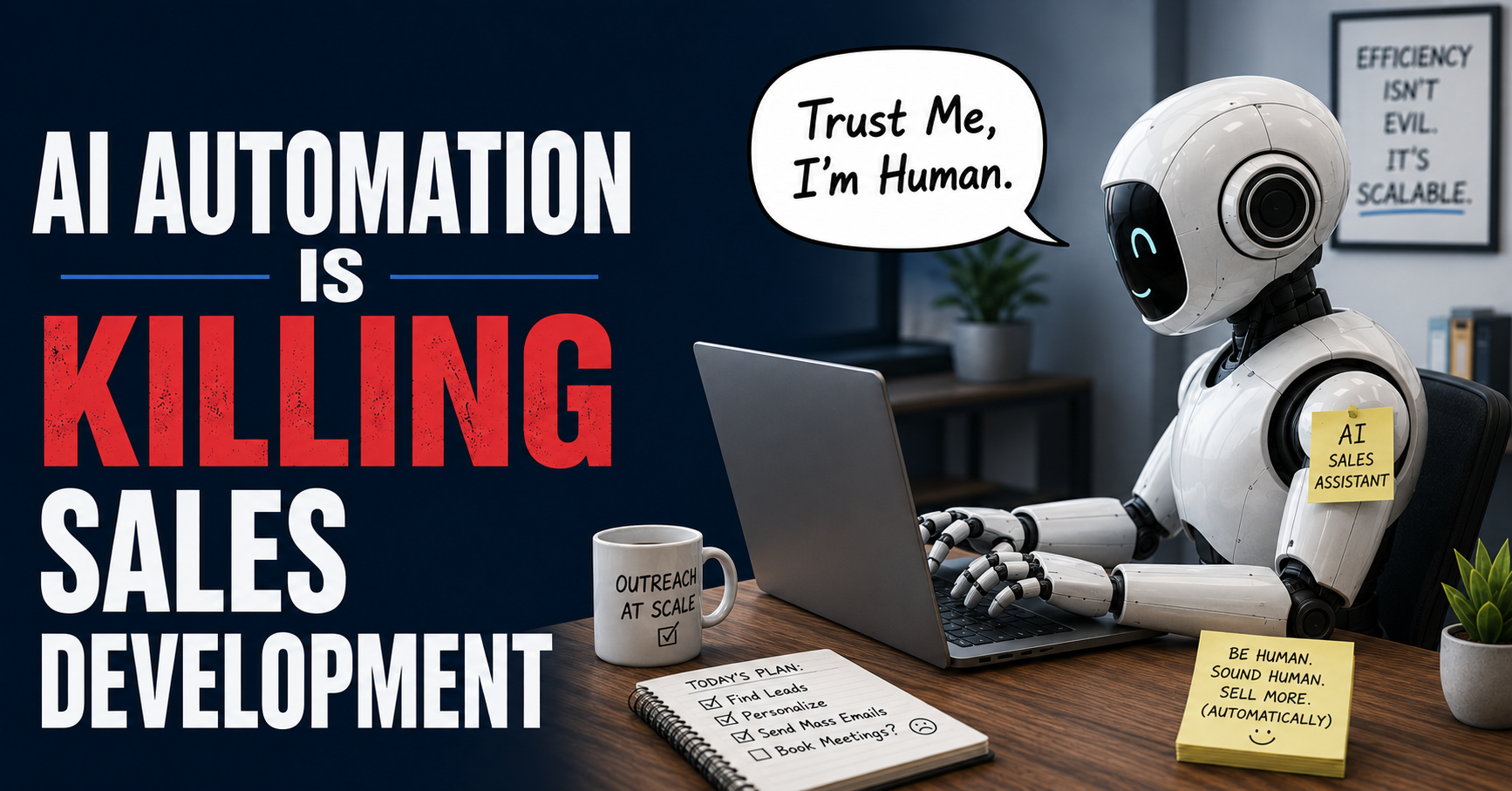
The first major trend is the decline of the AI-only SDR fantasy.
From 2022 onward, sales teams were told that AI was about to redefine outbound completely. A wave of companies emerged around the promise of AI SDRs, AI prospecting, AI writing, AI personalization, and AI-generated outreach at scale. Some of the positioning was aggressive. The underlying message was clear: human SDR teams were too expensive, too slow, and too replaceable.
The market has now had enough time to test that theory.
What many teams found is that AI can assist sales development, but it does not replace it. Automated outbound still struggles with nuance. AI-generated outreach still tends to sound generic. Prospecting data can still be wrong. Timing can still be off. And buyers can still sense when a message was produced by a machine trying to sound human.
There is also a lot of AI washing in the market. Many tools branded as revolutionary AI products are really packaging old automation concepts in new language. Automated email existed before ChatGPT. Basic sequencing existed before ChatGPT. Triggered messaging existed before ChatGPT. AI has improved some workflows, but it has not magically solved outbound.
In 2026, companies are becoming more skeptical of tools that promise fully automated pipeline. That skepticism is healthy.
2. Human-AI Sales Development Becomes the Practical Model
If AI-only strategies are losing momentum, what is replacing them?
The answer is the Human-AI model.
This is the practical middle ground. It accepts that AI is useful, but only when it supports a real sales process instead of pretending to replace it. Sales teams are increasingly using AI where it genuinely helps: research, account summaries, call preparation, proposal support, internal drafting, lead prioritization, and administrative acceleration.
That is real value.
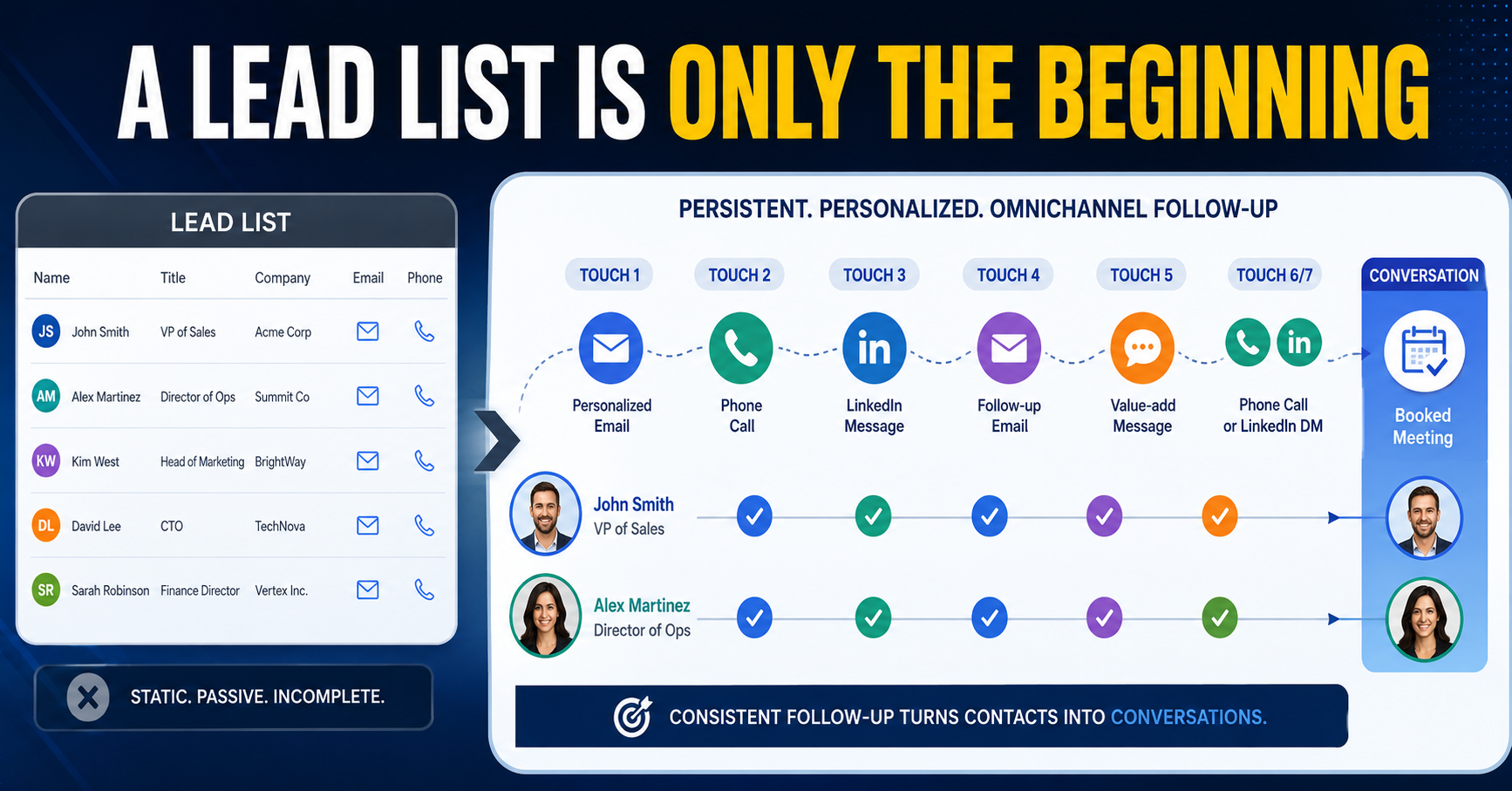
AI can help an SDR understand a company faster. It can help organize information about a prospect. It can help create a starting point for messaging. It can even help a rep prepare smarter questions before an outreach attempt. But the final work still needs a human being. A real rep still needs to interpret the research, adjust the message, read the context, and decide whether the outreach actually makes sense.
That is the difference between Human-AI and AI-only.
In 2026, smart sales teams will not be bragging that they removed humans from the process. They will be showing how humans use AI to become more prepared, more efficient, and more relevant.
That is also where Salaria fits naturally. Salaria’s model is not based on replacing people with automation. It is based on using AI as a support layer while keeping strategy, judgment, and outbound execution human-led.
3. LinkedIn, Gmail, and Outlook Crack Down on Automation
The third major trend is platform resistance.
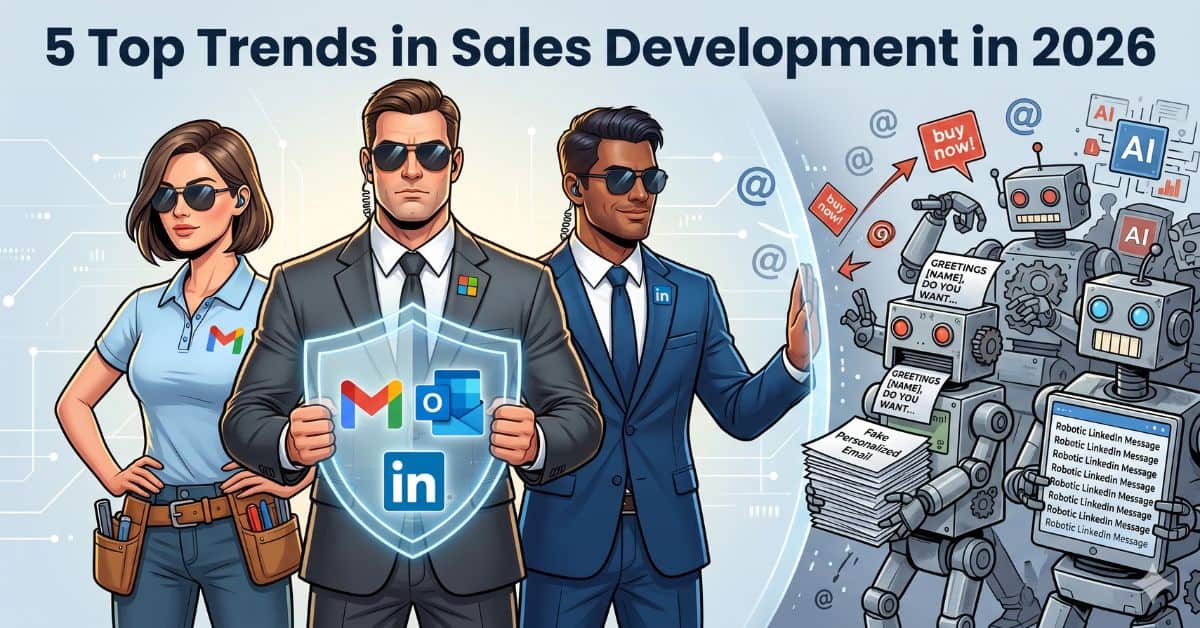
LinkedIn, Gmail, and Outlook are not passive observers in the automation boom. They have a direct incentive to protect user experience. That means they are becoming less tolerant of spammy outreach, abuse of automation, and anything that reduces trust in the platform.
This is a major issue for outbound teams relying too heavily on automation tools.
LinkedIn in particular has become more aggressive in spotting robotic behavior, limiting abuse, and making life harder for teams that believe they can scale connection requests and messages without consequence. Email ecosystems are also evolving. Gmail and Outlook have continued raising expectations around deliverability, sender behavior, and overall email quality. When teams flood inboxes with low-value messaging, the platforms notice.
The result is simple: lazy automation is becoming less durable.
This matters because many companies built outbound processes around volume rather than quality. They assumed they could just send enough messages and something would work. In 2026, that assumption will become more expensive. Deliverability risks increase. Platform friction increases. Reputation risks increase.
The more the platforms tighten standards, the more valuable a high-quality, human-led outreach model becomes.
4. GEO and AEO Become Part of Sales Development Strategy
Sales development is no longer limited to cold outreach channels alone.
Another major shift in 2026 is the growing importance of being visible inside answer engines, AI-generated responses, and LLM-driven discovery experiences. Some people refer to this as GEO, meaning Generative Engine Optimization. Others call it AEO, meaning Answer Engine Optimization. The exact label may still vary, but the underlying shift is real.
Buyers are increasingly using AI platforms to research vendors, compare providers, and understand categories before they ever talk to a sales rep. That changes how pipeline gets influenced. Your future buyer may not discover you through a traditional search result alone. They may encounter your brand through AI summaries, answer engines, or research tools that synthesize information for them.
That means sales development is starting to overlap more with content visibility and digital authority.
This does not replace outbound. It strengthens the environment around outbound. If a rep reaches out and the prospect already sees the brand showing up in credible ways across search and AI-driven discovery, that outreach lands differently. Trust rises. Familiarity rises. Conversion potential improves.
In 2026, the best sales development teams will think beyond the inbox. They will care about how their company appears across emerging discovery channels as well.
5. Buyers Push Back Against AI Slop, and Real SDR Talent Becomes More Valuable
The fifth trend is one of the most important: buyers are tired of AI slop.
The market is saturated with generic personalization. Prospects receive emails that pretend to be thoughtful but are really stitched together from public profile data. They get messages referencing their school, their job change, their LinkedIn post, or their company announcement in ways that feel shallow and automated. The sender thinks it looks smart. The buyer usually sees right through it.
That backlash is going to grow in 2026.
Fake personalization does not impress experienced buyers. It often has the opposite effect. It signals laziness disguised as effort. It tells the buyer that the sender wanted to scale relevance without earning it.
At the same time, sales teams are still facing a hard truth: great SDR talent is difficult to find. Strong researchers, disciplined callers, and thoughtful outbound reps are not easy to hire. That makes the temptation to automate even stronger. But it also makes quality human sales skill more valuable, not less.
The teams that stand out in 2026 will be the ones willing to do the harder work. Better research. Better targeting. Better writing. Better call preparation. Better follow-up. Not because it sounds old fashioned, but because it converts.
What These Trends Mean for B2B Sales Teams
Taken together, these trends point to a clear conclusion.
Sales development in 2026 is moving away from blind volume and toward disciplined execution. The market is becoming less tolerant of noise. Buyers are becoming more alert to weak outreach. Platforms are becoming more defensive. And companies are becoming more realistic about what AI can and cannot do.
For B2B sales teams, this means a few things.
First, automation should support the process, not define it. If your outbound strategy only works when messages are mass produced, it is fragile.
Second, research is becoming more important, not less. In a world full of generic messaging, relevance is a competitive advantage.
Third, human judgment is still the difference maker. AI can organize information. It can draft. It can summarize. But it cannot replace the sales professional who knows how to use that information well.
Finally, outbound quality is now a brand issue. Every bad touch creates friction. Every smart touch creates trust.
How Salaria Is Built for Sales Development in 2026
Salaria is well positioned for where sales development is heading because the company is already aligned with the model that makes the most sense now.
Salaria does not rely on AI-only outreach. It does not treat automation as a substitute for sales expertise. It does not confuse volume with progress. Instead, the approach is built around human-led SDR execution supported by AI where AI actually adds value.
That means using AI for research and preparation, not for turning outreach into robotic slop. It means building campaigns around thoughtful targeting and real outbound skill. It means keeping messaging relevant, direct, and useful. And it means helping clients generate pipeline without sacrificing brand quality or buyer trust.
In 2026, that is what sustainable sales development looks like.
The market is maturing. Buyers are paying attention. Platforms are tightening the rules. The companies that keep winning will be the ones that adapt early and keep their outreach human, strategic, and credible.
That is exactly where Salaria is strongest.
Build a Sales Development Strategy for 2026
The sales development playbook is changing. AI-only outreach is losing credibility, buyers are pushing back against low-quality personalization, and platforms are becoming more aggressive about automation abuse. If your team wants to build pipeline in 2026, the answer is not more noise. It is a smarter, more human-led outbound strategy.
Salaria helps B2B companies build sales development programs that combine strong research, skilled SDR execution, and the right use of AI to improve quality without sacrificing credibility.
Want to strengthen your sales development strategy for 2026? Request a consultation with the Salaria team.